🔍 Executive Summary
- The high-stakes Trump-Xi summit in Beijing is viewed as the ultimate catalyst for Nvidia to convert stalled H200 export licenses into realized revenue, potentially reshaping the global HBM3e supply chain.
Strategic Deep-Dive
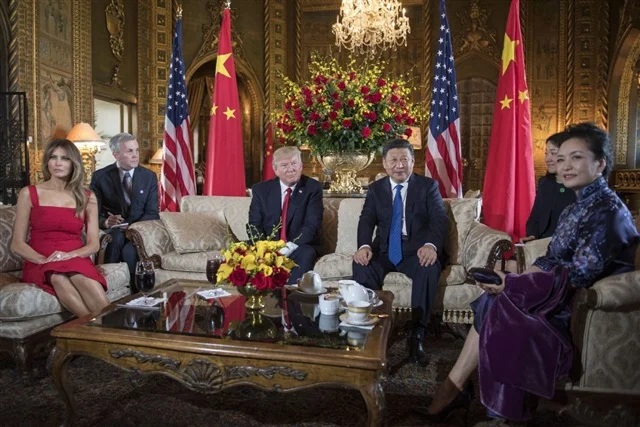
The diplomatic theater in Beijing, featuring US President Donald Trump and Chinese President Xi Jinping, has profound implications for Nvidia’s commercial trajectory in the Asia-Pacific region. At the heart of the discussion is the stalled revenue from Nvidia’s H200 AI accelerators. Despite a regulatory environment in Washington that has technically issued export licenses, Nvidia has found itself in a ‘purgatory’ where policy approvals have not translated into tangible billings.
This discrepancy suggests that informal trade barriers or lingering uncertainty regarding the long-term stability of export controls are preventing Chinese cloud service providers (CSPs) from committing to large-scale deployments of the H200 architecture.
From a systems and supply chain perspective, the resolution of this bottleneck involves more than just lifting restrictions; it involves the strategic redirection of critical sub-components, most notably HBM3e (High Bandwidth Memory). The H200 utilizes ultra-fast HBM3e to achieve its massive throughput targets, and global supply for these modules remains exceptionally constrained. If the Trump-Xi summit clears the path for a massive influx of H200 units into China, Nvidia will be forced to recalibrate its global allocation of HBM3e wafers.
This could potentially lead to a supply crunch for Western hyperscalers as capacity is diverted to fulfill long-standing orders from the Chinese market.
Furthermore, the summit may determine the future of Nvidia’s custom SKU strategy. To date, Nvidia has been forced to down-bin its chips to comply with compute-threshold restrictions. However, a pragmatic deal between the two superpowers could allow for a more standardized hardware stack, reducing the R&D overhead associated with maintaining China-specific silicon variants.
For Nvidia, the Beijing meeting represents the ’last mile’ in securing its dominance in the global AI landscape. If successful, it will unlock billions in latent revenue; if not, Nvidia may have to permanently pivot its growth strategy toward emerging markets in India and Southeast Asia to offset the loss of the Chinese mainland’s vast data center appetite. Investors and system architects alike are watching for any signal of a ’thaw’ that could stabilize the global GPU supply chain for the 2026-2027 cycle.