🔍 Executive Summary
- Elon Musk’s xAI has orchestrated a significant infrastructure shift, leasing its 220,000-GPU Colossus 1 supercluster to rival Anthropic for inference workloads via SpaceX. This move addresses the cluster's mixed-architecture training inefficiencies while clearing the path for 'Colossus 2,' a unified NVIDIA Blackwell-based system designed for next-generation frontier training and a potential IPO roadmap.
Strategic Deep-Dive
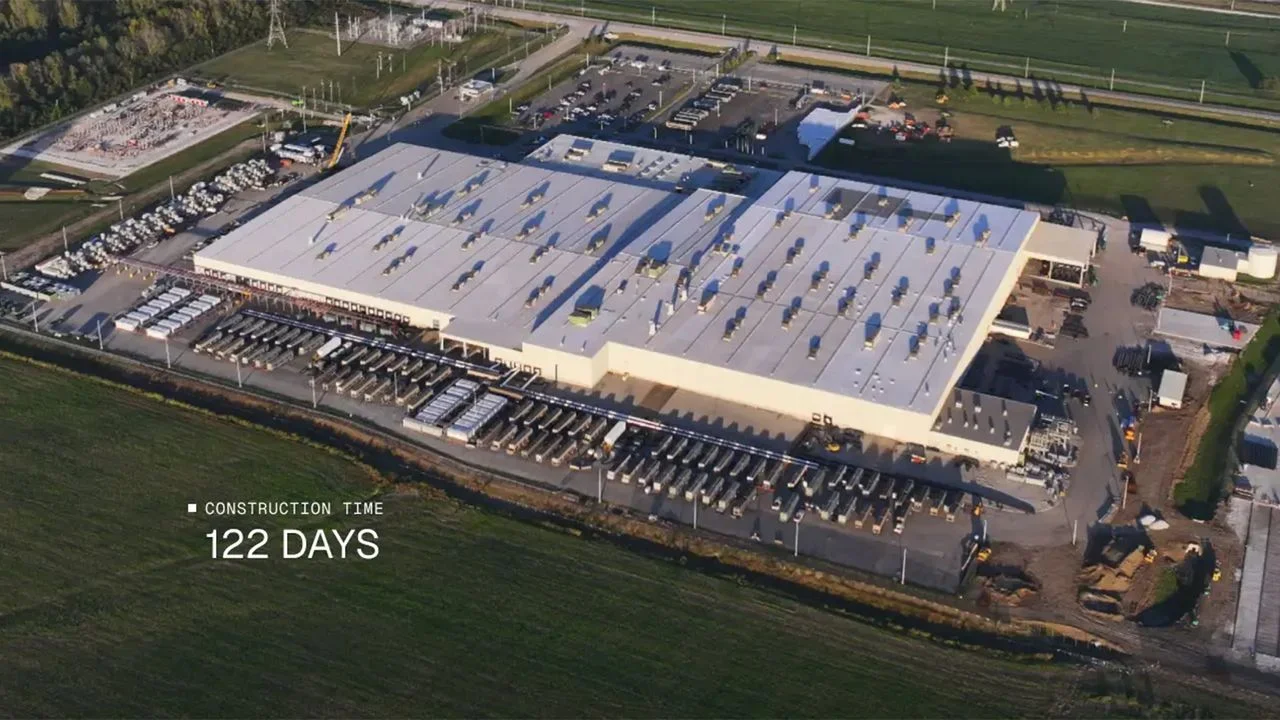
The strategic realignment of xAI’s supercomputing assets marks a defining moment in the AI infrastructure arms race. At the center of this pivot is Colossus 1, a massive 220,000-GPU cluster that, despite its unprecedented scale, struggled with the architectural homogeneity required for training frontier-level large language models like Grok. The technical challenge stemmed from its ‘mixed architecture,’ which integrated a combination of NVIDIA H100s and older A100s across disparate interconnect topologies.
In high-performance computing, such heterogeneity creates significant synchronization overhead during synchronous Stochastic Gradient Descent (SGD) tasks, where the slowest GPU or interconnect link dictates the speed of the entire cluster. Recognizing this bottleneck, Elon Musk has facilitated a deal to lease the entire cluster to Anthropic—not directly through xAI, but through SpaceX, highlighting the inter-entity synergy of Musk’s empire. For Anthropic, this move is a tactical masterstroke, providing the massive inference capacity needed to scale Claude 3.5 and 4 to millions of users, effectively offloading its compute-heavy inference tasks to a dedicated site.
From Musk’s perspective, this lease transforms a training-inefficient asset into a high-yield revenue stream, functioning as a ‘Hardware-as-a-Service’ (HaaS) model that funds the development of ‘Colossus 2.’ The second-generation cluster is designed to be a streamlined, unified Blackwell environment. By utilizing NVIDIA’s Blackwell architecture exclusively, Colossus 2 will leverage NVLink 5 and specialized Transformer Engines to achieve order-of-magnitude improvements in training efficiency. This roadmap is crucial for xAI’s IPO strategy, as it demonstrates a dual-track business model: leading the frontier of AI research (Grok-3) while simultaneously operating a world-class infrastructure leasing business.
The mention of SpaceX in the leasing structure also hints at long-term ambitions for orbital data centers, where satellite-based cooling and solar power could solve the terrestrial energy constraints currently facing massive superclusters. In summary, the transition from Colossus 1 to Colossus 2 represents more than a hardware upgrade; it is a sophisticated play in the global compute market, where hardware liquidity and architectural purity are becoming as valuable as the AI models themselves. Musk is effectively positioning xAI as a foundational layer of the AI economy, ensuring that while competitors handle current inference loads, xAI retains the superior training capability necessary for the race toward Artificial General Intelligence (AGI).