🔍 Executive Summary
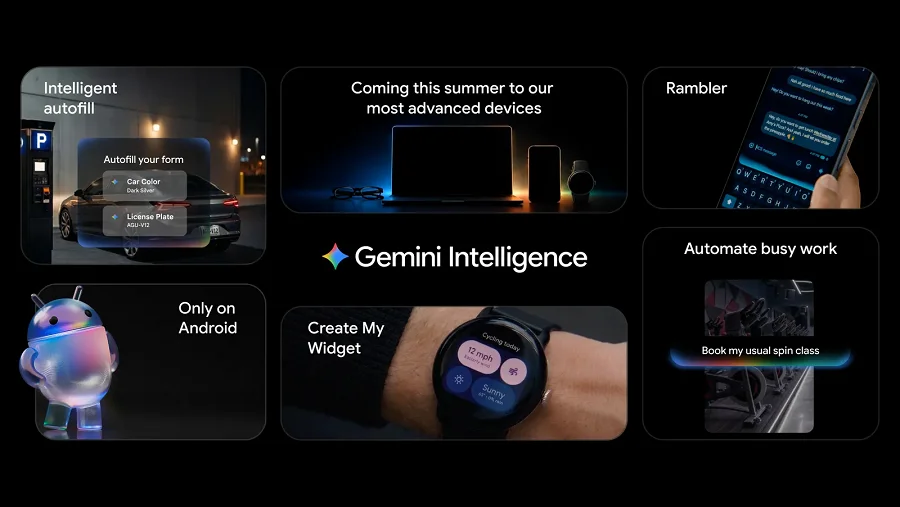
- The upcoming Gemini Intelligence for Android 17 introduces stringent hardware prerequisites, demanding high-capacity RAM and NPU performance thresholds. This shift highlights a new era of 'AI-driven obsolescence' where even recent devices like the Pixel 9 may fail to meet the benchmarks for next-generation on-device AI agents.
Strategic Deep-Dive
The Infrastructure of Intelligence: NPU and RAM Thresholds
As we approach the rollout of Android 17, the tech industry is hitting a significant architectural bottleneck. The centerpiece of the new OS, ‘Gemini Intelligence,’ represents a paradigm shift from cloud-hybrid AI to aggressive on-device execution. For a senior data systems analyst, the implications are clear: the hardware requirements are no longer about general-purpose computing but specialized AI throughput.
To run a persistent, context-aware AI agent locally, a device must sustain a massive RAM buffer—likely 12GB+ just for the model weights—and an NPU capable of high TOPS (Trillions of Operations Per Second) to prevent thermal throttling during complex token processing.
The Pixel 9 Paradox: Marketing vs. Reality
The most glaring issue in the current roadmap is the ‘Pixel 9 Paradox.’ Marketed as the pinnacle of Google’s AI vision, the Pixel 9 may soon find itself relegated to the ’legacy’ category. The source context suggests that the hardware specifications of the Pixel 9’s Tensor chip might not meet the strict prerequisites for the full Gemini Intelligence suite. This creates a friction point where a flagship less than a year old is rendered functionally obsolete for the most significant software update in Android’s history.
It is a stark reminder that in the era of Generative AI, hardware longevity is no longer guaranteed by the brand name, but by raw architectural capacity.
Quantifying AI-Driven Obsolescence
We are entering a period of ‘AI-driven obsolescence.’ In previous OS cycles, software optimization could extend the life of older hardware. However, Large Language Models (LLMs) are physically constrained by memory bandwidth and NPU architecture. If the hardware lacks the necessary ’token processing’ power, no amount of software optimization can make it functional.
This fragmentation within the Android ecosystem is unprecedented. We are seeing a divide between ‘AI-Ready’ devices—those equipped with massive LPDDR5X RAM and dedicated NPU clusters—and ‘Standard’ devices that will be excluded from the future of personal computing.
This trend poses significant challenges for consumer rights and environmental sustainability. As the ‘AI Agent’ becomes the primary interface for our digital lives, those unable to afford the yearly hardware tax will find themselves on the wrong side of a new digital divide. The hardware specs of yesterday are becoming the e-waste of tomorrow, driven by an insatiable demand for on-device intelligence.
The question for consumers is no longer about whether their phone works, but whether its silicon is ‘smart’ enough to survive the next Android update.