🔍 Executive Summary
- Quanta Computer reported record-breaking revenue and EPS for Q1 2026, driven by the explosive demand for AI servers. However, the company is grappling with a significant collapse in gross margins as it absorbs the high costs associated with the rapid transition to premium GPU-based hardware configurations. This 'margin collapse' highlights the precarious position of ODMs who act as high-volume assemblers for Tier-1 chip vendors while capturing minimal value-add.
Strategic Deep-Dive
Quanta Computer’s financial performance for the first quarter of 2026 presents a striking dichotomy between top-line expansion and bottom-line efficiency. While the company achieved historic highs in total revenue and earnings per share (EPS), the underlying narrative is one of margin erosion necessitated by the aggressive pivot toward artificial intelligence infrastructure. The primary catalyst for this shift is the global demand for AI servers, specifically those integrated with high-performance Graphics Processing Units (GPUs).
However, the technical reality of these next-generation servers is fundamentally different from traditional general-purpose x86 servers. In the current market, the bill of materials (BOM) is heavily skewed; the cost of silicon—dominated by NVIDIA’s H200 and Blackwell-class AI accelerators—now accounts for as much as 80% to 90% of the total system cost. As an Original Design Manufacturer (ODM), Quanta is essentially operating in a ’toll-booth’ capacity, managing the procurement and integration of components that cost tens of thousands of dollars per unit while retaining only a thin slice of the profit.
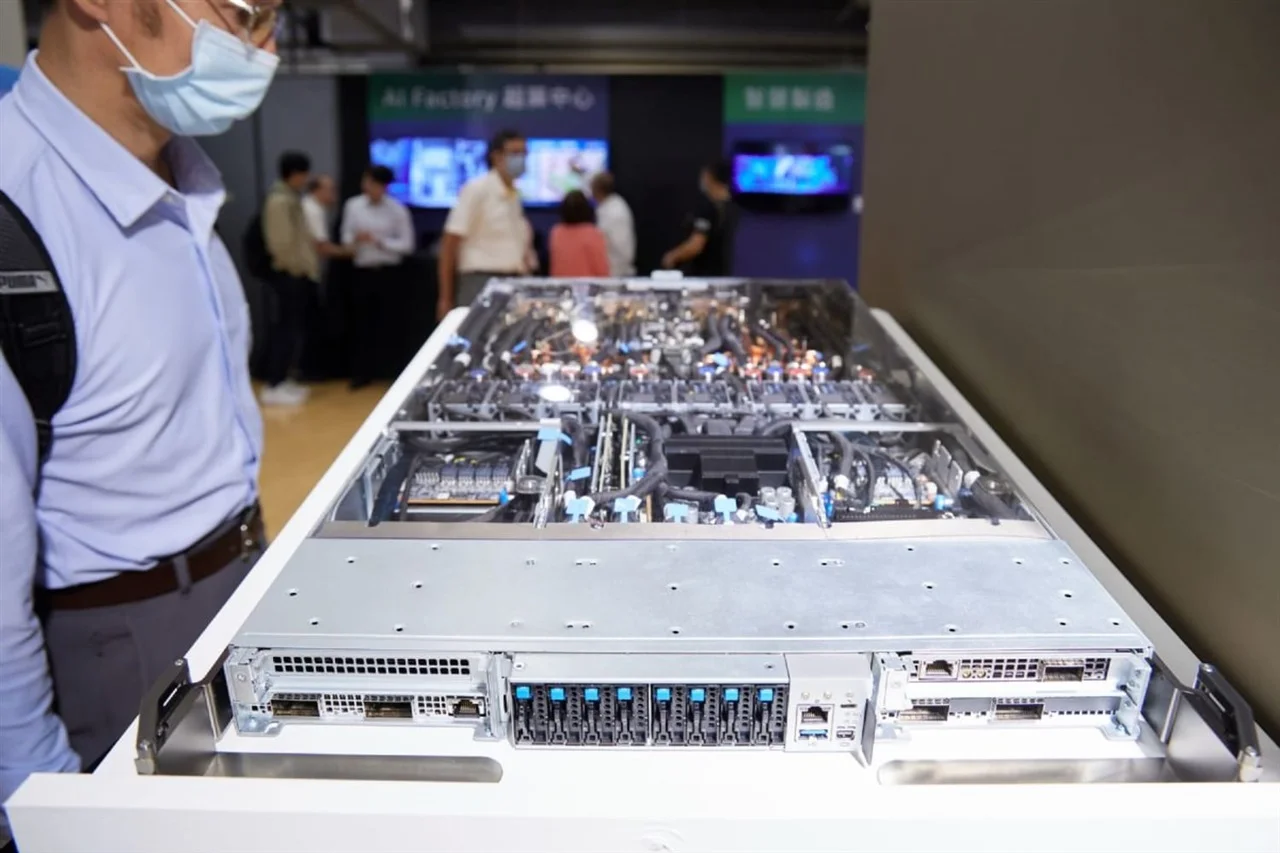
This leads to a massive increase in the cost of goods sold (COGS) without a proportional increase in operating income. Furthermore, the transition to Blackwell chips introduces significant engineering overhead, particularly the move toward advanced liquid cooling systems and high-density rack power delivery, which requires substantial capital expenditure (CAPEX). These costs are being absorbed by Quanta as it ramps up production to meet the demands of global CSPs like Google, Meta, and AWS.
The technical analysis suggests that Quanta’s role is increasingly becoming one of ’low value-add’ assembly compared to the ‘high margin’ silicon design of its partners. To stabilize its financial health, Quanta must look beyond standard reference architectures and focus on proprietary power management and thermal solutions that offer higher margins. The current trend indicates that while AI is a massive revenue driver, the ODM sector faces a profitability crisis unless it can shift the power balance in the supply chain.
In summary, Quanta’s Q1 results serve as a cautionary tale: in the AI gold rush, the toolmakers are thriving, but the assemblers of the tools are seeing their margins squeezed by the very same high-priced components that drive their revenue growth. Sustaining this model requires extreme operational efficiency and a strategic shift toward high-margin intellectual property in server rack design.