🔍 Executive Summary
- Despite high-level talks, Beijing has maintained its strict export controls on Indium Phosphide (InP) substrates, a move targeted at the optical backbones of US-led AI clusters and high-speed data centers.
Strategic Deep-Dive
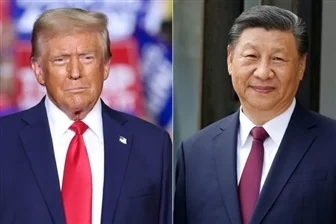
Despite the diplomatic optics of recent summits, Beijing continues to wield Indium Phosphide (InP) as a strategic weapon in the tech-decoupling war. InP is critical for the fabrication of high-speed optical components, offering superior electron velocity compared to silicon or gallium arsenide. This property makes it irreplaceable for 400G and 800G optical modules, which serve as the ’nervous system’ for massive AI training clusters.
By maintaining strict export controls on InP substrates, China is effectively throttling the hardware supply chain necessary for the next generation of high-bandwidth interconnects. As AI models scale, the demand for low-latency, high-rate data transmission between nodes has skyrocketed, making InP a critical bottleneck that China is using to counter US-led technological dominance.