🔍 Executive Summary
- AI infrastructures require 36 times more fiber optic cabling than traditional servers, creating a global shortage of optical glass and pushing manufacturer backlogs into 2027.
Strategic Deep-Dive
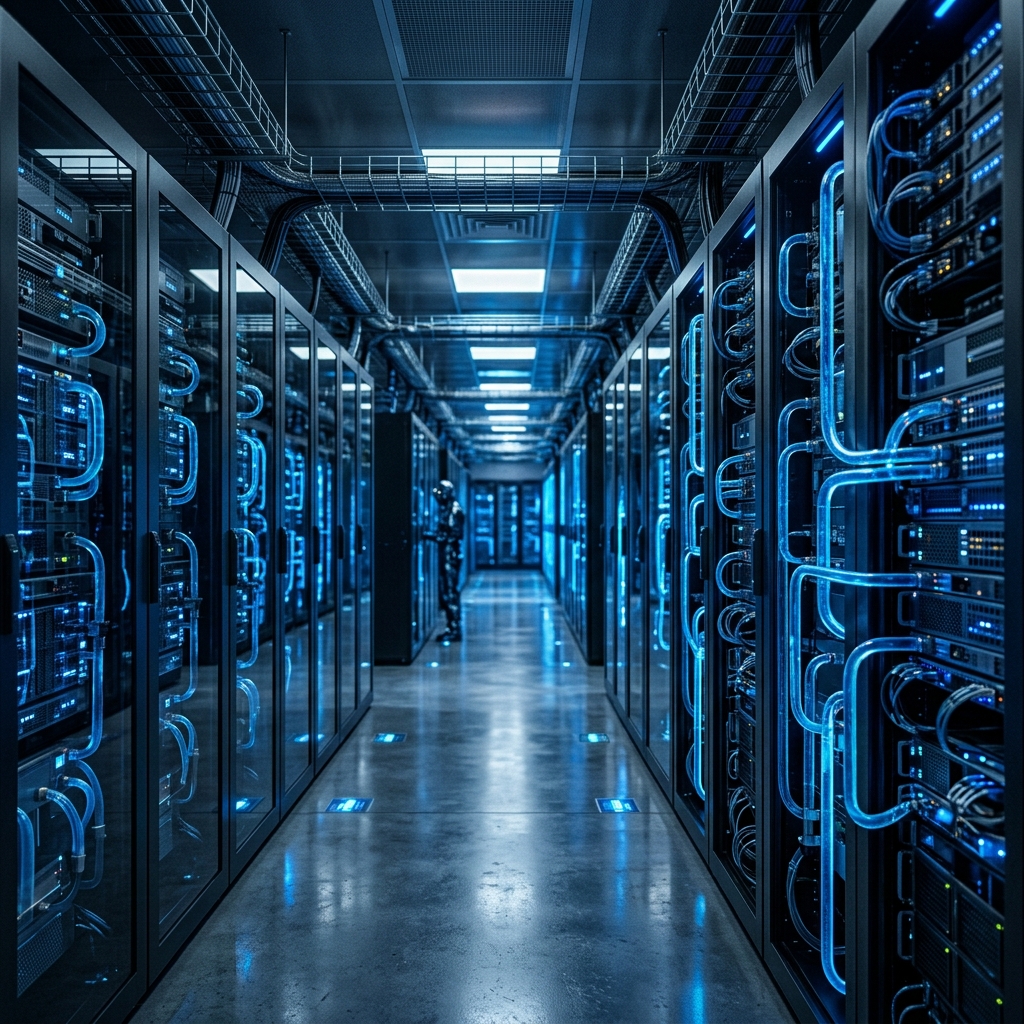
The global endeavor to build out massive AI infrastructure has hit a formidable physical bottleneck: the availability of fiber optic cabling. Industry intelligence reports now reveal a shocking disparity in material requirements, noting that AI-centric data centers require up to 36 times more fiber optic cabling than traditional, standard-server-based facilities. This exponential increase is the result of the ‘East-West’ traffic patterns inherent in distributed AI training, where tens of thousands of GPUs must communicate with each other with sub-microsecond latency.
To eliminate bottlenecks, architects are deploying high-density interconnect fabrics that essentially weave a dense web of glass throughout the data center, a requirement that far exceeds the needs of legacy cloud storage or web hosting.
The 36x multiplier effectively means that for every single AI data center brought online, the supply chain must provide enough cabling to outfit thirty-six traditional centers. This surge has decimated existing inventories and pushed the manufacturing capacity of optical materials to its absolute breaking point. The bottleneck is not simply in the assembly of the plastic-coated cables but in the production of high-purity synthetic silica glass preforms.
Synthetic silica is produced through a complex chemical vapor deposition process that cannot be easily scaled or accelerated. Consequently, the shortage of this core material has caused lead times for fiber optic orders to skyrocket, with customers now waiting more than 12 months for standard deliveries.
This scarcity is reflected in the order books of the world’s leading fiber manufacturers. Major players, particularly in China which accounts for over 50% of global optical fiber production, have officially declared that their production capacity is fully booked through 2027. This backlog indicates that the pace of AI infrastructure deployment will no longer be dictated solely by how fast Nvidia can produce GPUs or how quickly power plants can be built, but by the availability of the glass needed to connect them.
The strategic importance of the fiber supply chain is now being elevated to the same level as semiconductor lithography.
Furthermore, the capital-intensive nature of building new glass drawing towers and preform fabrication facilities means that supply will remain inelastic for the foreseeable future. Any new capacity announced today will likely not be operational until the 2027 backlog has already taken its toll. As tech giants like Amazon and Microsoft continue to announce multi-billion dollar data center expansions, they are increasingly finding themselves in a bidding war for physical infrastructure components that were once considered commodities.
This physical reality contrasts sharply with the software-centric narrative of AI; without the physical layer of optical glass, the most advanced algorithms in the world remain isolated and ineffective. The 2027 glass crisis highlights a critical disconnect between the digital ambition of the AI era and the physical constraints of the industrial age.