🔍 Executive Summary
- arXiv has announced a strict ban on AI-generated 'slop' and papers containing hallucinations to protect the integrity of scientific discourse.
- Submitters caught violating this policy will face a mandatory one-year suspension from the platform, effectively a 'yearlong vacation' from academic publishing.
- The policy addresses the growing threat of automated low-quality content that threatens to overwhelm human-led peer review processes and undermine scientific consensus.
Strategic Deep-Dive
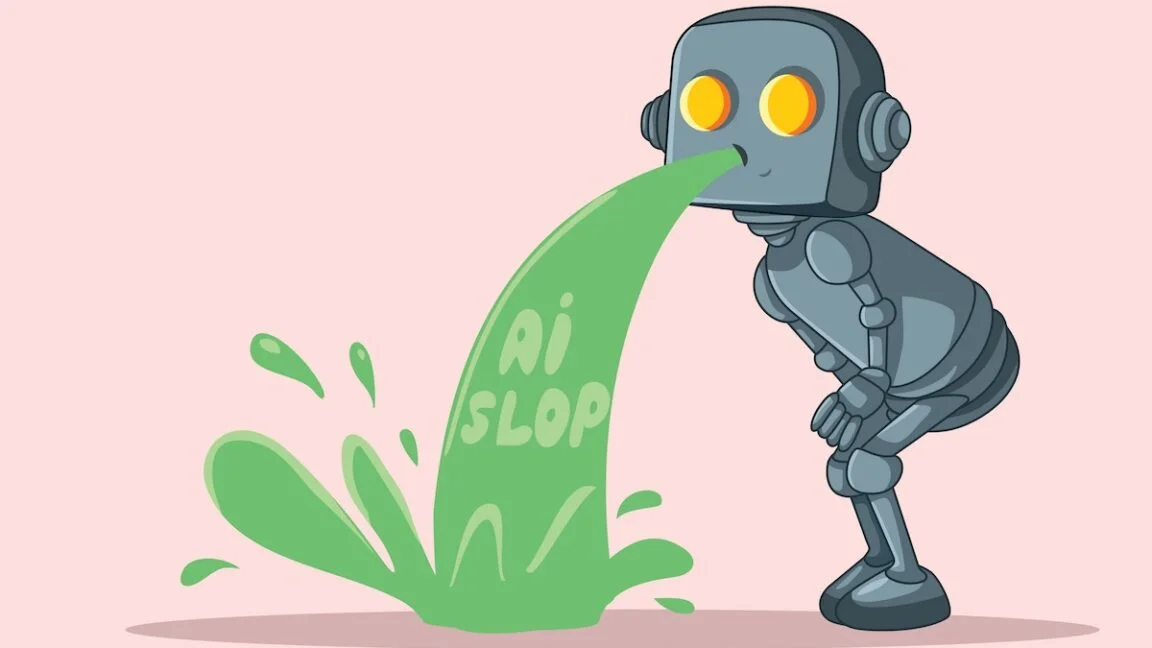
The academic landscape is currently facing a systemic crisis of credibility as the barrier to content generation collapses under the weight of generative AI. arXiv, the preeminent open-access archive for 2.4 million scholarly articles, has taken a decisive and controversial stand by banning what moderators call ‘AI-generated slop.’ This term refers to automated, low-effort content that mimics the structure of scientific inquiry without providing any original insight or empirical rigor. In a move that signals a significant shift in community management, arXiv has instituted a ‘yearlong vacation’—a 12-month ban—for any submitter found to be uploading papers that contain AI-generated hallucinations or fabricated data.
This policy is a direct response to the ‘hallucination’ problem, where Large Language Models (LLMs) produce confident but entirely incorrect statements, a phenomenon that could lead to dangerous misinformation in fields like physics or medicine.
The implications of this move reach deep into the mechanics of scientific publishing. For decades, preprint servers have relied on a high-trust environment where the community self-regulates. However, the ‘Dead Internet Theory’—the idea that the web is becoming increasingly dominated by bot-generated content—is now manifesting in academic circles.
If left unchecked, this ‘slop’ could inflate citation metrics, distort H-index values, and ultimately drown out legitimate researchers who lack the automated tools to compete with the sheer volume of AI output. arXiv’s intervention is an attempt to preserve the human element of discovery. One moderator emphasized that while AI tools for grammar correction or data analysis remain acceptable, the wholesale generation of research narratives is an existential threat to the scientific method itself.
Furthermore, this policy addresses the ‘bottleneck of verification.’ Human moderators and peer reviewers are a finite resource. When the submission queue is flooded with automated text, the quality of review for all papers suffers. By imposing a one-year ban, arXiv is creating a significant deterrent against researchers who might be tempted to use AI to inflate their publication counts.
This enforcement mechanism highlights a broader failure in current automated screening tools; despite advances in AI, we still lack a reliable, non-discriminatory ‘AI detector’ for academic prose. Consequently, the burden of proof falls back on the integrity of the individual researcher. This decision will likely force a re-evaluation of how academic prestige is measured and may encourage other platforms like BioRxiv or MedRxiv to adopt similar punitive measures.
In the long run, the ‘yearlong vacation’ is not just a punishment—it is a defensive moat built to ensure that scientific progress remains rooted in verifiable human intellect rather than the recursive echoes of machine learning models.