🔍 Executive Summary
- The invocation of the Thucydides Trap during the May 14 Xi-Trump summit underscores the structural conflict between the US and China, positioning Taiwan’s advanced semiconductor nodes and COUPE packaging technology as the primary theater of technical sovereignty.
Strategic Deep-Dive
The diplomatic landscape in Beijing on May 14, 2026, provided a stark backdrop for the evolving narrative of global semiconductor hegemony. When President Xi Jinping hosted Donald Trump and opened with the ‘Thucydides Trap,’ he wasn’t merely citing ancient history; he was defining the structural inevitability of the friction between a rising China and an established United States. The pivot point of this friction remains Taiwan, or more specifically, the technical sovereignty contained within TSMC’s fabs.
This summit effectively linked the destiny of two superpowers to the physical reality of silicon manufacturing, where breakthrough technologies like COUPE (Compact Universal Photonic Engine) have become the ultimate instruments of statecraft.
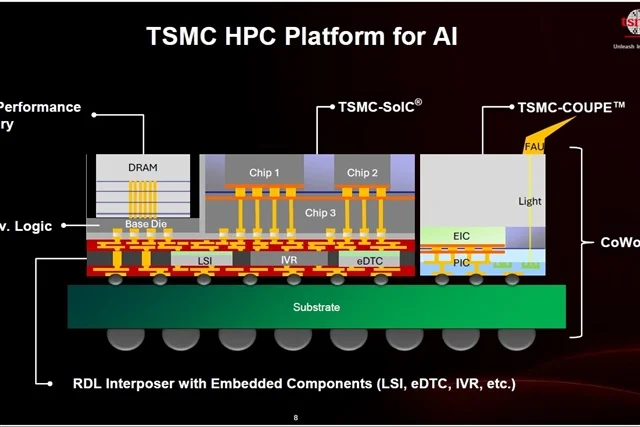
Beyond the established CoWoS (Chip on Wafer on Substrate) packaging, TSMC’s COUPE technology represents the next frontier in advanced heterogeneous integration. By integrating electronic ICs and photonic ICs into a single, compact module, COUPE addresses the critical bottleneck of power consumption and interconnect latency in AI clusters. This level of technical sophistication is why the US seeks to maintain a ‘silicon shield’ around Taiwan, ensuring that the manufacturing of 2nm nodes and beyond remains shielded from Chinese influence.
Xi’s warning that improper handling of the Taiwan issue could lead to ‘clashes and conflicts’ reflects Beijing’s perception that Western control over these hardware pivots is a direct threat to China’s long-term technological evolution.
Technical sovereignty in the AI era means that the nation dominating the packaging of high-performance compute resources dictates the pace of global progress. For the hardware industry, the Xi-Trump summit signals a definitive end to the era of ‘blind globalization.’ We are entering a phase of ‘Silicon Geopolitics,’ where capital expenditure plans are dictated as much by diplomatic warnings as by market demand. TSMC is being pressured to diversify its geographic footprint to mitigate the risks discussed in Beijing, yet the most critical IP and advanced processes remain concentrated in Taiwan, preserving its status as a strategic pivot.
Furthermore, the integration of silicon photonics through COUPE suggests that the hardware battle is moving from simple transistor density to the ’nervous system’ of data centers—optical interconnects. The Thucydides Trap is being encoded into the very architecture of next-generation servers. If the supply chain for these components is disrupted by the ‘conflicts’ Xi alluded to, the global AI economy faces a catastrophic retrenchment.
The summit confirms that a breakthrough in advanced packaging is now as significant as a major diplomatic treaty. Tech architects must now navigate a landscape where technical excellence is inseparable from geopolitical resilience. As we move forward, the ability to maintain ’technical sovereignty’ while avoiding the kinetic manifestations of the Thucydides Trap will be the defining challenge of the decade for the entire hardware ecosystem.