🔍 Executive Summary
- At the high-stakes Trump-Xi summit, US Treasury Secretary Scott Bessent articulated a strategic pivot toward 'constrained high-intensity competition.' This framework aims to rigorously preserve America's technological lead in sectors like advanced semiconductors while establishing controlled mechanisms for limited economic engagement. This dual-track policy reflects a pragmatic recognition of the deep global economic interdependencies that make total decoupling a logistical and financial impossibility.
Strategic Deep-Dive
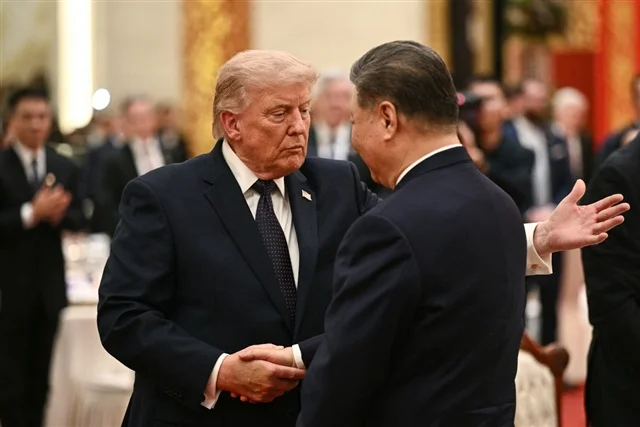
The strategic landscape of US-China relations is undergoing a fundamental transformation, moving toward what US Treasury Secretary Scott Bessent has formally defined as ‘constrained high-intensity competition.’ This policy shift, articulated during the pivotal Trump-Xi summit, signals a departure from the blunt instruments of the past toward a more surgically precise form of economic and technological statecraft. The Bessent Doctrine posits that while the United States will not compromise on its technological primacy in critical sectors—such as advanced logic chips, AI, and quantum systems—it also recognizes the inherent risks of a total economic divorce from the world’s second-largest economy.
In this ‘high-intensity’ phase, the US will likely double down on export controls and investment screenings to ensure that China remains generations behind in front-end semiconductor manufacturing. The ‘constrained’ element, however, introduces a pragmatic mechanism for ’limited economic engagement.’ This suggests a dual-track global economy: one track for strategic assets where zero-sum competition is the rule, and another for general commerce where trade can continue within prescribed boundaries. This approach is designed to provide a predictable, albeit friction-filled, framework for global corporations that have spent decades integrating Chinese manufacturing into their value chains.
From a data-driven perspective, the necessity of this shift is clear. With US-China bilateral trade still representing hundreds of billions of dollars, a complete decoupling would trigger significant inflationary pressures and supply chain shocks in the West. By adopting a policy of ‘controlled friction,’ the US Treasury seeks to mitigate these risks while maintaining maximum pressure on Beijing’s military-industrial complex.
For the global semiconductor industry, this means navigating a world where the definitions of ‘strategic’ versus ’non-strategic’ technology will be constantly contested. We expect to see more sophisticated export administration regulations that target specific ‘choke-point’ technologies rather than broad industry categories.
Furthermore, this policy shift indicates that the US is seeking to build a sustainable model for technological leadership that can withstand long-term friction with a primary rival. It moves the conversation away from temporary trade wars toward a permanent state of managed rivalry. For tech leaders in Silicon Valley and Hsinchu, the message is that market access to China will increasingly be treated as a privilege granted under specific conditions, rather than a right of free trade.
This new era of constrained competition will likely lead to a bifurcation of global tech standards, where companies must manage two distinct supply chains—one compliant with US security standards and another for the rest of the world.