🔍 Executive Summary
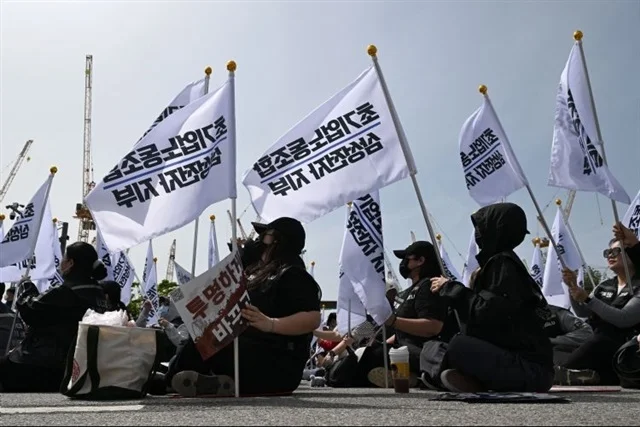
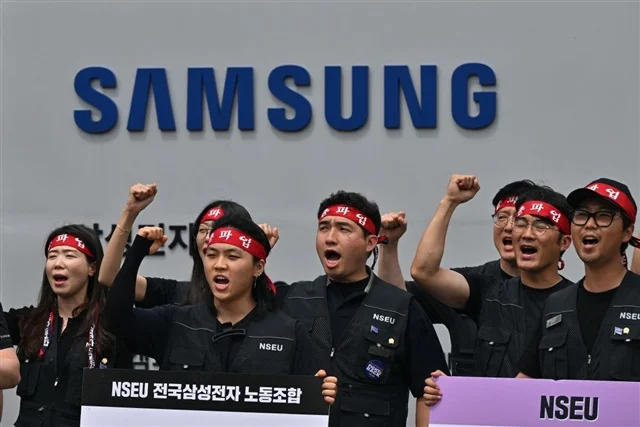
- Samsung Electronics, which commands approximately 45% of the global DRAM market, is facing a significant supply chain crisis as a planned 18-day labor strike looms. This internal dispute has introduced fresh uncertainty into the global memory market, causing spot prices to spike. Despite the South Korean government's proactive efforts to mediate and push for a resumption of management-labor negotiations, the potential for a prolonged production halt remains a primary driver of market volatility.
Strategic Deep-Dive
The global semiconductor industry is currently navigating a period of intense volatility as Samsung Electronics, the undisputed titan of the memory sector, stands on the precipice of a localized labor crisis with global ramifications. The announcement of a scheduled 18-day strike represents a dramatic escalation in the ongoing dispute between Samsung’s management and its labor union. From the perspective of a data journalist, the sheer scale of Samsung’s market influence cannot be overstated: with a dominant 45% share of the global DRAM market and a substantial foothold in NAND flash, any disruption to its production lines sends immediate shockwaves through the entire electronic component ecosystem.
The planned 18-day duration is particularly alarming for industry analysts. In the high-precision world of semiconductor fabrication (fabs), operations are designed for 24/7 continuity. A total work stoppage of nearly three weeks could lead to catastrophic yield losses, as restarted equipment requires extensive recalibration and interrupted chemical processes can ruin entire batches of advanced wafers.
This technical reality is what industry insiders describe as ‘fresh uncertainty,’ a variable that algorithmic trading and procurement departments are struggling to price accurately. Consequently, we are witnessing a sharp uptick in spot prices for DDR5 and LPDDR5 modules, as buyers move to secure buffer stocks in anticipation of a supply vacuum.
Recognizing that a domestic labor issue could metastasize into a global economic hurdle, the South Korean government has intervened with significant urgency. The Ministry of Employment and Labor is reportedly applying pressure on both parties to find a middle ground before the strike officially commences. This government-led mediation aims to preserve national economic security, as semiconductor exports account for nearly 20% of South Korea’s total outbound shipments.
However, the gap between labor demands and management’s offer remains wide, particularly regarding performance-based bonuses and transparency in profit sharing.
For global OEMs such as Apple, Dell, and HP, the situation presents a critical procurement challenge. If the strike proceeds as planned, the resulting contraction in supply could lead to a ‘bullwhip effect,’ where initial shortages lead to over-ordering and further price inflation. Historically, Samsung has been a stabilizing force in memory pricing, but this labor-induced risk has temporarily inverted that role.
As the strike deadline approaches, the interaction between South Korean policy intervention, labor resolve, and corporate contingency planning will remain the primary driver of memory market sentiment. The next two weeks will be a litmus test for Samsung’s operational resilience and its ability to maintain its lead in an increasingly fragile global supply chain.