🔍 Executive Summary
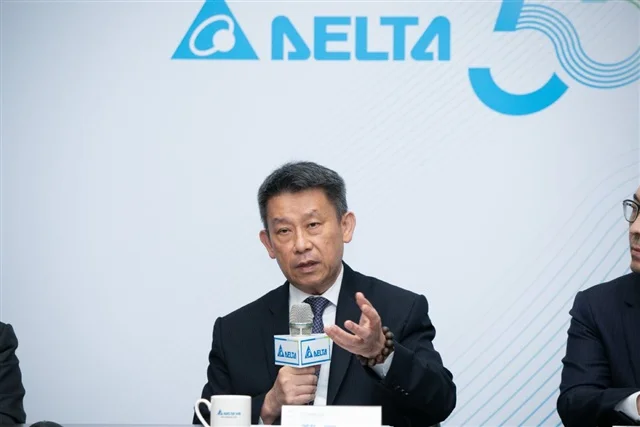
- 델타 일렉트로닉스의 핑 쳉 회장은 글로벌 고객사들의 재생 에너지 요구가 강화됨에 따라, RE100 목표를 달성하지 못하는 기업은 수주 경쟁에서 즉각 배제될 것이라고 경고했습니다. 이는 대만의 녹색 전력 부족이 단순한 환경 문제를 넘어 반도체 및 전자 산업 전체의 존립을 위협하는 ‘비관세 장벽’으로 작용하고 있음을 시사합니다.
Strategic Deep-Dive
The Shift from Voluntary CSR to Mandatory Procurement Compliance
Ping Cheng, Chairman of Delta Electronics, has articulated a strategic warning that marks a definitive shift in the global technology manufacturing landscape. According to Cheng, RE100 (100% Renewable Energy) compliance has transitioned from a Corporate Social Responsibility (CSR) aspiration to a non-negotiable procurement mandate. Major global customers are increasingly integrating stringent green energy requirements into their core vendor selection criteria.
For manufacturing giants like Delta, the failure to meet these environmental benchmarks no longer results in mere reputational damage; it leads to the immediate loss of high-value orders and exclusion from the world’s most lucrative supply chains. In this new paradigm, green energy reliability is becoming as critical as technical yield or cost efficiency.
Taiwan’s “Silicon Shield” Under Environmental Pressure
The report underscores a critical structural vulnerability within Taiwan’s high-tech ecosystem. While the island remains a global hegemon in semiconductor and electronics manufacturing, its renewable energy infrastructure is lagging behind the exponential growth in demand. This creates a dangerous “strategic bottleneck” where the physical capacity to produce advanced chips is high, but the legal and environmental capacity to sell them into Western markets is shrinking.
As multinational corporations tighten their ESG oversight, Taiwan’s reliance on traditional energy sources is emerging as a significant liability. The tension between maintaining intensive manufacturing output and adhering to zero-carbon mandates is pushing companies to seek energy-rich alternatives outside their home jurisdictions, potentially leading to a fragmentation of the domestic tech cluster.
RE100 as a De Facto Non-Tariff Trade Barrier
From a senior analyst’s perspective, the escalation of RE100 requirements functions as a sophisticated non-tariff barrier to trade. By setting environmental standards that are difficult to achieve in specific geographic regions, global procurement leaders are effectively reshaping the competitive landscape. This “Green-only” supply chain requirement creates a high-stakes environment for Asian manufacturers who operate in markets with limited renewable resources.
Cheng’s observations reflect the urgent need for a massive overhaul of Taiwan’s energy policy to protect its economic security. If the local green power supply cannot be scaled rapidly, the island risks a “hollowing out” of its tech sector as Tier-1 suppliers migrate to regions where RE100 compliance is more feasible. Consequently, the resolution of green power supply issues is no longer an environmental debate; it is a battle for the preservation of Taiwan’s dominance in the global technology manufacturing hierarchy.