🔍 Executive Summary
- The world's leading preprint repository, ArXiv, has instituted a mandatory one-year suspension for authors who submit papers containing unchecked AI-generated content, signaling a major policy shift to preserve academic rigor.
Strategic Deep-Dive
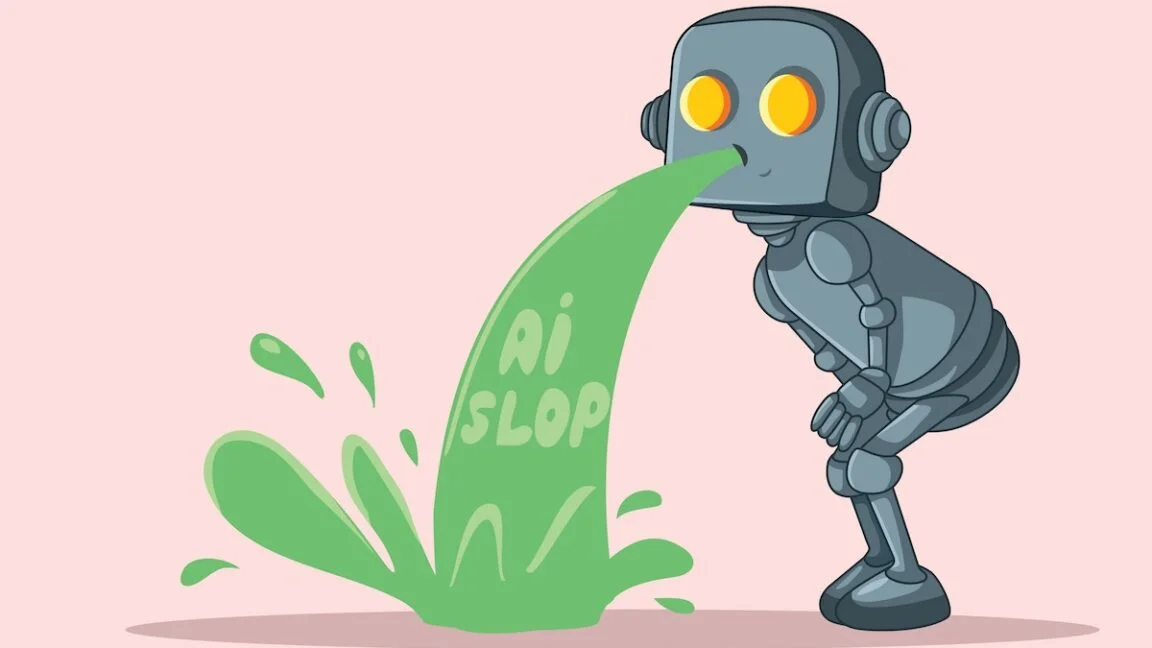
For more than three decades, ArXiv has stood as the foundational pillar of open-access research, serving as the primary distribution channel for preprints across critical scientific disciplines including computer science, mathematics, and physics. This platform has historically enabled the rapid dissemination of breakthroughs before they undergo the slow, traditional peer-review process. However, the rise of large language models (LLMs) has introduced a new, systemic threat to the sanctity of this academic ecosystem: the phenomenon known as ‘AI slop.’ This term refers to research papers that are heavily generated by artificial intelligence and uploaded to repositories without adequate human oversight, rigorous checking, or even a basic reading by the named authors.
In response to this growing trend of technological gatekeeping failure, Thomas Dietterich, the chair of ArXiv’s computer science section, has announced a landmark policy designed to enforce research standards and deter the misuse of generative AI in academia. Under the new guidelines, researchers who submit papers showing obvious signs of unchecked AI generation will face a severe penalty: a mandatory one-year ban from submitting any further work to the repository. This move represents a declaration of war against the erosion of academic integrity and the ‘slop’ that threatens to overwhelm human-led scientific discourse.
The implications of this policy shift are profound. ArXiv is not merely a digital filing cabinet; it is a high-velocity communication tool for the global scientific community. If this pipeline becomes flooded with AI-generated noise, the efficiency of global scientific progress could be significantly hindered.
By targeting the distribution of computer science, math, and physics papers, ArXiv is addressing the sectors most susceptible to automated content generation due to their technical and structured nature. This policy emphasizes the necessity of the ‘human-in-the-loop’ model, where researchers remain fundamentally responsible for the content that bears their names. The potential long-term impact on researcher credibility is substantial.
In the highly competitive ‘publish or perish’ environment, a one-year ban serves as a significant deterrent. A year-long absence from ArXiv could stall a researcher’s career trajectory, limit their visibility to peers and funders, and permanently stain their professional reputation. Dietterich’s announcement highlights a broader consensus within the scientific community that while AI can be a powerful tool for assistance in data processing or formatting, it cannot replace the critical eye, ethical responsibility, and original thought of the human scholar.
As the preprint ecosystem continues to evolve, ArXiv’s stand against AI slop sets a global precedent, reinforcing the idea that academic rigor is non-negotiable, even in an era defined by rapid technological automation. This policy is an essential protective measure to ensure that ArXiv remains a trusted source of verifiable human intelligence for decades to come.