🔍 Executive Summary
- This experiment marks a pivotal shift from cloud-dependent IoT to autonomous edge AI, where local LLMs manage real-time home security interactions without sacrificing user privacy.
Strategic Deep-Dive
The integration of local Large Language Models (LLMs) into video doorbells represents a fundamental paradigm shift in the Internet of Things (IoT) landscape, moving away from centralized cloud architectures toward decentralized edge computing. Historically, smart home security devices functioned as mere conduits, capturing data and transmitting it to hyper-scale data centers for processing. This reliance on the cloud introduced significant friction, most notably in terms of latency and profound privacy risks.
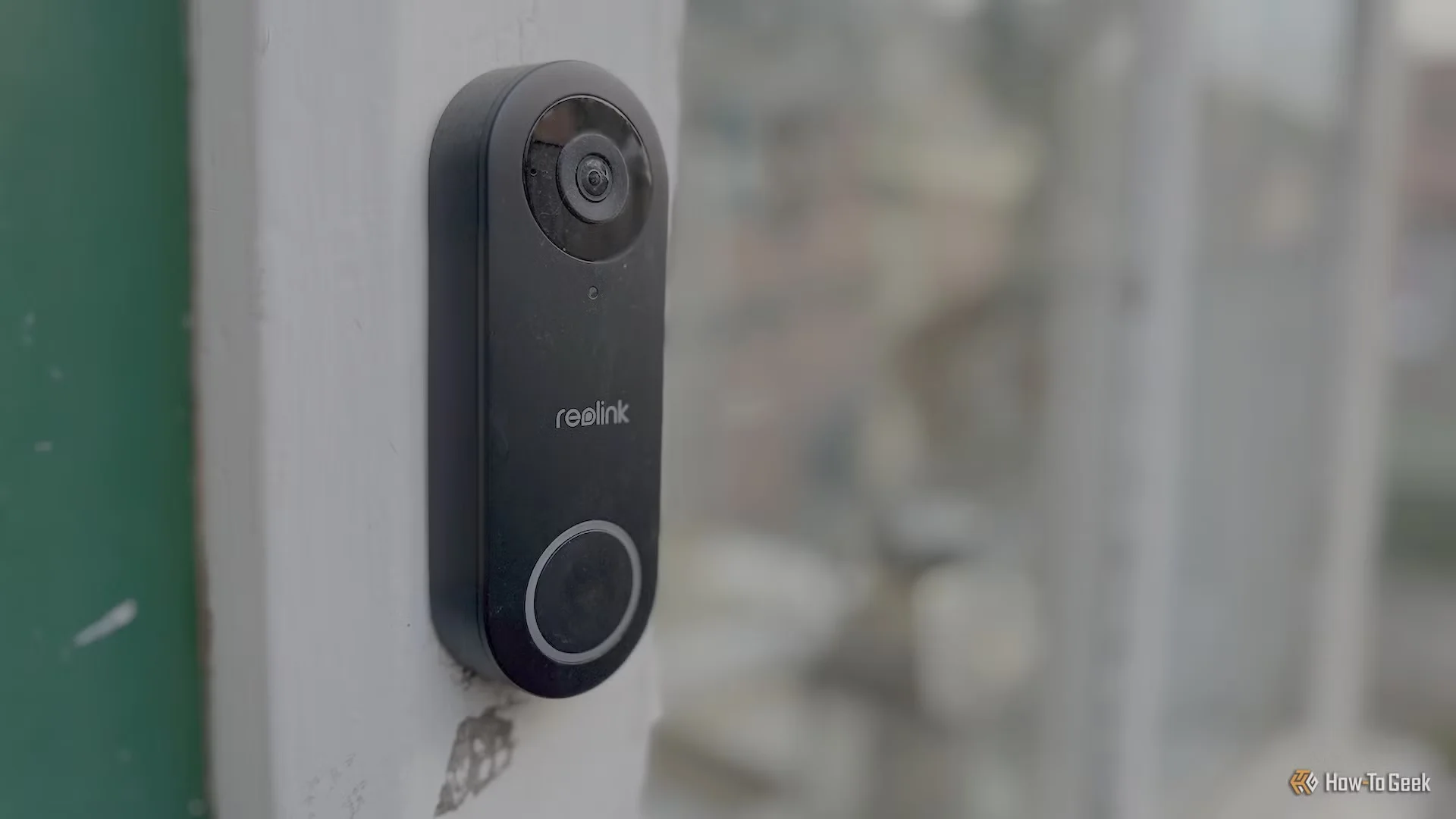
The recent technical demonstration involving a Reolink video doorbell proves that the hardware is finally catching up with the software requirements of modern AI. By running models locally on dedicated edge hardware—such as NVIDIA Jetson modules or high-performance NPUs embedded in home servers—the system can achieve near-instantaneous response times that cloud-based solutions simply cannot match.
From a technical standpoint, the implementation relies on quantized LLMs, such as Llama-3 or Mistral variants, compressed to 4-bit or 8-bit integers to fit within the thermal and memory constraints of edge devices. This quantization ensures that the model can perform complex natural language understanding (NLU) tasks without a massive power draw. The architectural benefits are multifaceted.
First, from a security perspective, local processing ensures that sensitive biometric and behavioral data never leaves the home’s local area network (LAN). This effectively mitigates the risks associated with data breaches at the service provider level or unauthorized surveillance access. Second, the reduction in latency allows for fluid, context-aware interactions.
For instance, the doorbell can distinguish between a persistent solicitor and a delivery person with a package, offering specific instructions or warnings based on real-time visual analysis.
Furthermore, the emergence of the Matter and Thread protocols is accelerating this trend. These standards allow local devices to communicate directly with one another, bypassing the cloud and reducing points of failure. When a local LLM is added to this mesh, the entire smart home becomes an autonomous reasoning engine.
The “Privacy vs. Power” trade-off is often cited as a hurdle, as high-performance local inference requires more expensive hardware. However, as specialized silicon becomes more affordable, the cost of the hardware is offset by the elimination of monthly cloud subscription fees.
Moreover, the robustness of the system is greatly enhanced; even during a total internet outage, the home’s security intelligence remains operational. This democratization of high-quality local inference tools and the increasing openness of hardware manufacturers to local API integration will likely make edge AI the gold standard for future smart home security. As we move forward, the success of this local LLM integration suggests a future where the ‘Smart Home’ is defined not by its connection to the internet, but by its internal capacity for autonomous reasoning and private data management, setting a new benchmark for consumer trust in the digital age.