🔍 Executive Summary
- Microsoft has announced the broad rollout of Advanced Shader Delivery for Windows 11, achieving a 95% reduction in initial launch times. By utilizing precompiled shaders on AMD GPUs, titles like Forza Horizon 6 can now boot in just 4 seconds, down from the previous 90-second benchmark.
Strategic Deep-Dive
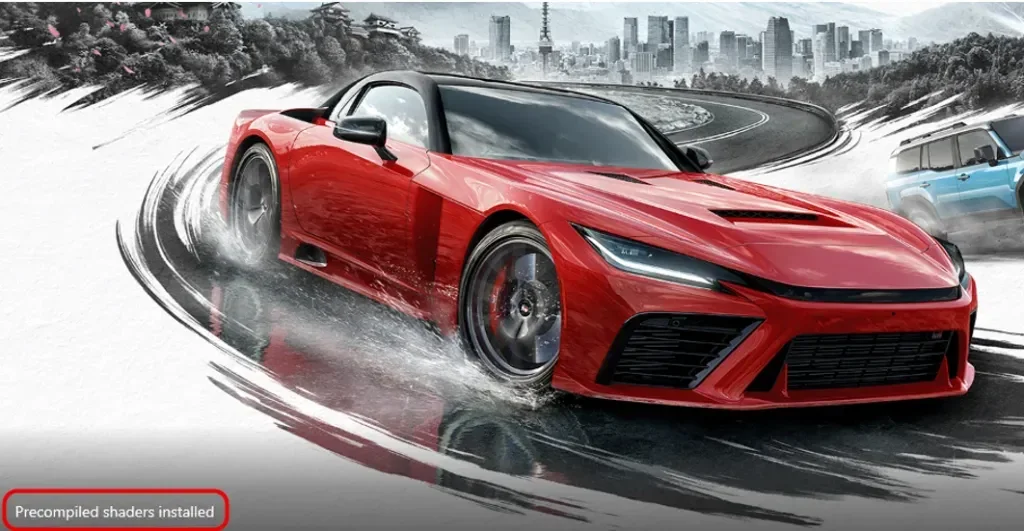
Microsoft is officially bringing its Advanced Shader Delivery (ASD) technology to the broader Windows 11 PC ecosystem, marking a significant milestone in the evolution of PC gaming performance. Initially introduced last year as a specialized optimization for the ‘Xbox ROG Ally’ handheld devices, the technology has now matured enough to be implemented across general Windows-based gaming rigs, specifically targeting the elimination of long loading sequences and shader compilation stutters that have historically plagued PC gamers. The flagship demonstration of this technology’s impact is seen in the upcoming Forza Horizon 6.
Microsoft claims that on systems equipped with compatible AMD GPUs, the initial boot time has been slashed from 90 seconds to a mere 4 seconds—a staggering 95% reduction in latency that fundamentally alters the user experience.
The technical foundation of Advanced Shader Delivery lies in the strategic use of precompiled shaders. In traditional PC gaming environments, the software often has to compile shaders locally on the user’s hardware during the first launch or after a driver update. This process, known as Just-In-Time (JIT) compilation, is notorious for creating massive CPU bottlenecks and I/O overhead as the system struggles to translate high-level code into machine-level instructions specific to the GPU.
By streamlining how these shaders are delivered and processed, Microsoft and AMD have effectively removed a primary barrier. The ASD system works by providing pre-validated shader binaries that match the target GPU architecture—such as AMD’s RDNA line—allowing the Windows 11 kernel to bypass the local compilation stage entirely. This ensures that the GPU can access and execute necessary graphical instructions almost instantaneously upon launching the executable.
This integration represents a deep, driver-level collaboration between Microsoft’s software stack and AMD’s hardware architecture. Beyond the raw speed, the move from specialized handheld hardware like the ROG Ally to the vast, fragmented landscape of Windows 11 PCs suggests that Microsoft has developed a robust abstraction layer capable of handling diverse hardware configurations. Traditionally, console gaming offered a superior ‘instant-on’ experience because developers knew exactly what hardware they were targeting.
Microsoft’s ASD technology effectively bridges this gap, bringing console-like predictability to the chaotic world of PC hardware. By reducing a 90-second wait to 4 seconds, Microsoft is not just saving time; it is changing the cadence of play. Users can jump into high-fidelity open-world environments without the traditional barriers of entry, making high-end PC gaming feel more responsive than ever before.
As Windows 11 continues to position itself as a gaming-first operating system, the Advanced Shader Delivery system, bolstered by AMD’s sophisticated driver support, stands as a critical pillar in Microsoft’s strategy to harmonize performance profiles. This development signals a future where software-hardware co-design becomes the standard for performance gains, rather than relying solely on raw silicon power. For the industry, this means a shift away from the disk I/O and CPU-bound bottlenecks of the past, paving the way for more complex, visually stunning games that can load in the blink of an eye.
The data synthesis provided by this rollout confirms that the synergy between OS-level management and GPU architecture is the key to unlocking the next generation of real-time rendering efficiency.