🔍 Executive Summary
- As the lines between still and motion blur, DaVinci Resolve’s node-based architecture is unseating Adobe Lightroom by offering a more robust, non-destructive, and visually logical approach to high-end color science.
Strategic Deep-Dive
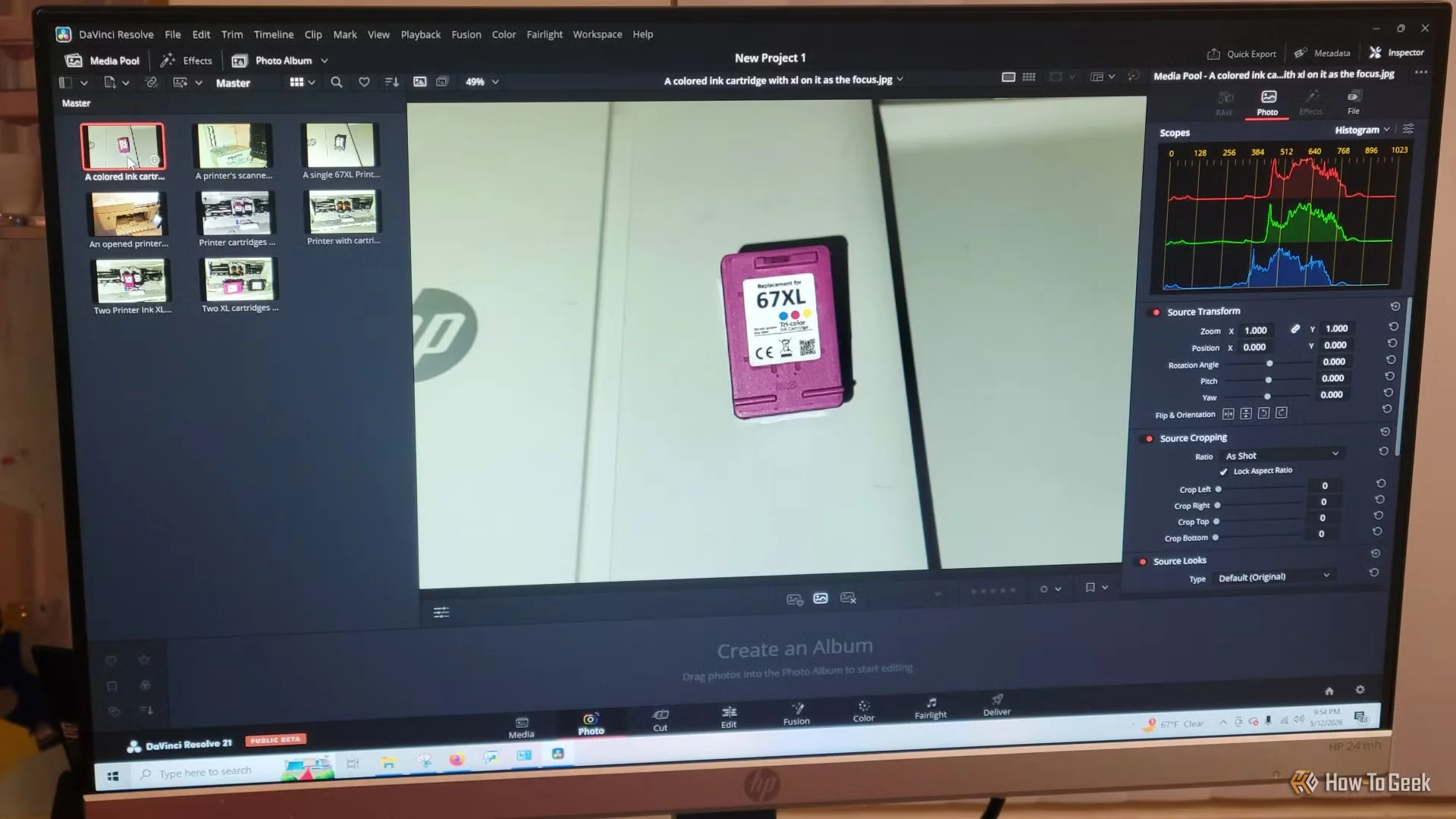
For over a decade, Adobe Creative Cloud has enjoyed a near-monopoly on the professional creator’s desktop. However, we are witnessing a significant ‘unbundling’ of this suite as specialists seek out best-in-class performance over all-in-one convenience. The most surprising shift is the migration of photographers from Adobe Lightroom to Blackmagic Design’s DaVinci Resolve.
What started as a niche trend among hybrid shooters has evolved into a full-scale exodus, driven by a fundamental technological differentiator: the node-based workflow versus the traditional layer-based or slider-centric paradigm.
To understand this transition, one must look at the cognitive and technical architecture of image manipulation. Adobe Lightroom operates on a linear stack; adjustments are applied in a predetermined sequence, and while non-destructive, the relationship between these adjustments is often opaque. DaVinci Resolve, however, utilizes a node graph—a visual representation of the image’s data path.
Each node acts as a discrete processing unit for specific tasks like primary color correction, secondary grading, or spatial noise reduction. This non-linear structure allows for parallel processing and complex routing that is simply impossible in a vertical stack. For the high-end photographer, this means unparalleled control over color science.
You can branch off a specific signal, apply a highly targeted mask, and then blend it back into the main pipeline without degrading the underlying RAW metadata. This is why DaVinci Resolve, a tool built for the rigors of Hollywood digital intermediate (DI) workflows, is proving to be a superior NLE and photo processing engine.
The psychological hurdle of moving from the ‘painting’ metaphor of layers to the ‘coding’ metaphor of nodes is non-trivial. It requires the user to think in terms of logic and data flow rather than just visual stacking. Yet, once this conceptual bridge is crossed, the creative freedom is intoxicating.
Photographers find that the node-based system allows for a level of granular precision in color grading that makes Lightroom feel like a toy. Moreover, as the industry moves toward a world where ‘content’ is rarely just a still image, having a single, high-performance engine that handles both 12-bit RAW stills and 8K video with the same precision is a massive competitive advantage. Adobe’s dominance was built on integration, but that integration has led to software bloat and a lack of innovation in core processing logic.
The rise of DaVinci Resolve in the photography market is a clear signal: today’s professionals are willing to trade a comfortable ecosystem for the raw power and architectural flexibility of a specialized tool. The ‘unbundling’ is not just about price—it’s about the liberation of the creative workflow through superior computation.