🔍 Executive Summary
- Nan Ya PCB, a leading Taiwanese IC substrate manufacturer, expects its capital spending to hit record levels in 2026. This aggressive expansion is driven by the soaring demand for advanced packaging substrates—particularly high-layer count ABF—required by high-performance AI chips, positioning the company as a critical supplier in the global AI hardware infrastructure.
Strategic Deep-Dive
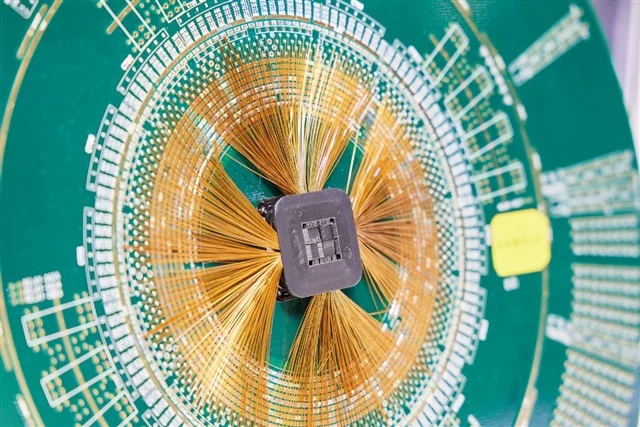
Nan Ya PCB is positioning itself at the epicenter of the AI hardware boom by committing to record-breaking capital expenditures for 2026. The Taiwanese firm anticipates that the rebound in spending will correlate directly with the accelerating integration of AI computing into data centers and edge devices. At the heart of this growth is the increasing complexity of Integrated Circuit (IC) substrates, particularly those utilizing Ajinomoto Build-up Film (ABF).
As AI chips move toward chiplet designs—which combine multiple specialized silicon dies on a single package—the physical area and layer count of the substrates have intensified, necessitating sophisticated manufacturing processes that Nan Ya is now scaling up to meet.
Advanced packaging is no longer just a peripheral step in semiconductor manufacturing; it is a critical performance enabler. High-performance computing (HPC) chips like the next-generation Nvidia Blackwell series require substrates that can handle significantly higher heat dissipation and denser interconnection points. Traditional substrate manufacturing cannot meet the low-CTE (Coefficient of Thermal Expansion) requirements of these massive multi-die packages.
By investing heavily in capacity expansion and low-loss material technology, Nan Ya PCB aims to alleviate potential supply bottlenecks that could hinder the growth of its major AI chip customers. The company’s strategic focus on the high-end segment of the market reflects a broader industry trend where substrate manufacturers are becoming indispensable partners to foundries and fabless firms alike. As the 2026 capex cycle begins, Nan Ya’s ability to successfully ramp up its new capacity while maintaining high yields for large-format substrates will be a key factor in determining its long-term profitability and market share in the competitive global electronics landscape.