🔍 Executive Summary
- TSMC’s long-standing dominance is under threat as the AI revolution and US geopolitical mandates force a shift toward a multi-polar semiconductor manufacturing landscape.
Strategic Deep-Dive
The semiconductor industry is witnessing a historical realignment as the era of TSMC’s unchallenged hegemony begins to fade. For nearly a decade, the Taiwanese giant has been the sole gatekeeper for the world’s most advanced silicon, creating a single point of failure that the global economy can no longer ignore. The catalyst for this disruption is twofold: the insatiable hardware requirements of the Artificial Intelligence (AI) revolution and the aggressive geopolitical maneuvering of the United States.
As generative AI scales, the sheer volume of advanced processing power needed is outstripping TSMC’s available capacity, forcing major tech titans—who were once loyal TSMC customers—to diversify their foundry partners to ensure business continuity and satisfy market demand.
Central to this shift is the influence of Washington and the CHIPS and Science Act. The U.S. government has made it a matter of national security to de-risk the semiconductor supply chain by reducing reliance on facilities located in geopolitically volatile regions.
This policy shift has effectively subsidized the rise of viable competitors. Intel Foundry, once a laggard in advanced nodes, is leveraging massive federal support and a renewed focus on its 18A process to position itself as a Western alternative to TSMC. Simultaneously, Samsung Electronics is utilizing its immense capital and its new Taylor, Texas facility to offer a diversified manufacturing footprint.
In the 2026 landscape, a foundry’s value is no longer determined solely by its transistor density, but by its geographical safety and alignment with U.S. industrial policy. This environment is creating a ‘forced competition’ where yield superiority is being weighed against geopolitical risk management.
Moreover, the technical nature of AI silicon is facilitating this market fragmentation. Unlike standard mobile chips, AI processors require complex co-packaging with High Bandwidth Memory (HBM) and advanced thermal management solutions. This has shifted the battlefield from front-end wafer fabrication to back-end ‘system-level’ manufacturing.
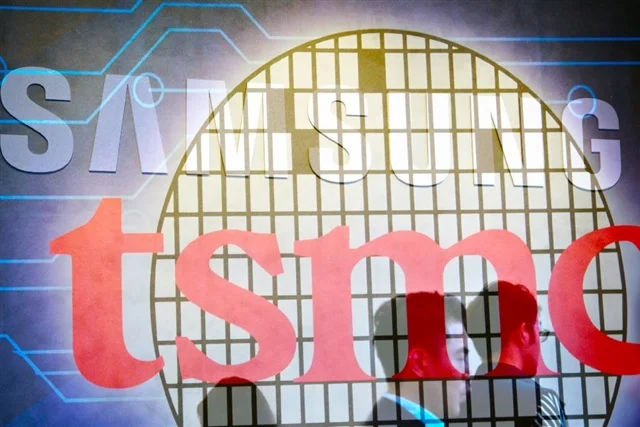
Samsung’s integrated model, which combines memory, logic, and packaging, and Intel’s ‘System Foundry’ approach are becoming increasingly attractive to AI firms looking for a one-stop-shop to reduce latency and assembly costs. While TSMC remains the leader in pure-play yield, the ‘good enough’ threshold for AI chips is being met by rivals faster than anticipated. As these competitors scale, the historical monopoly is eroding, giving way to a triad of foundries—TSMC, Samsung, and Intel—that will define the next decade of compute.
This transition toward a multi-polar semiconductor world is not merely a change in market share; it is a fundamental redesign of the digital backbone of civilization, driven by the realization that in the AI era, concentrated power is a strategic liability. The question is no longer whether TSMC will be challenged, but how successfully it can reinvent itself in an age where policy and AI demand are redrawing the chip map.