🔍 Executive Summary
- Samsung Electronics faces an unprecedented 18-day strike threat from May 21 to June 7, posing a severe risk of production downtime and supply chain disruption for the global DRAM and NAND markets.
Strategic Deep-Dive
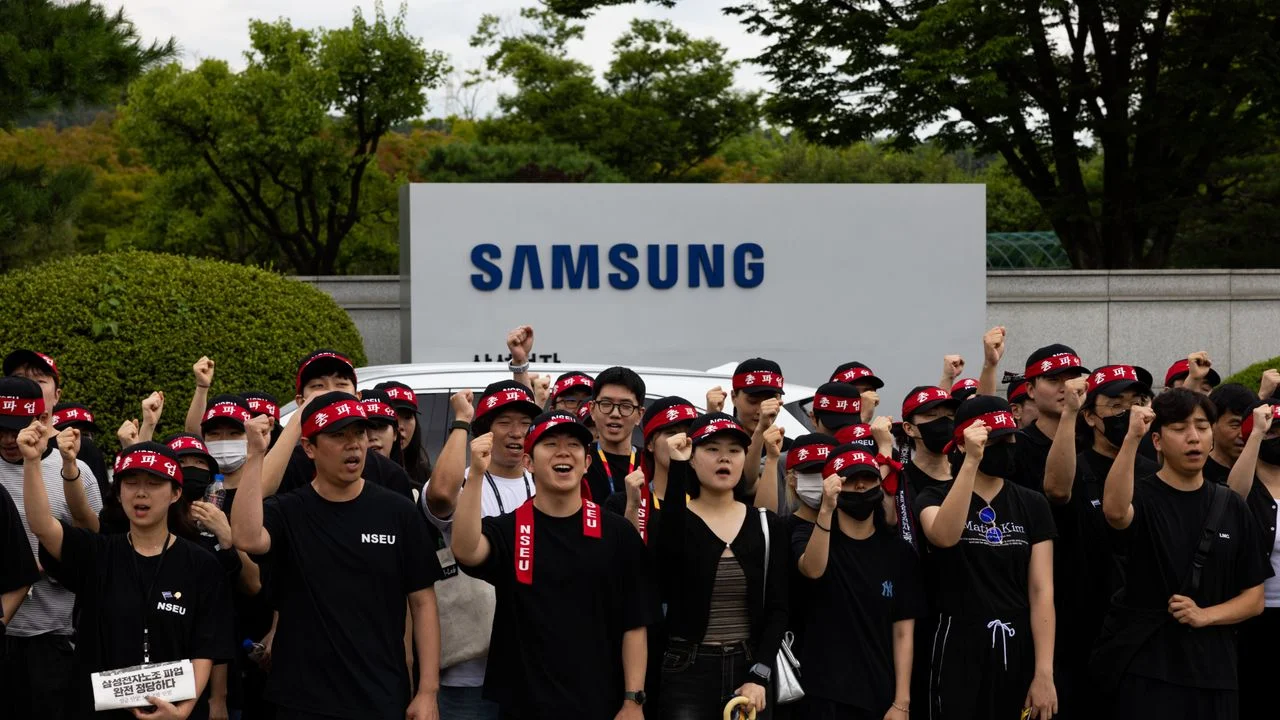
Samsung Electronics is currently navigating its most severe labor crisis to date, a situation that threatens to destabilize the global memory semiconductor ecosystem. On May 15, 2026, Samsung’s executive leadership took the unprecedented step of issuing a formal public apology, coupled with a proposal for unconditional negotiations to resolve the ongoing dispute with the National Samsung Electronics Union (NSEU). This strategic retreat by management highlights the gravity of the situation; in an industry defined by razor-thin margins and relentless innovation cycles, an internal fracture of this magnitude is a systemic threat to operational continuity.
However, the union has remained unmoved, confirming an 18-day strike period from May 21 to June 7, signaling a deep-seated breakdown in the corporate governance and labor-management architecture.
From the perspective of a data systems architect, the technical risks associated with an 18-day work stoppage are staggering. Semiconductor fabrication plants (Fabs) are highly integrated systems designed for continuous, steady-state operation. The manufacturing of a single DRAM or NAND chip involves over 700 individual process steps, many of which are sensitive to even minute fluctuations in environmental conditions or human intervention.
A sustained strike of nearly three weeks risks causing significant ‘downtime’—a term that, in this context, implies more than just a temporary halt. It involves the potential for mechanical degradation of lithography equipment, the contamination of chemical vapor deposition chambers, and the loss of thousands of ‘work-in-progress’ (WIP) wafers that may no longer meet the stringent yield variance standards required for high-performance computing (HPC) applications.
The global economic ramifications are equally profound. Samsung is a systemic anchor in the global memory supply chain. A significant disruption in its output would create a massive supply-side shock, particularly in the high-growth segments of DDR5 and HBM (High Bandwidth Memory).
Given that Samsung’s production accounts for a vast percentage of global memory capacity, any shortfall in its bit shipment targets will likely trigger price volatility across the spot and contract markets. Major hyperscalers and smartphone OEMs, who rely on just-in-time delivery for their product launches, could face months of delays. This labor dispute is no longer just a domestic issue for South Korea; it has become a critical bottleneck for the global AI revolution, which depends entirely on the reliable throughput of memory hardware.
As the strike deadline approaches, the industry is bracing for a potential readjustment of global supply chain strategies, as companies look to mitigate the ‘Samsung risk’ by diversifying their vendor portfolios even further.