🔍 Executive Summary
- Google is redefining the AI landscape by integrating its Gemini model into robotics, transforming generative intelligence into a 'physically capable AI' that can execute complex actions in the real world.
Strategic Deep-Dive
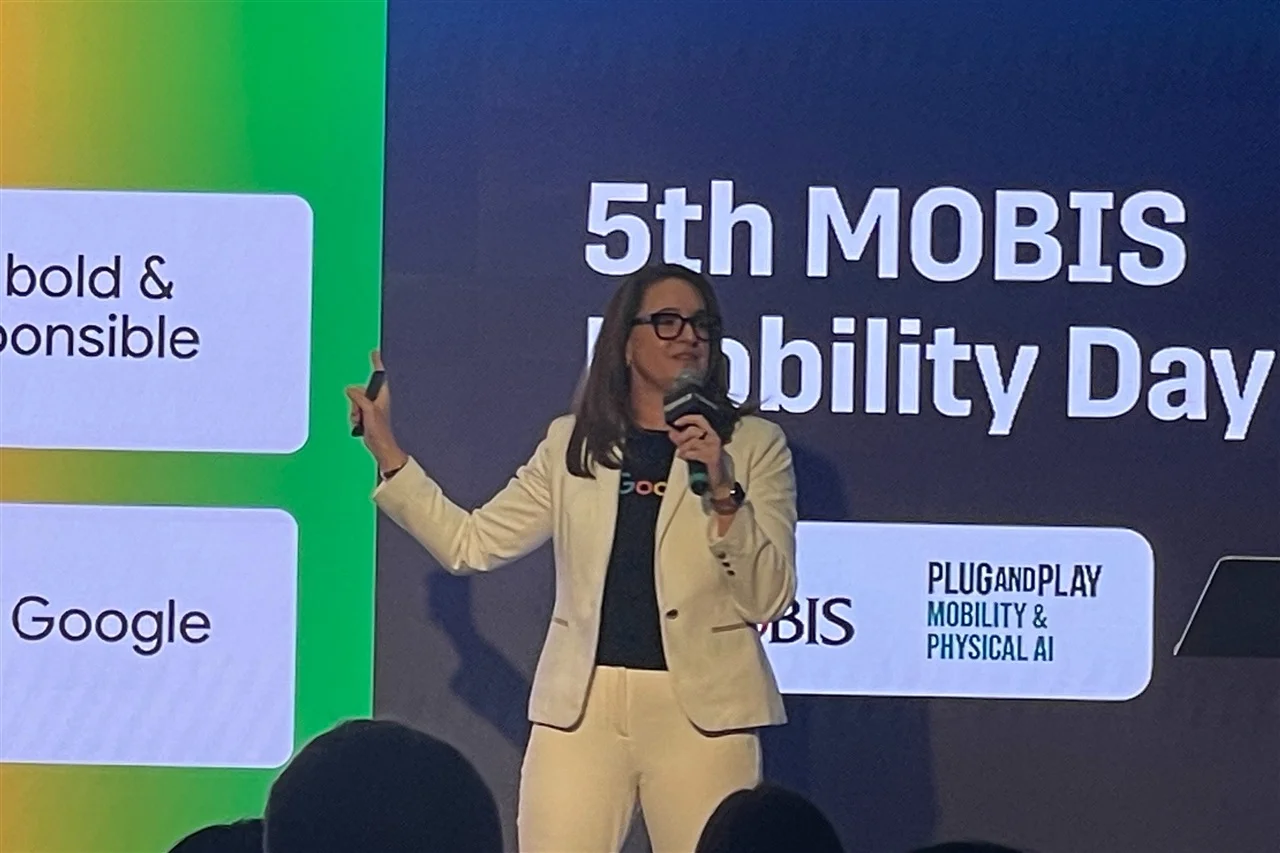
Google has signaled a transformative leap in its artificial intelligence strategy by announcing the integration of the Gemini model into the realm of robotics. This strategic move, detailed by Google strategist Kristin White during the 5th Mobis Mobility Day, marks the transition from ‘Generative AI’—which excels at synthesizing information and creating content—to ‘Physical AI,’ which possess the agency to act within and manipulate the material world. The vision presented is one where AI is no longer confined to a screen but is embodied in robotic systems capable of navigating complex urban environments and performing sophisticated logistical tasks.
This push is specifically targeted at the transportation and mobility sectors, where the ability to translate digital reasoning into kinetic action can address chronic labor shortages and operational inefficiencies.
The technical specifications required to bridge Gemini with robotic hardware are profoundly complex. At its core, this integration requires a seamless ‘perception-to-action’ pipeline. Gemini must process high-dimensional multimodal sensor data—including LIDAR point clouds, stereoscopic vision, and haptic feedback—to build a real-time semantic map of its surroundings.
The reasoning capabilities of a Large Language Model (LLM) allow the robot to understand high-level abstract goals, such as ‘deliver this package to the loading dock safely,’ and decompose them into a series of low-level motor commands. However, the latency requirements for such operations are measured in milliseconds; any significant delay between perception and action could result in catastrophic failure in a dynamic environment. Therefore, Google is likely focusing on hybrid architectures where localized, high-speed controllers handle immediate physical safety, while the cloud-based or edge-optimized Gemini model provides high-level cognitive guidance and situational awareness.
Furthermore, the evolution toward physically capable AI necessitates a new paradigm in training methodologies. Traditional AI training relies on static datasets, but robotics requires ’embodied AI’ training, where the model learns through interaction. Google is leveraging its immense computational infrastructure to run millions of concurrent simulations, allowing Gemini-powered agents to ‘practice’ physical tasks in virtual environments before deploying the learned weights to physical hardware.
This approach, often referred to as Sim2Real transfer, is critical for scaling robotic capabilities without the risk of damaging expensive hardware. As Google prepares for a broader rollout, possibly hinted at during Google I/O, the competition in the AI sector is shifting from linguistic prowess to mechanical competence. The company that successfully establishes a standardized intelligence layer for diverse robotic platforms—ranging from autonomous delivery vehicles to industrial manipulators—will effectively control the ‘Operating System’ of the physical world.
This move by Google suggests that the next decade of tech supremacy will be defined by the successful merger of silicon-based reasoning and steel-based execution, fundamentally altering the global mobility and logistics landscape.