🔍 Executive Summary
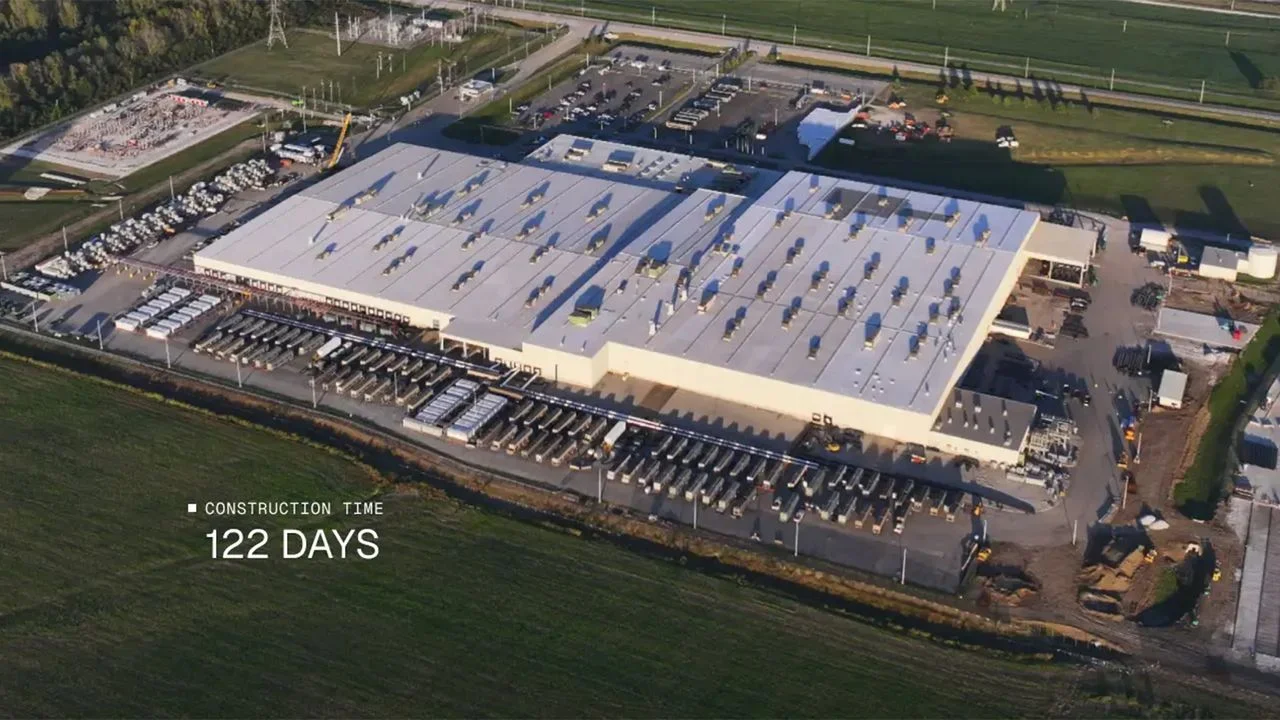
- SoftBank is pioneering a massive 10GW AI infrastructure project on a former US nuclear site, integrating $4.2 billion in grid enhancements and a strategic liability-free cleanup model to support next-generation compute densities.
Strategic Deep-Dive
As a lead data architect, analyzing SoftBank’s 10GW datacenter project reveals a fundamental shift in how the industry perceives the scalability of artificial intelligence. We are moving away from an era defined by chip count toward one defined by total power capacity. The decision to construct this facility on a former US nuclear weapons site is a masterful stroke of infrastructure arbitrage.
By repurposing land that already possesses some form of high-voltage transmission heritage, SoftBank bypasses the multi-year permitting hurdles that typically stifle greenfield developments of this magnitude. Furthermore, the financial structure—wherein a third party covers the uranium cleanup costs—serves as a critical de-risking mechanism. In the world of massive infrastructure, environmental liabilities are often the primary cause of project insolvency or indefinite delays.
By stripping these costs away, SoftBank ensures that every dollar of its capital expenditure is funneled directly into the high-value technology stack and the $4.2 billion grid upgrade.
From a technical perspective, the requirement for 10GW of power distribution within a single site is unprecedented. To put this in context, next-generation AI clusters, particularly those utilizing the NVIDIA Blackwell B200 and the upcoming Rubin architectures, demand extreme power densities. Traditional air-cooled racks are becoming thermally unviable as TDP (Thermal Design Power) per GPU climbs toward 1.2kW.
Managing a 10GW site requires an architectural shift toward advanced liquid-cooling systems—specifically direct-to-chip or immersion cooling—to manage the heat flux generated by millions of integrated cores. The $4.2 billion investment in grid infrastructure is not merely about pulling more wires; it involves the deployment of advanced substations, harmonic filters, and massive energy storage systems to buffer the volatile power swings inherent in high-performance computing workloads. Transmission loss at this scale becomes a major architectural bottleneck, necessitating the use of ultra-high voltage DC (UHVDC) systems within the campus to ensure that energy reaches the server floor with maximum efficiency.
The strategic synthesis here is clear: SoftBank is building a digital fortress. The integration of 10GW of new power generation capacity alongside the compute clusters suggests a move toward complete energy autonomy. In an era where national grids are becoming increasingly strained by the dual pressures of electrification and data processing, SoftBank is insulating its AI roadmap from external energy volatility.
This is a recognition that ‘Silicon Sovereignty’ is inextricably linked to ‘Energy Sovereignty.’ By controlling the entire chain—from the reclaimed land and the grid connection to the custom cooling loops and the final inference engine—SoftBank is positioning itself to be the dominant utility provider for the intelligence age. This project serves as a blueprint for the future of hyperscale development, where the success of an AI model is predicated on the industrial capacity to power it, cool it, and sustain it without interruption. The scale of 10GW isn’t just a number; it is the minimum threshold for leadership in the post-generative AI era, where compute demand is effectively infinite and energy availability is the only hard constraint.