🔍 Executive Summary
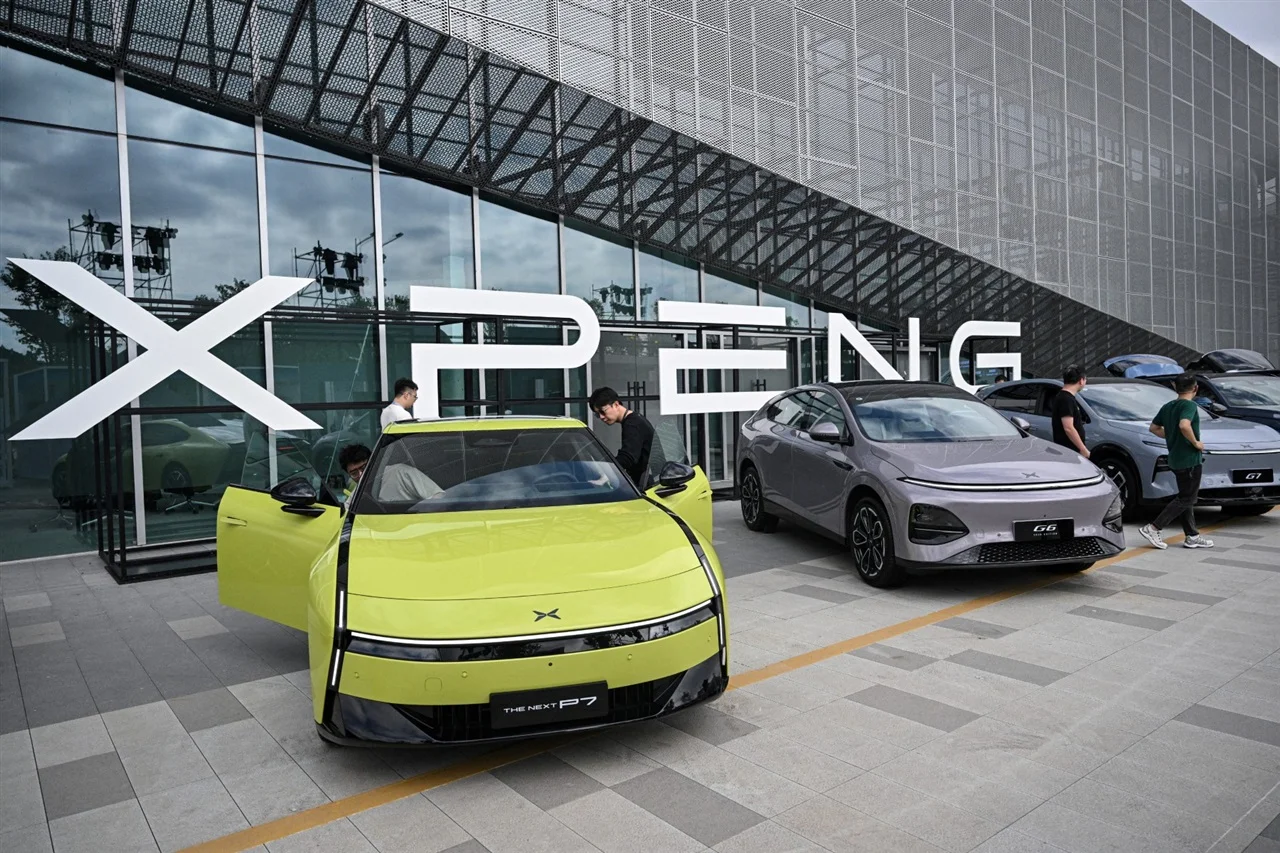
- XPeng’s mass-produced robotaxi, featuring in-house AI silicon, marks a significant milestone in vertical integration for Level 4 autonomy, enabling microsecond-latency sensor fusion and superior energy efficiency.
Strategic Deep-Dive
XPeng’s introduction of its mass-produced robotaxi, powered by proprietary in-house AI silicon, represents a strategic shift in the autonomous vehicle (AV) landscape from general-purpose computing to application-specific integrated circuits (ASICs). As a lead data architect, I view this transition as a fundamental response to the ‘bottleneck problem’ inherent in Level 4 (L4) autonomy. While industry standards have long leaned on high-performance general-purpose GPUs, the power consumption and latency overhead associated with these chips often conflict with the range requirements of electric vehicles and the safety-critical response times needed for urban navigation.
XPeng’s move to design its own silicon allows them to strip away the silicon bloat and focus on a custom Neural Processing Unit (NPU) architecture specifically tuned for transformer-based vision models and LiDAR point-cloud fusion.
The technical advantage of ‘Silicon Sovereignty’ in this context is manifold. By controlling the Instruction Set Architecture (ISA), XPeng can optimize how data moves between the sensor ingress ports and the memory controller. In a standard AV stack, data moving across a PCI Express bus to a general-purpose GPU introduces nanoseconds of jitter that can aggregate into dangerous latencies.
XPeng’s ASIC likely utilizes a unified memory architecture that provides high-bandwidth, low-latency access for both the vision pipeline and the decision-making engine. This hardware-software co-optimization ensures that the ‘perception-to-actuation’ loop is as tight as possible. Furthermore, custom silicon enables the implementation of specialized hardware accelerators for ’end-to-end’ (E2E) neural networks, which are increasingly becoming the standard for L4 systems.
This allows the vehicle to process complex urban scenarios—such as navigating unpredictable pedestrian behavior or construction zones—with a fraction of the energy required by off-the-shelf solutions.
Beyond the immediate technical gains, this vertical integration serves as a powerful economic moat. Developing in-house silicon is an expensive and risky endeavor, but it pays dividends by significantly lowering the per-unit Bill of Materials (BOM) cost once mass production is achieved. It also insulates XPeng from the supply chain volatility of the merchant silicon market, a lesson learned painfully by many during the global chip shortage.
From a competitive standpoint, this positions XPeng alongside Tesla as one of the few companies capable of iterating its entire stack—from the underlying transistors to the cloud-based fleet management software—simultaneously. As China’s regulatory environment for robotaxis becomes more permissive, having a mass-produced, cost-optimized L4 vehicle ready for deployment gives XPeng a critical ‘first-mover’ advantage. This isn’t just about making cars; it’s about owning the platform that will define the future of urban mobility.
XPeng’s silicon-centric strategy signals that the next generation of automotive leaders will be judged not by their engines, but by their ability to design and deploy specialized intelligence at the edge.