🔍 Executive Summary
- In response to US export controls, Chinese foundries like SMIC and Hua Hong are successfully pivoting toward a self-contained ecosystem that prioritizes mature process nodes and domestic demand over the high-end 2nm race.
Strategic Deep-Dive
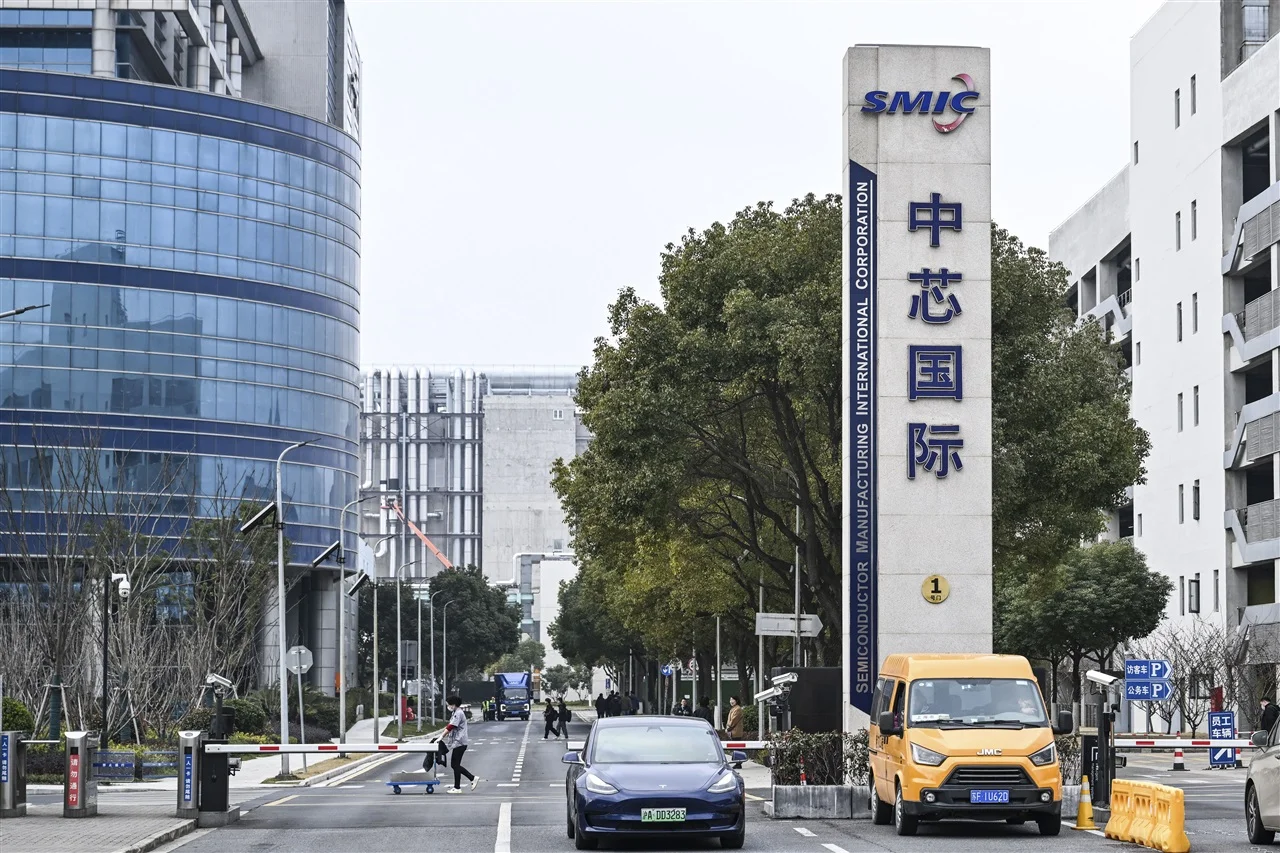
The global semiconductor narrative is currently dominated by the high-stakes race for the 2nm process node and the production of specialized AI accelerators. However, beneath this surface level of competition, a significant shift is occurring within the Chinese foundry sector. Led by giants such as Semiconductor Manufacturing International Corporation (SMIC) and Hua Hong Semiconductor, China is constructing a resilient, inward-looking foundry ecosystem that is increasingly decoupled from Western technological roadmaps.
This development is a direct consequence of US sanctions, which aimed to stifle China’s progress but instead acted as a catalyst for a state-backed drive toward hardware sovereignty. Rather than stalling, these foundries are reporting robust revenue growth driven by a captive domestic market and a strategic focus on mature process nodes that power everything from automotive electronics to industrial IoT devices.
Technically, the exclusion from EUV (Extreme Ultraviolet) lithography remains a formidable barrier to achieving parity with the world’s most advanced nodes. To compensate, Chinese foundry engineers are refining the limits of DUV (Deep Ultraviolet) multi-patterning techniques. This approach, while more complex and potentially lower in yield, allows for the production of chips that meet the performance requirements for a vast majority of consumer and industrial applications.
Furthermore, the technical focus has pivoted toward advanced packaging and heterogeneous integration. By utilizing chiplet architectures and 3D stacking, China is attempting to bypass the limitations of single-die transistor density, effectively using system-level hardware integration to achieve performance gains that lithography alone cannot provide. This emphasis on ‘good enough’ technology, produced at an immense scale, is creating a formidable competitive moat in the legacy process segments (28nm and above), which remain the lifeblood of the global electronics industry.
The long-term outlook suggests the emergence of a bifurcated global semiconductor market. While the West continues to push the physical boundaries of the 2nm frontier, China is cementing its role as the world’s primary supplier of foundational hardware. The expansion of domestic capacity is creating a self-sustaining cycle where Chinese fabless firms design specifically for Chinese foundry processes, further insulating the domestic industry from global geopolitical volatility.
This strategic ‘sidestepping’ of the leading-edge race allows China to dominate the volume-driven sectors of the market, potentially leading to a scenario where the global electronics supply chain is critically dependent on Chinese-produced legacy chips. This hardware-focused sovereignty represents a fundamental reshuffling of the global tech hierarchy, shifting the focus from who possesses the smallest transistor to who controls the most stable and extensive manufacturing base for the world’s essential semiconductors. For global systems architects, this means designing products that can navigate two increasingly incompatible hardware worlds, each with its own set of technical standards and supply constraints.