🔍 Executive Summary
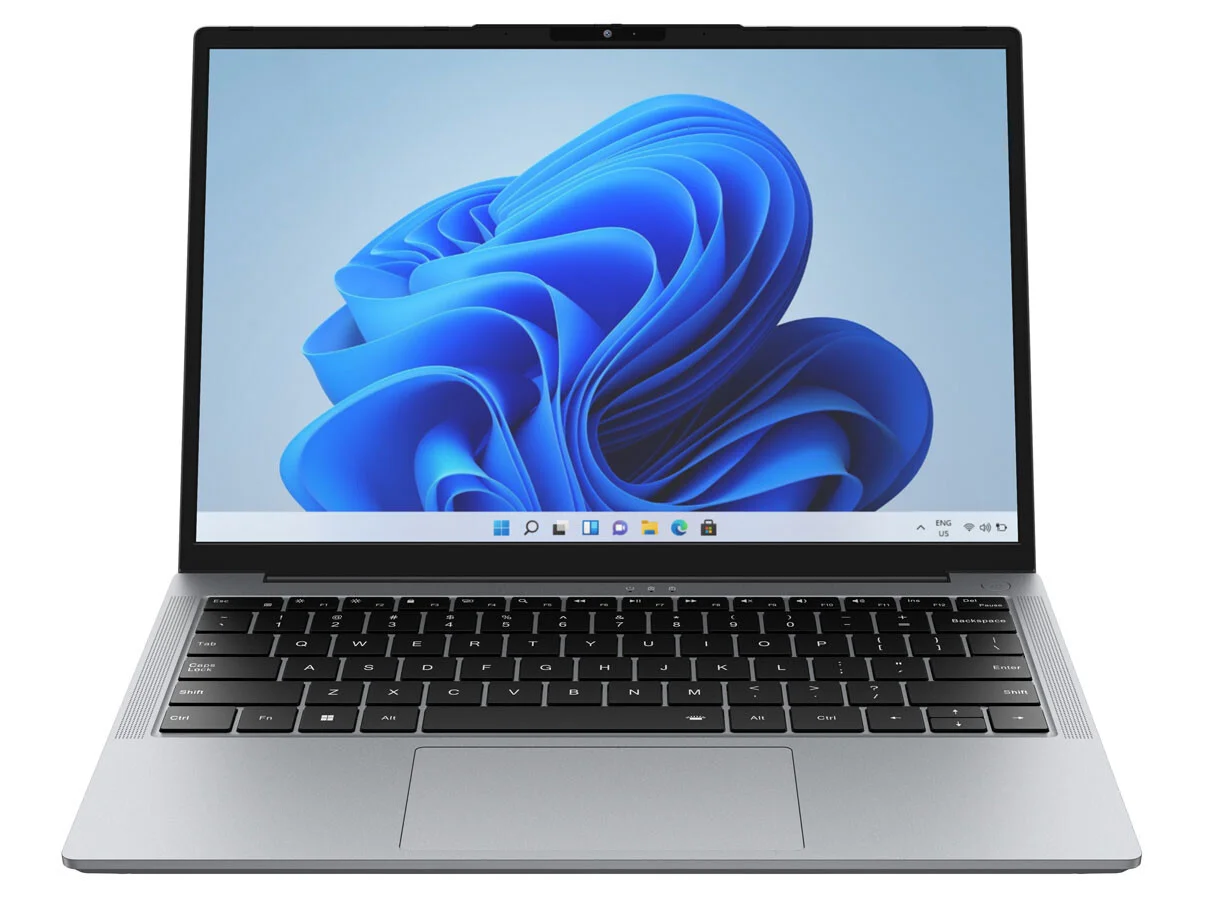
- CHUWI has announced the UniBook, the first commercial device to utilize Intel's 18A process via the Wildcat Lake Core 3 304 processor. Priced at $449, this laptop demonstrates the efficiency of Intel’s next-generation RibbonFET and PowerVia technologies in a value-tier consumer product.
Strategic Deep-Dive
The unveiling of the Chuwi UniBook is a watershed moment for the semiconductor industry, representing the first commercial delivery of Intel’s 18A process—a node that many industry analysts considered the ‘holy grail’ of Intel’s turnaround strategy. At the core of the UniBook is the Intel Wildcat Lake Core 3 304 processor. While it features a modest 5-core, 5-thread configuration with a boost clock of 4.30 GHz, its significance lies in its architectural DNA.
This is the world’s first consumer-facing implementation of RibbonFET (Intel’s version of Gate-All-Around transistors) and PowerVia (backside power delivery). For a global data systems architect, the choice to launch such advanced technology in a $449 ‘value-tier’ laptop rather than a high-end Xeon server is a fascinating market play.
PowerVia technology decoupling power and signal routing onto opposite sides of the wafer is the primary driver behind the UniBook’s staggering 15 to 20-hour battery life. By reducing the complexity of the interconnect layers, Intel has effectively minimized IR drop (voltage drop), allowing the processor to operate at peak efficiency even under sustained workloads. RibbonFET further complements this by providing superior electrostatic control, which translates to faster switching speeds and lower leakage current.
This combination allows the UniBook to challenge the power-envelope dominance previously held by ARM-based silicon like the Apple M-series or Qualcomm’s Snapdragon X Elite, but within a more cost-effective x86 framework.
The UniBook’s $449 price point suggests that Intel has achieved a level of yield stability on the 18A node that allows for mass-market distribution. This strategy likely serves two purposes: gathering real-world telemetry data from a wide user base and reclaiming the ’efficiency’ narrative in the mid-range mobile segment. University students and young professionals often require a balance of software compatibility (x86) and extreme mobility; the UniBook addresses this gap perfectly.
Furthermore, the inclusion of 18A tech in such an accessible device hints at Intel’s ambition to regain its lead in the foundry business. If 18A can deliver this level of endurance in a budget-friendly chassis with minimal thermal overhead, it signals a major shift in the competitive landscape. For Chuwi, being the launch partner for Intel’s most advanced node provides an unprecedented competitive edge, positioning the UniBook as the gold standard for price-to-performance-per-watt in the current hardware cycle.