🔍 Executive Summary
- Texas Instruments anticipates a strategic pivot to 800V power architectures in AI data centers starting in 2027, identifying operational safety and high-voltage reliability as the decisive factors for semiconductor supplier leadership.
Strategic Deep-Dive
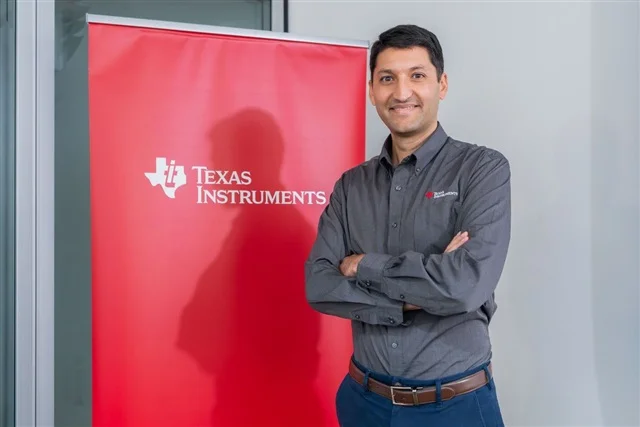
Pradeep S. Shenoy, a leading computing technology architect at Texas Instruments (TI), has outlined a strategic roadmap for the power infrastructure of next-generation AI data centers. According to Shenoy, the industry is approaching a critical thermal and electrical threshold that necessitates a shift from the incumbent 48V standards to more robust 800V architectures.
While 2026 is viewed as a period of rigorous prototyping and validation, 2027 is projected to be the inflection point where 800V deployments begin to scale rapidly across global hyperscale facilities. This transition is driven by the sheer power density requirements of AI superclusters, where power delivery at the rack level is moving toward hundreds of kilowatts. At these levels, traditional low-voltage distribution suffers from excessive copper losses and complex busbar requirements.
Shifting to an 800V bus significantly reduces current for the same power delivery, thereby minimizing I²R losses and allowing for more efficient power stage designs using Gallium Nitride (GaN) or Silicon Carbide (SiC) technologies. However, Shenoy’s thesis centers on the principle that ‘safety will decide’ the eventual market winners. In a high-voltage environment, the risk of electrical arcing, dielectric breakdown, and catastrophic thermal runaway is substantially heightened.
Therefore, the architectural challenge is not just achieving a 99% efficiency rating, but ensuring rigorous Safety Integrity Levels (SIL) and robust isolation. Semiconductor suppliers must provide integrated solutions that include advanced sensing for fault detection and high-speed protection circuits that can respond in microseconds. This focus on functional safety creates a new competitive moat; established players like TI are pivoting their R&D toward holistic power management ecosystems that prioritize fail-safe operations.
For the data center architect, the 2027 horizon represents more than just a voltage bump—it is a fundamental redesign of the power delivery network (PDN) where reliability and safety compliance will serve as the primary filters for vendor selection in the high-stakes AI infrastructure race. As the industry moves toward these ‘Thermal Envelopes’ of unprecedented scale, the ability to manage the risks of 800V power distribution will be as valuable as the chips themselves.