🔍 Executive Summary
- China has operationalized a groundbreaking 24MW subsea AI data center off the coast of Shanghai. By integrating offshore wind energy with a passive seawater cooling architecture, the facility supports high-density AI clusters while maintaining an industry-leading Power Usage Effectiveness (PUE).
Strategic Deep-Dive
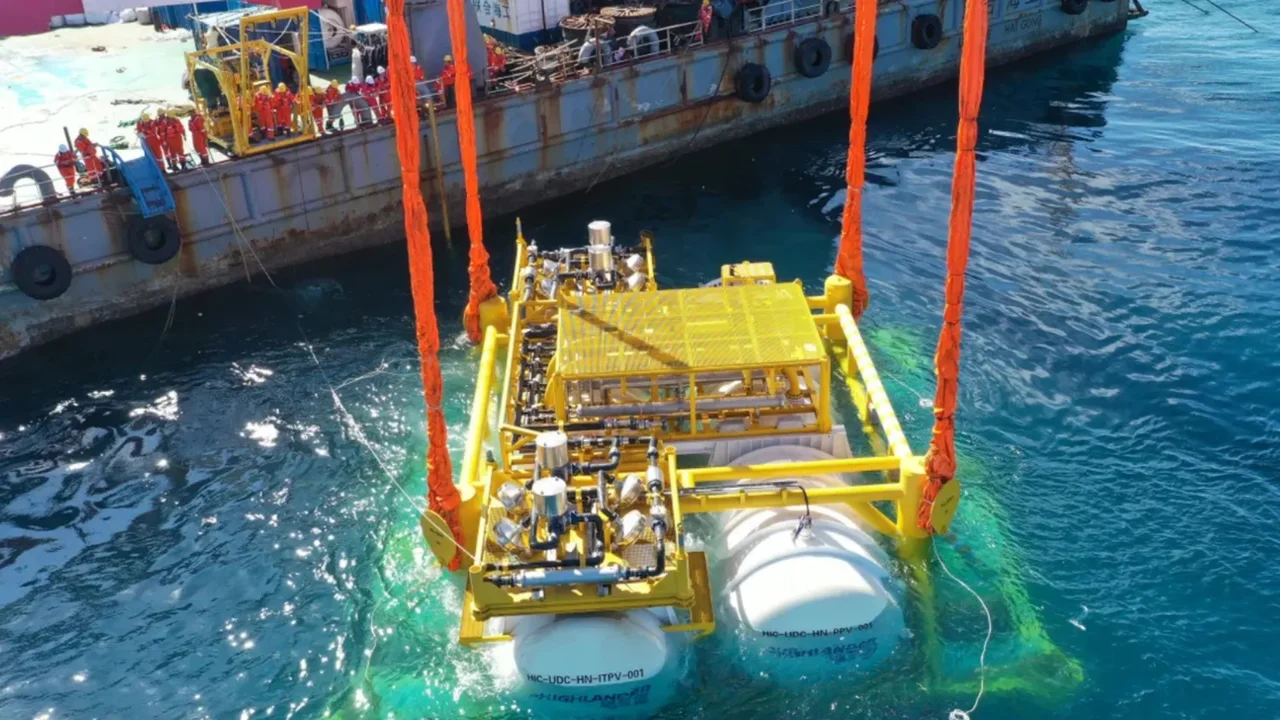
The operationalization of the 24MW subsea AI data center off the coast of Shanghai marks a transformative era in global compute architecture. From the perspective of a systems architect, this facility represents the first successful integration of high-density AI hardware with a sustainable, passive thermal management system on a commercial scale. The facility houses approximately 2,000 servers within specialized pressure hulls, utilizing the surrounding seawater as an infinite, high-capacity heat sink.
By eliminating energy-intensive mechanical chillers and water-treatment plants required by terrestrial facilities, this subsea deployment achieves a Power Usage Effectiveness (PUE) that approaches the theoretical limit of efficiency.
The technical complexity of this project extends beyond simple immersion. The pressure vessels are filled with an inert nitrogen environment to prevent oxidation and minimize component fatigue, resulting in a significantly lower failure rate compared to air-cooled systems. Furthermore, the direct coupling of the facility with an offshore wind farm creates a vertical integration of power generation and compute consumption.
This localized energy loop bypasses the inefficiencies of long-distance power transmission and relieves pressure on the municipal grid.
From a data systems architecture standpoint, the subsea environment provides a thermal stability that is impossible to maintain on land, where seasonal and diurnal temperature swings force cooling systems to over-provision. The constant low temperature of the seabed allows for precise thermal tuning of GPU and CPU clusters, maximizing their boost clock durations and overall computational throughput. As the demand for AI training and inference scales exponentially, the ‘power-cooling’ bottleneck has become the primary constraint for traditional data centers.
This 24MW facility serves as a definitive proof of concept that moving infrastructure to the seafloor is not only feasible but arguably necessary for the next generation of green AI workloads. The strategic placement of these modules near coastal population centers also addresses the latency requirements of edge-AI applications, creating a high-bandwidth, low-latency node that exists within a self-sustaining ecosystem. This deployment confirms that the future of hyperscale computing is increasingly likely to be found beneath the waves, where physics and economics align to support the massive energy demands of the AI age.