🔍 Executive Summary
- The WTO argues that re-globalization—integrating more marginalized economies into the trade network—is the essential defense against geopolitical fragmentation and supply chain 'choke points' created by major power rivalries.
Strategic Deep-Dive
As the global order faces systemic challenges from protectionist policies and geopolitical rivalries, the World Trade Organization (WTO) is advocating for a strategic shift termed ’re-globalization.’ This concept is not a call to return to the hyper-globalization of the late 20th century, which prioritized cost-efficiency above all else. Instead, re-globalization is a deliberate strategy to broaden the scope of international trade integration, moving away from a concentration in a few dominant hubs toward a more decentralized and resilient network. The WTO posits that the current trend toward ‘decoupling’ or economic fragmentation is a dangerous path that threatens to reduce global GDP by as much as 5% in the long term while doing little to actually improve security.
The fundamental thesis behind re-globalization is the mitigation of ‘choke points.’ In the modern tech-driven economy, the concentration of critical components—such as advanced semiconductors or refined rare earth elements—in a handful of geographic locations creates systemic fragility. When major powers engage in trade disputes, these choke points are weaponized, leading to cascading failures across global industries. The WTO’s solution is to deepen trade links with marginalized economies in the Global South, effectively turning them into redundant nodes in the global production chain.
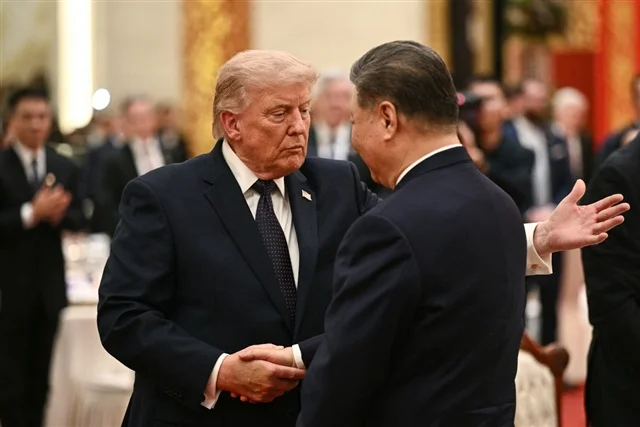
By diversifying the manufacturing and sourcing landscape to include regions like Southeast Asia, Africa, and Latin America, the world can insulate itself from the volatility of any single bilateral relationship, including the contentious US-China dynamic.
However, implementing re-globalization requires a monumental shift in policy and corporate strategy. For decades, supply chains were built on the ‘just-in-time’ model. The WTO is now advocating for a ‘just-in-case’ model that prizes stability and diversity.
This involves lowering trade barriers for developing nations and investing in their infrastructure to ensure they can meet the quality and volume requirements of global markets. Critics argue that this approach contradicts the current trend of ’near-shoring’ and ‘friend-shoring,’ where trade is limited to close political allies. The WTO counters that limiting trade to a small group of ‘friends’ actually increases risk by creating new, smaller-scale concentrations of supply that remain vulnerable to local shocks.
Ultimately, re-globalization is presented as the only viable path to de-escalate major power impact on the global poor. When trade is fragmented into rival blocs, developing nations are often forced to pick sides, losing access to technology or markets in the process. A re-globalized world would maintain a multilateral framework where trade acts as a stabilizer rather than a source of friction.
While the political appetite for such a vision is currently low in many capitals, the economic costs of fragmentation are becoming impossible to ignore. The WTO’s message is clear: the solution to the failures of old globalization is not less trade, but more inclusive and strategically diversified trade. The coming years will determine if the international community has the foresight to rebuild these bridges before the existing ones collapse under the weight of geopolitical ambition.