🔍 Executive Summary
- President Lai’s administration reaches a critical midpoint, facing a volatile mix of U.S. political shifts and escalating pressure from Beijing. 2. The 'Trump factor' introduces significant uncertainty regarding trade protectionism and defense guarantees, impacting the semiconductor sector. 3. Assessment of Taiwan's 'Silicon Shield' strategy as it attempts to maintain market dominance amidst a rapidly decoupling global tech landscape.
Strategic Deep-Dive
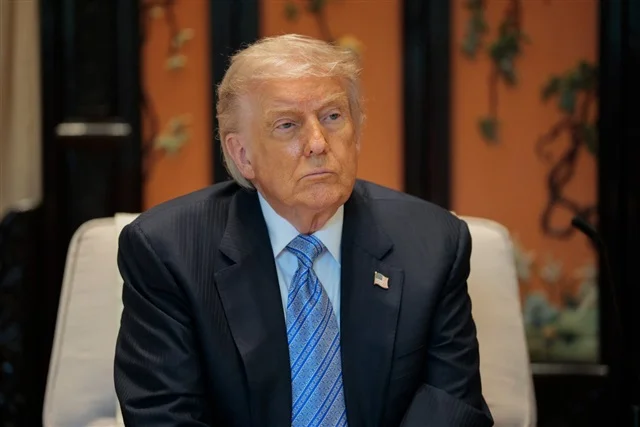
As President Lai Ching-te marks the midpoint of his term, Taiwan stands at a precarious crossroads, navigating a geopolitical landscape defined by the intensifying rivalry between Washington and Beijing. The administration’s ability to maintain regional stability is being tested by two major external forces: the looming ‘Trump factor’ in the United States and the unrelenting multifaceted pressure from the People’s Republic of China. The potential return of Donald Trump to the White House introduces a high degree of unpredictability into the U.S.-Taiwan relationship.
Trump’s transactional view of foreign policy, combined with his previous rhetoric regarding Taiwan’s dominance in the semiconductor industry, suggests a potential shift from principled support to a more protectionist stance. This ‘Trump Risk’ poses a direct threat to the current incentive structures that have encouraged Taiwanese firms like TSMC to expand their fabrication footprints in the United States while keeping their R&D cores in Hsinchu.
Simultaneously, Beijing has ramped up its efforts to isolate Taiwan diplomatically and economically, viewing the Lai administration as a challenge to its ‘One China’ principle. This pressure manifests in frequent military drills in the Taiwan Strait and targeted trade sanctions designed to create domestic political friction within Taiwan. For the global technology sector, these tensions are not merely regional concerns but systemic risks to the entire electronics supply chain.
Taiwan’s position as the world’s premier foundry hub means that any significant disruption in the East Asian tech corridor would have catastrophic effects on industries ranging from artificial intelligence to automotive manufacturing. The concept of the ‘Silicon Shield’—the idea that Taiwan’s technological indispensability protects it from invasion—is being stress-tested as Western nations increasingly push for ‘friend-shoring’ and the localization of semiconductor production to mitigate their own strategic vulnerabilities.
Under Lai’s leadership, the Taiwanese government is attempting a high-stakes balancing act. On one hand, it is deepening its integration with the U.S. through initiatives like the U.S.-Taiwan Initiative on 21st-Century Trade.
On the other hand, it is diversifying its partnerships, strengthening ties with Japan and the EU to ensure that its tech sector remains the global ‘indispensable partner.’ However, the transition from a unipolar global order to a fragmented, multipolar one presents significant challenges for a small island nation whose primary leverage is its monopoly on high-end logic chips. As the global decoupling of U.S. and Chinese technology sectors accelerates, Taiwan risks being caught in a crossfire of export controls and investment restrictions.
The remainder of Lai’s presidency will be defined by how he navigates these treacherous waters—ensuring that Taiwan remains at the center of the global innovation map while bracing for a potential era of ’transactional’ American leadership and heightened Chinese aggression.
Strategic Insights
The volatility within the East Asian tech corridor has reached a critical inflection point where traditional security guarantees are being replaced by transactional diplomacy. Investors and C-suite executives must prepare for a scenario where Taiwan’s ‘Silicon Shield’ is increasingly challenged by both ally-driven protectionism and adversary-driven coercion. Strategic resilience now requires a diversification of geographical risk without losing the technical efficiencies of the Taiwanese ecosystem.