🔍 Executive Summary
- TDK Corporation, the Japanese electronic components powerhouse, has officially sanctioned its largest-ever capital expenditure (CapEx) plan for the 2026 fiscal year, commencing in April 2026. This unprecedented financial deployment is a direct response to the structural shift in global demand triggered by the artificial intelligence (AI) revolution. TDK is moving to reinforce its manufacturing infrastructure to support the massive scale-up of AI data centers and the proliferation of sophisticated edge-AI devices. The investment signals TDK's transition from a broad component supplier to a stra...
Strategic Deep-Dive
A Landmark Strategic Commitment: TDK’s Record-High CapEx
TDK Corporation, the Japanese electronic components powerhouse, has officially sanctioned its largest-ever capital expenditure (CapEx) plan for the 2026 fiscal year, commencing in April 2026. This unprecedented financial deployment is a direct response to the structural shift in global demand triggered by the artificial intelligence (AI) revolution. TDK is moving to reinforce its manufacturing infrastructure to support the massive scale-up of AI data centers and the proliferation of sophisticated edge-AI devices.
The investment signals TDK’s transition from a broad component supplier to a strategic architect of the AI hardware ecosystem.
Targeted Technological Expansion: Power, Storage, and Advanced Materials
The CapEx plan is meticulously targeted toward three technological sectors that define the performance of modern AI clusters. First, TDK is drastically expanding its production capacity for Multilayer Ceramic Capacitors (MLCCs). In the high-current environments of AI training nodes, MLCCs are critical for power decoupling and voltage stabilization.
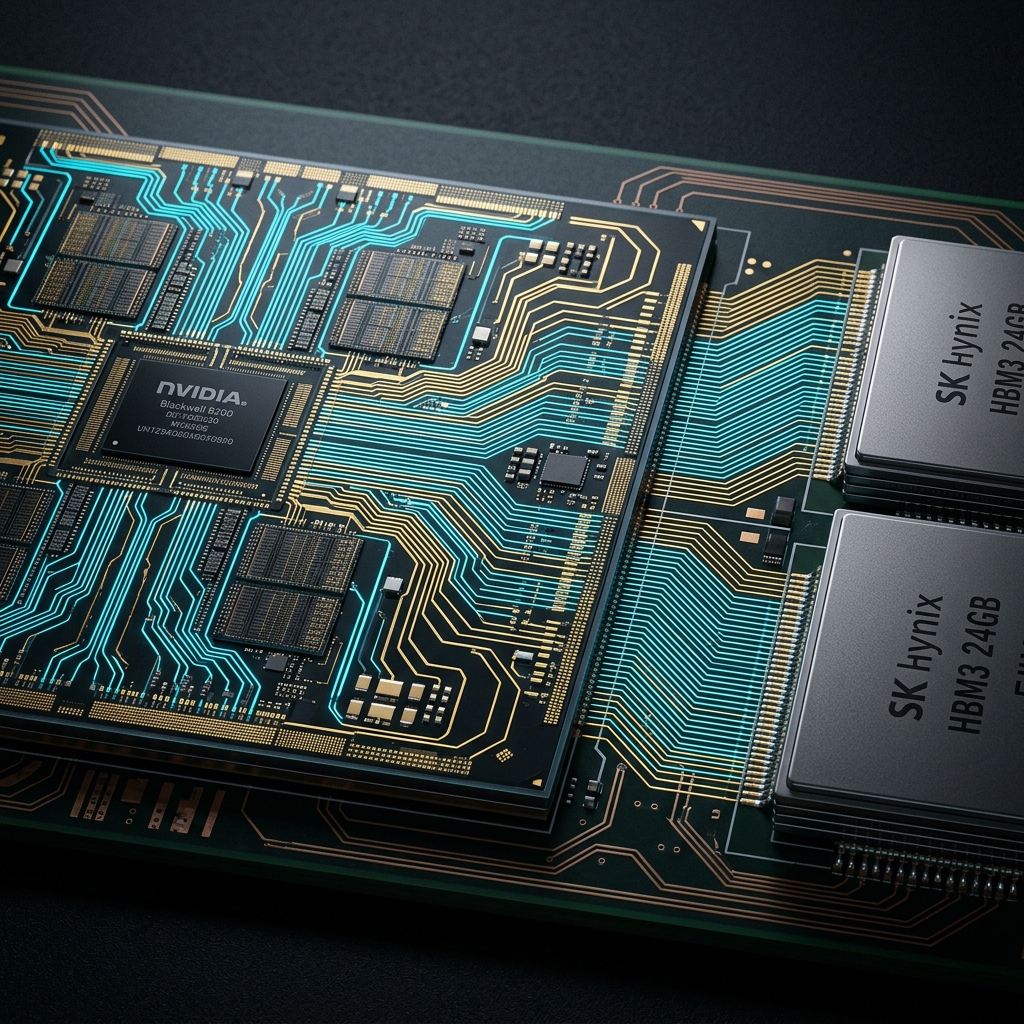
As power densities per rack climb beyond 100kW, the demand for high-reliability, high-voltage MLCCs has skyrocketed. TDK’s investment will ensure it can supply the tens of thousands of capacitors required for a single Blackwell or H100 cluster, ensuring system stability and minimizing downtime.
Second, the company is doubling down on hard disk drive (HDD) component technology. Despite the growth of flash storage, the sheer volume of “cold data” generated by Large Language Models necessitates high-capacity, low-cost HDD storage. TDK’s advancements in magnetic head precision and actuator responsiveness are essential for the next generation of high-density disk drives.
Third, TDK is pioneering the first mass production of nanocomposite materials alongside its battery expansion. From a materials engineering perspective, these nanocomposites offer superior thermal dissipation and electromagnetic shielding properties. Integrating these materials into compact AI hardware addresses the critical problem of thermal throttling, thereby extending the Mean Time Between Failure (MTBF) and improving the overall reliability of high-performance systems.
Strategic Implications and Market Positioning
By committing to this record-high investment cycle, TDK is placing a massive bet on the longevity of the AI infrastructure boom. The introduction of nanocomposite materials into the mass-production line marks a significant technical milestone that separates TDK from its competitors in the APAC region. This move suggests that TDK is not merely competing on volume but is seeking to define the quality standards for AI components.
For the global market, this indicates that the infrastructure layer of AI is still in a heavy growth phase, requiring foundational materials innovation to sustain the current pace of software development. TDK’s 2026 roadmap will likely establish it as a primary gatekeeper of the hardware components that power the global digital economy.