🔍 Executive Summary
- Analog Devices Inc. is reportedly finalizing a US$1.5 billion cash acquisition of Empower Semiconductor, aiming to integrate advanced integrated voltage regulator (IVR) technology into its high-performance power portfolio.
Strategic Deep-Dive
Strategic Deep-Dive: ADI, Empower, and the Pursuit of Power Density
Analog Devices Inc. (ADI) is currently navigating the final stages of a strategic acquisition that could fundamentally shift the power management landscape for high-performance computing (HPC). The reported US$1.5 billion cash bid for Empower Semiconductor is not merely a tactical expansion but a profound move to acquire intellectual property that addresses the most significant bottleneck in modern silicon design: power delivery.
As data centers scale to meet the demands of LLMs and generative AI, the thermal design power (TDP) of individual GPU and CPU clusters has skyrocketed, necessitating power management solutions that offer extreme efficiency and rapid transient response.
Technical Nuances: Integrated Voltage Regulators (IVR) vs. Traditional Architectures
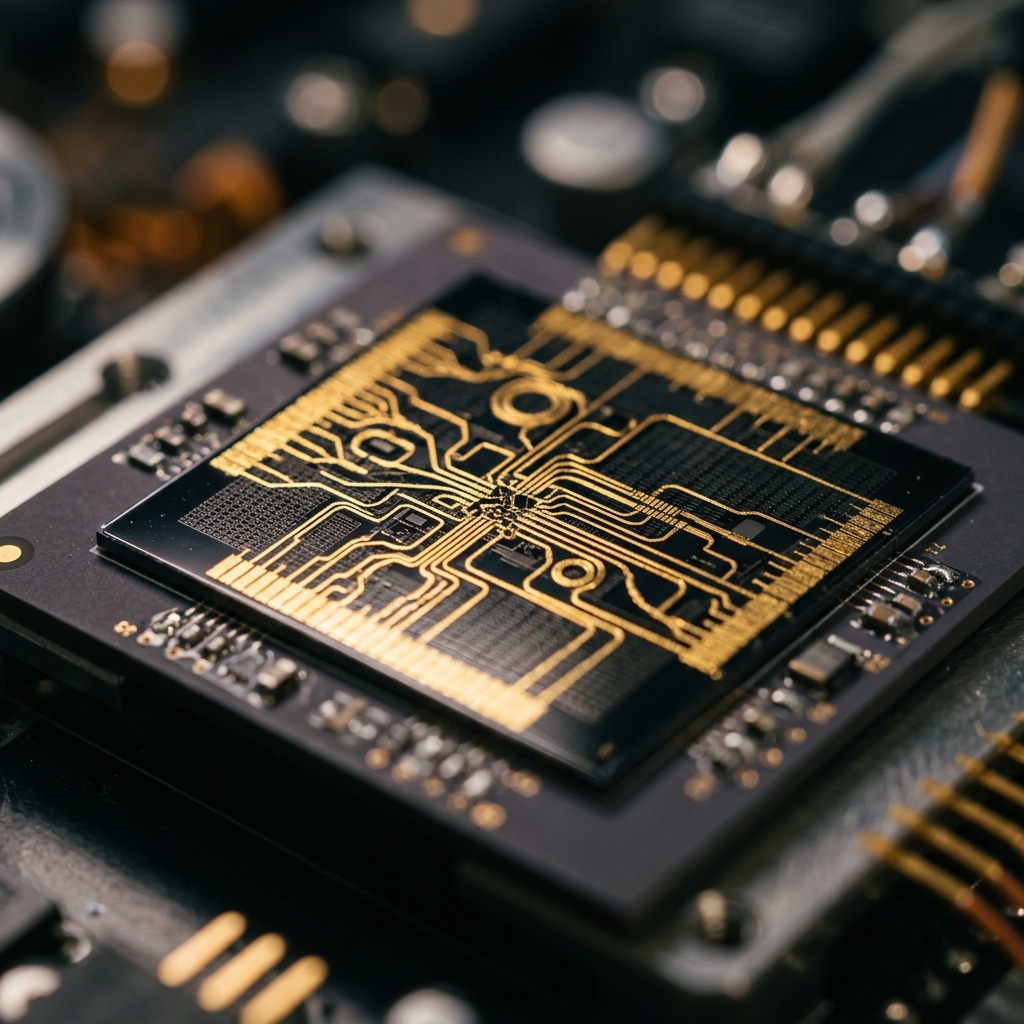
Empower Semiconductor has differentiated itself through the development of Integrated Voltage Regulators (IVR). Traditional power management systems rely on discrete inductors and capacitors, which consume significant PCB real estate and introduce parasitic inductance, limiting the switching frequency and transient response speed. Empower’s technology integrates these components onto a single die or within the package, enabling switching frequencies in the multi-megahertz range.
This results in a power delivery network (PDN) that can respond to the massive current swings of modern processors within nanoseconds, reducing the need for large decoupling capacitor banks. From a data systems architect’s perspective, this means higher power density and reduced system-level complexity.
Furthermore, this acquisition is a direct competitive response to players like Monolithic Power Systems (MPS), which has seen rapid growth in the AI power segment. By absorbing Empower, ADI can offer a holistic power-to-processor solution. The US$1.5 billion valuation represents a significant premium, likely reflecting a high revenue multiple consistent with specialized high-margin analog firms.
For ADI, whose P/E ratio and cash reserves remain robust, this acquisition is a calculated bet on the long-term necessity of ultra-compact power stages in the hyperscale era.
Financial Strategy and M&A Risks in a High-Interest Environment
Financially, a cash-heavy deal in the current economic climate demonstrates ADI’s confidence in its balance sheet and the strategic imperative of this technology. However, the semiconductor M&A environment remains fraught with regulatory hurdles. If the deal faces scrutiny from antitrust authorities concerned with consolidation in the analog chip market, it could stall.
Nevertheless, the integration of Empower’s engineering talent into ADI’s global R&D structure would likely yield immediate benefits in the automotive and industrial sectors, where high-efficiency power conversion is becoming a baseline requirement. As we await the formal announcement, this move highlights that in the world of high-end hardware, power efficiency is the new currency of performance.