🔍 Executive Summary
- Dell Technologies has reached a pivotal milestone in the enterprise technology sector, announcing that its ‘AI Factory’ initiative has now surpassed 5,000 corporate clients. This achievement is underscored by a remarkable quarterly surge, adding approximately 1,000 new enterprise customers in just three months. This trajectory highlights a significant shift in the global hardware landscape: the transition from general-purpose server procurement to specialized, high-performance AI infrastructure designed to handle massive generative AI workloads. At the heart of this success lies Dell’s deep-ro...
Strategic Deep-Dive
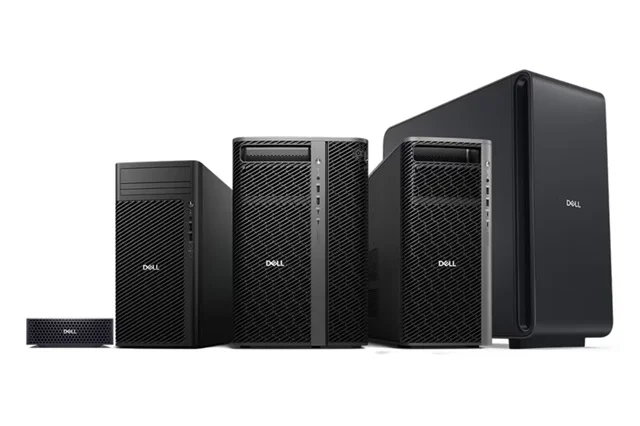
Dell Technologies has reached a pivotal milestone in the enterprise technology sector, announcing that its ‘AI Factory’ initiative has now surpassed 5,000 corporate clients. This achievement is underscored by a remarkable quarterly surge, adding approximately 1,000 new enterprise customers in just three months. This trajectory highlights a significant shift in the global hardware landscape: the transition from general-purpose server procurement to specialized, high-performance AI infrastructure designed to handle massive generative AI workloads.
At the heart of this success lies Dell’s deep-rooted partnership with Nvidia. By integrating Nvidia’s cutting-edge GPUs and AI Enterprise software suite directly into Dell’s PowerEdge servers and PowerScale storage, the two giants have created a seamless ‘factory’ environment for AI model training and inference.
Strategic implications of this growth are profound. For years, the narrative suggested that public cloud providers like AWS and Azure would dominate the AI era. However, Dell’s performance suggests a strong resurgence of on-premise and hybrid infrastructure.
Large-scale enterprises in sectors such as finance, defense, and healthcare are increasingly wary of moving sensitive proprietary data to the public cloud due to latency, costs, and data sovereignty concerns. Dell’s AI Factory addresses these pain points by offering an ‘AI-as-a-Platform’ model that remains within the customer’s controlled environment. This provides Dell with a significant moat, as it transitions from a hardware vendor to an essential architectural consultant and long-term infrastructure partner.
Furthermore, the speed at which Dell is scaling—adding over 10 customers every single day—indicates that the market is currently in a hyper-growth phase. As Nvidia prepares to roll out its Blackwell architecture, Dell is positioned as the primary channel through which traditional enterprises will access this next-generation compute power. This alignment creates a powerful lock-in effect, as the software-hardware integration becomes too complex for clients to easily switch vendors.
Analysts observe that Dell is effectively capitalizing on the CAPEX-to-OPEX shift by offering flexible consumption models for these AI stacks, mirroring the convenience of the cloud with the performance of local silicon. Consequently, Dell is no longer just a participant in the AI race; it is the infrastructure backbone of the private enterprise AI movement, setting the pace for the entire hardware industry in 2026 and beyond. This momentum suggests that Dell will continue to see margin expansion as the product mix shifts toward high-value, AI-optimized configurations that command significant premiums over standard commodity hardware.