![Recovery: [기술 리포트] 메타의 하드웨어 수직 계열화: 브로드컴 협력과 커스텀 ASIC의 전략적 가치 - AI 테크 인텔리전스 리포트 시각 자료](/images/posts/2026/05/20/hardware-recovery-asic-1_gen.jpg)
🔍 Executive Summary
- Meta is aggressively decoupling from the commercial GPU market by deploying four proprietary, Broadcom-engineered custom ASICs across its gigawatt-scale global data center network.
Strategic Deep-Dive
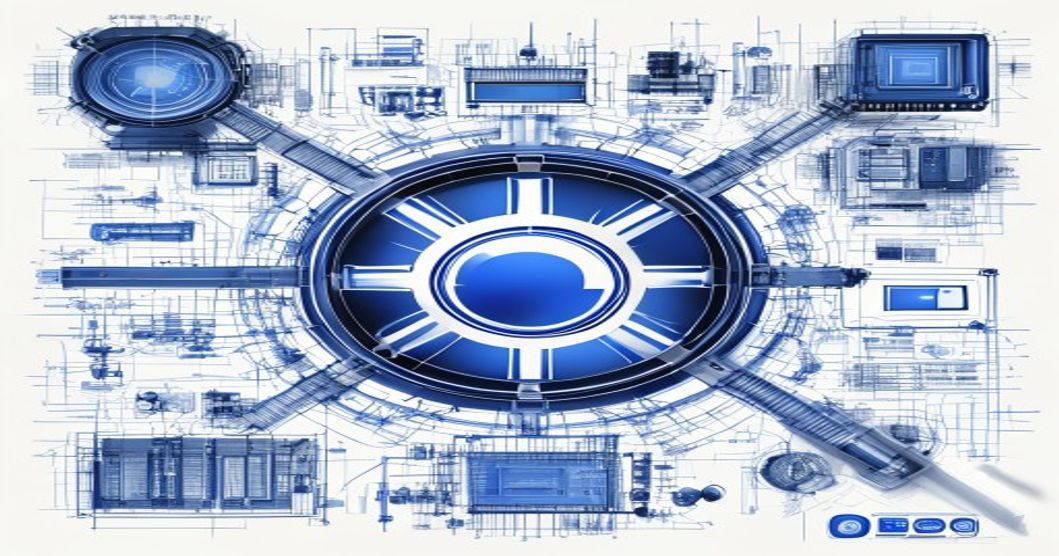
Meta’s recent unveiling of four custom-designed AI chips, developed in deep technical partnership with Broadcom, represents a watershed moment in the hyperscale data center industry. This strategic pivot toward application-specific integrated circuits (ASICs) is not merely a cost-cutting measure but a fundamental redesign of Meta’s computational DNA. By moving away from general-purpose GPUs produced by vendors like Nvidia, Meta is optimizing its hardware at the gate level to align perfectly with its proprietary AI workloads, including advanced recommendation engines and the Llama family of large language models.
The technical collaboration with Broadcom leverages decades of expertise in high-speed interconnects and sophisticated system-on-chip (SoC) architectures. These four new chips are designed to bridge the gap between high-level software abstraction and low-level physical execution. Unlike commercial GPUs, which must accommodate a vast array of industry use cases, Meta’s ASICs are stripped of unnecessary functional blocks, allowing for higher transistor density dedicated to specific AI matrix operations.
This lean design philosophy results in significant performance-per-watt gains, which is a critical metric for Meta’s ambitious infrastructure roadmap.
Central to this announcement is the concept of ‘gigawatt-scale’ deployment. Meta is currently re-engineering its global data center footprint to handle power loads measured in gigawatts rather than megawatts. At this unprecedented scale, even marginal gains in power efficiency translate into billions of dollars in operational savings.
The deployment of these custom chips is the centerpiece of this expansion, as they allow for higher compute density within the same thermal envelope. Furthermore, the integration of these ASICs into the Open Compute Project (OCP) standards ensures that Meta maintains a modular and scalable environment that can be updated with minimal friction.
However, the move to custom silicon is not without its challenges. The development cycle for an ASIC is significantly longer and more capital-intensive than purchasing off-the-shelf hardware. Meta must maintain a continuous design pipeline to ensure that its silicon does not become obsolete as AI algorithms evolve.
Yet, the strategic benefits of hardware-software co-design—where the hardware is built for the software and vice versa—provide a competitive advantage that no commercial vendor can replicate. By controlling the entire stack, from the silicon layer to the user-facing AI applications, Meta is insulating itself from market volatility and silicon shortages, effectively securing its technological destiny in the age of generative AI.