🔍 Executive Summary
- President Lai Ching-te has reaffirmed Taiwan's commitment to its democratic sovereignty, announcing a strategic budgetary shift toward drone technology to enhance the nation's asymmetric defense capabilities.
Strategic Deep-Dive
President Lai Ching-te’s strategic declaration on May 20, 2026, regarding Taiwan’s refusal to ‘relinquish freedom’ represents a watershed moment in the island’s defense posturing. As the regional security environment grows increasingly complex, Taipei has formally pivoted toward a robust asymmetric warfare doctrine, anchored by a significant and unprecedented expansion of the national drone budget. This strategic reallocation is not merely a reaction to external pressure but a proactive effort to modernize the Republic of China Armed Forces by integrating low-cost, high-attrition autonomous systems that can neutralize numerical disadvantages in naval and aerial assets.
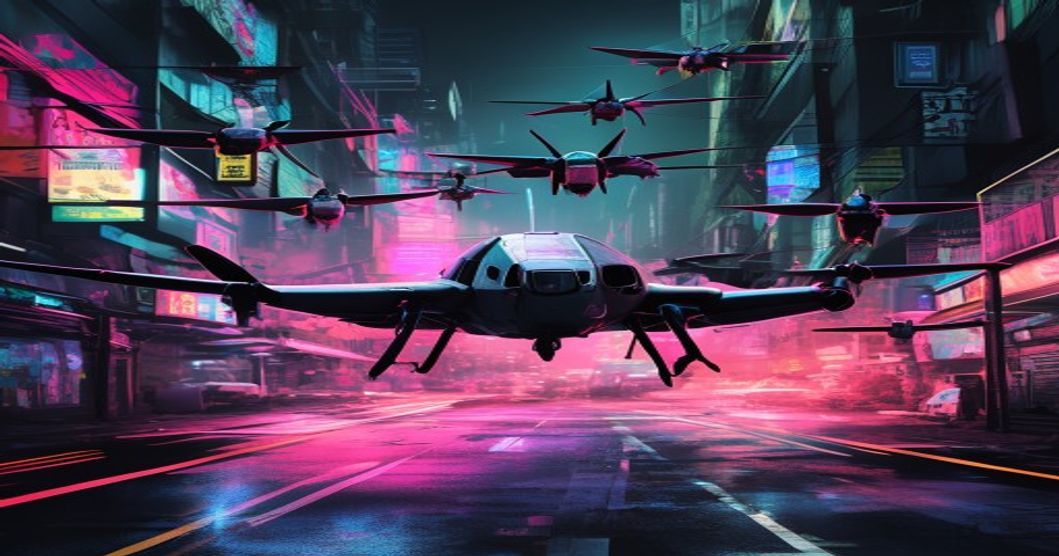
The geopolitical and technical implications of this move are profound. By prioritizing Unmanned Aerial Vehicles (UAVs) and Unmanned Underwater Vehicles (UUVs), Taiwan is effectively building a ‘Drone Shield’ designed to monitor the Taiwan Strait in real-time and provide precision strike capabilities without risking personnel. The current budget focuses on the development of AI-driven swarm technology, which allows multiple drones to operate in a coordinated fashion to overwhelm enemy radar and defense systems.
This technical granularity is essential for maintaining deterrence in the ‘First Island Chain.’ Furthermore, the administration is emphasizing the integration of hardened satellite communications and advanced electronic warfare (EW) countermeasures to ensure these systems remain operational in highly contested environments where GPS jamming is a standard threat.
Industrial cooperation with the United States and other democratic allies serves as a critical pillar of this initiative. The ‘Drone Team Taiwan’ initiative aims to leverage the island’s world-class semiconductor ecosystem—specifically its leadership in edge AI chips and high-frequency RF modules—to create a self-sufficient defense industrial base. This strategy aligns with Washington’s interest in fostering a ‘Democratic Supply Chain’ for critical defense technologies.
By shifting from high-prestige, legacy platforms to pragmatic and survivable autonomous systems, Taiwan is signaling a move toward a ‘Porcupine Strategy’ that makes the cost of any potential aggression prohibitively high.
Moreover, the 2026 perspective views these investments as a direct response to the lessons learned from recent global conflicts where drones redefined battlefield dynamics. The ability to deploy thousands of low-cost loitering munitions could effectively negate the traditional power projection of a larger conventional navy. For Taiwan, this is as much a technological race as it is a psychological one; it demonstrates a firm national resolve to defend its democratic way of life through innovation and strategic foresight.
As the global community watches, the success of Taiwan’s drone integration will likely become a blueprint for other medium-sized powers facing existential security challenges in the age of autonomous warfare.