🔍 Executive Summary
- Turnkey automation integrates high-precision CNC machinery with robotic loaders and waste management systems, offering a technical panacea for machine shops facing chronic labor shortages by drastically reducing manual operator touch-points and enabling 24/7 autonomous production cycles.
Strategic Deep-Dive
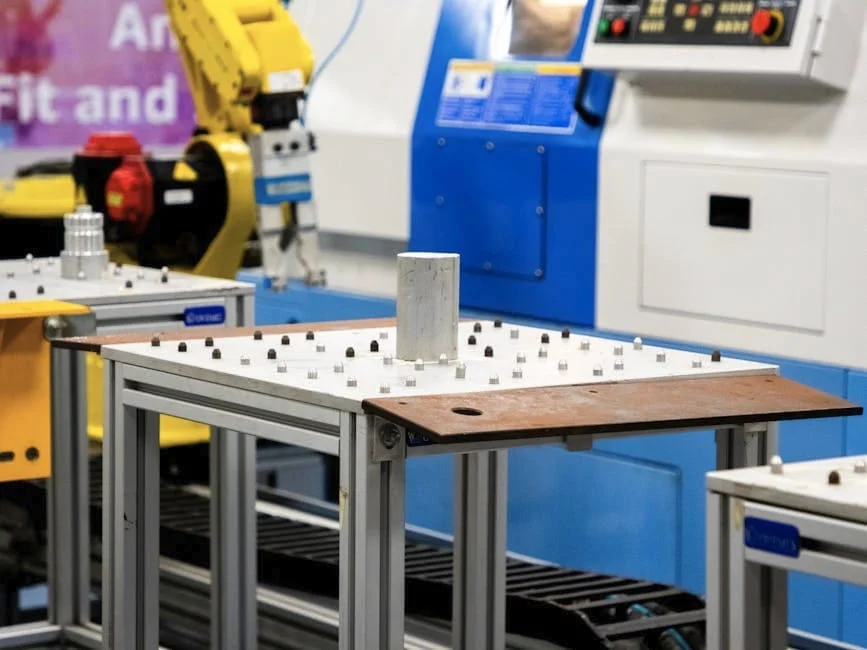
The transition to CNC turnkey automation represents a fundamental shift in how modern machine shops approach production scalability and labor management. As detailed in the ‘CNC Turnkey Automation Buyers Guide’ from Hardware Times, the catalyst for this investment is frequently rooted in external labor pressures rather than proactive expansion. A turnkey cell is not merely a collection of machines but a highly synchronized ecosystem comprising a CNC machine, a robotic loader, a part presenter, and an integrated chip-management system.
This holistic integration targets the most significant bottleneck in small-to-medium manufacturing: the manual labor required for repetitive loading and monitoring tasks.
Technically, the efficacy of a turnkey system is measured by the reduction in operator interaction time. In a manual or semi-automated setup, a technician might spend between 8 and 12 minutes per part on tasks that add no direct value to the component’s geometry—such as opening doors, clearing debris, and positioning blanks. By automating the material handling and environmental controls (such as high-pressure chip evacuation), shops can repurpose their skilled labor toward complex multi-axis programming and high-level quality assurance.
This shift is particularly vital as the global manufacturing sector grapples with an aging workforce and a decreasing number of skilled entrants. The robotic loader operates with a precision and repeatability that human operators cannot maintain over an eight-hour shift, let alone during overnight ’lights-out’ periods.
Furthermore, the strategic advantage of the turnkey approach lies in its ‘single-source’ responsibility. Instead of a shop owner acting as a systems integrator—attempting to bridge the communication gaps between different hardware vendors and dealing with disparate PLC protocols—a turnkey provider delivers a pre-validated cell. This ensures that the robotic kinematics are perfectly timed with the machine’s spindle cycles and that the chip management system is sized appropriately for the anticipated material removal rate.
This synchronization prevents the ‘cascading failure’ common in fragmented systems where one minor timing error can halt an entire line. For decision-makers, the ‘why it matters’ factor is clear: turnkey automation provides a predictable, repeatable production cadence that mitigates the risks associated with human error and labor volatility. As industry standards move toward smarter factories, the ability to deploy these integrated units quickly becomes a primary differentiator in competitive global markets, allowing firms to scale capacity without a linear increase in headcount.