🔍 Executive Summary
- In a bold post-IPO maneuver, SpaceX is set to acquire AI coding startup Cursor for $60 billion by July 2026, marking its transformation into a vertically integrated AI and aerospace titan.
Strategic Deep-Dive
As SpaceX approaches what is widely anticipated to be the largest Initial Public Offering (IPO) in history, its leadership is already mapping out a post-listing expansion strategy that targets the heart of the AI software ecosystem. According to detailed reports from Bloomberg, the aerospace titan plans to acquire Cursor, the leading AI-powered code editor, for a staggering $60 billion. This acquisition is strategically timed to conclude roughly 30 days after SpaceX begins trading on public markets, potentially closing in July 2026.
By utilizing the massive capital influx from the IPO, SpaceX is making a definitive statement about its future: it is no longer just a rocket company, but a premier artificial intelligence powerhouse.
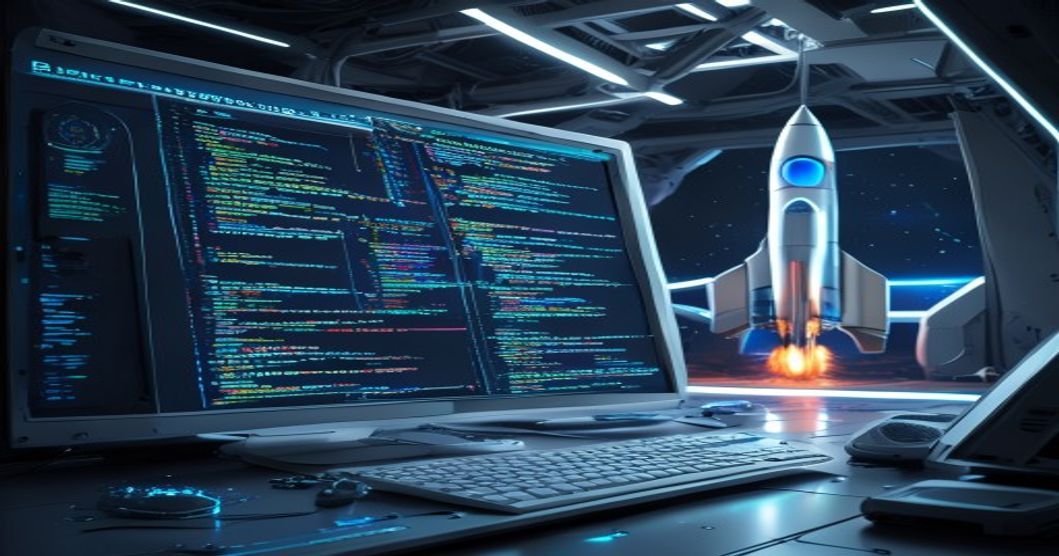
Cursor has rapidly become the gold standard for AI-integrated development environments (IDEs), utilizing advanced large language models to assist developers in writing, refactoring, and debugging complex codebases. For SpaceX, software is as vital as liquid oxygen. The company manages one of the world’s most complex distributed systems, encompassing the autonomous guidance of reusable rockets, the global mesh network of the Starlink constellation, and the multi-planetary operating systems required for Starship.
Integrating Cursor’s technology directly into SpaceX’s internal development pipelines will allow for an unprecedented acceleration in software iteration cycles. This ‘AI-augmented engineering’ approach is expected to reduce the time from conceptual algorithm design to mission deployment, providing a significant competitive advantage over legacy defense and aerospace contractors who are still mired in manual development processes.
The broader market implications of this $60 billion deal are profound. It represents a pivot toward vertical integration of AI at the infrastructure level. Investors are closely watching the IPO prospectus, not just for satellite launch metrics, but for clues on how this merger will redefine SpaceX’s valuation multiples.
By acquiring Cursor, SpaceX effectively secures a proprietary edge in automated software production, a move that parallels its internal manufacturing of rocket components. If successful, this acquisition will serve as a blueprint for how trillion-dollar hardware companies can leverage public capital to dominate the software sectors that empower their physical products. The deal marks the beginning of the ‘Software-Defined Aerospace’ era, where the winner is the one who can code and launch faster than the competition.
Analysts suggest that the synergy between SpaceX’s hardware and Cursor’s software intelligence could create a self-improving engineering loop that pushes the boundaries of autonomous space exploration.