🔍 Executive Summary
- A strategic joint venture between Google and Blackstone aims to deploy 500 MW of TPU-based capacity by 2027, transitioning AI hardware into a financialized leasing model while boosting custom silicon partners.
Strategic Deep-Dive
In a major move to reshape the AI infrastructure landscape, Google is teaming up with Blackstone to form a new cloud computing leasing company. With Blackstone serving as the primary shareholder, this joint venture (JV) aims to build approximately 500 MW of computing capacity by 2027. This collaboration represents a significant intersection of massive financial capital and advanced AI hardware, designed to meet the skyrocketing global demand for enterprise-scale computing resources while introducing a new ‘OPEX-first’ model for AI scaling.
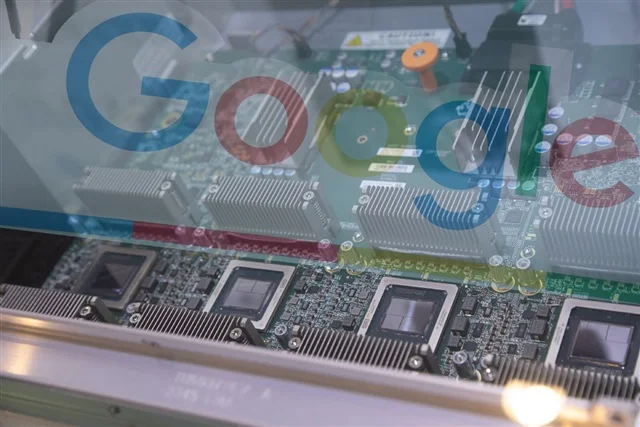
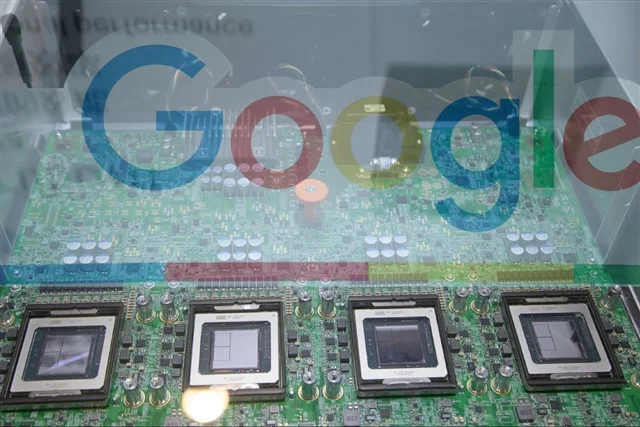
The strategic heart of this venture is its reliance on Google’s proprietary Tensor Processing Units (TPUs) rather than general-purpose GPUs. By utilizing custom-designed ASICs, the venture can achieve optimized performance-per-watt and specialized interconnect efficiency (ICI) for large-scale training and inference workloads. This decision provides a massive tailwind for Google’s dedicated ASIC partners.
Industry watchers expect Broadcom and MediaTek—who collaborate on TPU physical layer design and architecture—and TSMC—the sole foundry partner—to benefit significantly from the increased production volumes required for this 500 MW build-out.
From a systems architecture perspective, managing 500 MW of power delivery and thermal dissipation requires advanced liquid cooling and specialized power distribution units (PDUs), a challenge Blackstone and Google are uniquely positioned to address through this JV’s scale. The infrastructure will likely feature highly customized racks designed for high-density computing, further distancing Google from standard server designs. Furthermore, this joint venture introduces a robust financial model into the AI hardware ecosystem.
By leveraging Blackstone’s vast capital resources, Google can accelerate the deployment of its TPU clusters without straining its own balance sheet, while offering attractive leasing options to third-party enterprises. For the broader market, this signals that the ‘AI arms race’ is increasingly being fought through infrastructure scale and specialized silicon efficiency. As the JV moves toward its 2027 goal, it will likely pressure traditional cloud providers to reconsider their own hardware and financing strategies to keep pace with the efficiency of Google’s ASIC-centric leasing model.