🔍 Executive Summary
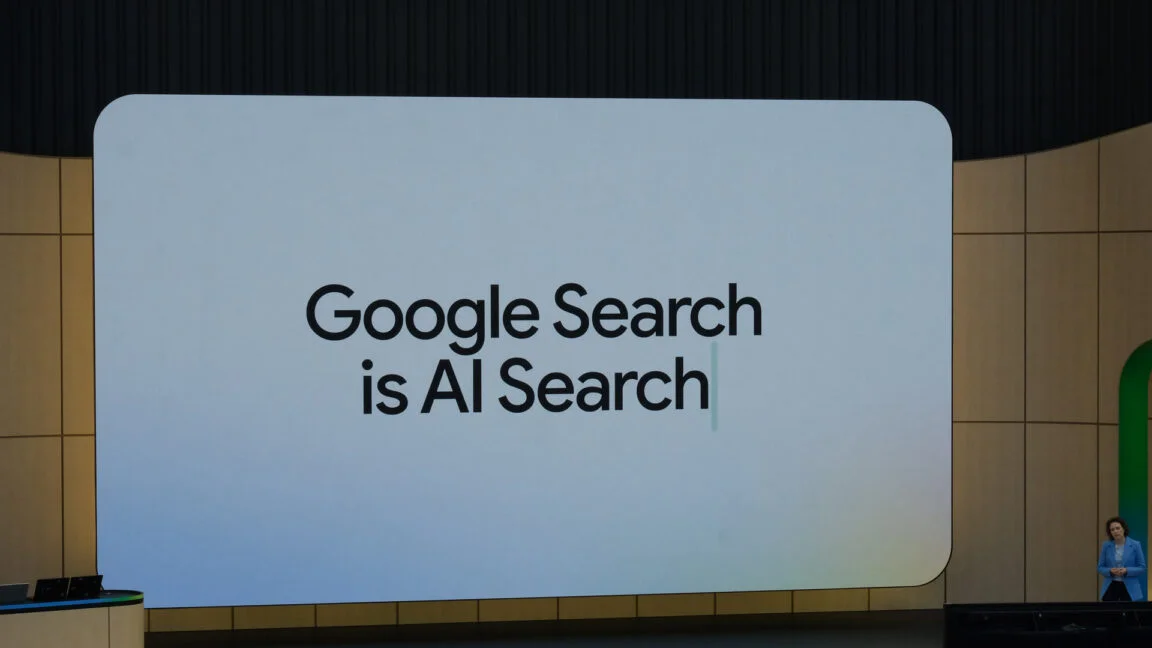
- During Google I/O 2026, the tech giant officially announced a fundamental shift from informational search to agentic AI systems that perform tasks autonomously.
- This evolution signals the end of the traditional search results page, replacing it with proactive AI agents that reason and execute multi-step user requests.
Strategic Deep-Dive
The landscape of the internet is undergoing its most profound transformation since the invention of the hyperlink, as Google officially remakes its foundational search platform with ‘agentic AI.’ Announced during the high-stakes Google I/O 2026 conference, this shift represents a move away from passive information retrieval toward proactive, goal-oriented execution. For decades, search engines functioned as digital librarians, pointing users toward relevant resources. In 2026, Google is redefining its engine as a digital executive assistant—an agentic system that doesn’t just find information but reasons through complex tasks and acts upon them autonomously.
This acceleration of AI-driven search evolution is not merely an incremental update; it is a total redesign of the user-web interface.
At the heart of this revolution is the concept of ‘Agency.’ Unlike previous iterations of Generative AI that focused on summarizing text or generating creative content, agentic AI has the capacity to plan and execute multi-step workflows. During the I/O 2026 keynote, Google demonstrated how its search engine can now handle nuanced requests like organizing complex corporate events or managing personal health schedules by interacting with third-party APIs and websites on the user’s behalf. This transition minimizes the cognitive load on the user, shifting the burden of navigation and decision-making to the AI.
By leveraging its vast data index and advanced reasoning models, Google is positioning its search engine as the primary operating layer for the modern digital experience.
The broader implications for the global economy and digital marketing are staggering. As search results transition into direct answers and completed actions, the traditional ’economy of clicks’ is being threatened. Websites that rely on organic search traffic for ad revenue must now confront a reality where the user may never even visit their page, as the AI agent extracts and acts on the necessary data directly within the search interface.
This necessitates a fundamental pivot in SEO strategy, moving toward what industry analysts are calling ‘Agentic Optimization’—ensuring that data is structured in a way that AI agents can easily consume and prioritize. The move is a double-edged sword; while it offers unparalleled convenience for the user, it concentrates immense power in the hands of the platform that controls the agent.
Furthermore, 2026 marks the year when the search engine becomes a full-fledged participant in the global trade of services. By enabling AI agents to facilitate transactions, Google is effectively entering the e-commerce and logistics space more deeply than ever before. This strategy targets the rising competition from specialized AI startups and alternative search platforms that have sought to disrupt Google’s monopoly.
By embedding agency into the very core of its most successful product, Google is not just defending its market share; it is setting the standard for the next generation of computing. The move to agentic search is a clear indicator that the future of technology lies not in finding information, but in achieving outcomes through the seamless integration of artificial intelligence into daily life.