🔍 Executive Summary
- Alibaba's T-Head unit has successfully transitioned the Zhenwu M890, a GPU-class AI accelerator, into scaled mass production, bypassing reliance on restricted Western hardware.
- The move signals a strategic shift toward domestic hardware sovereignty amid ongoing US-China technological friction and export restrictions.
Strategic Deep-Dive
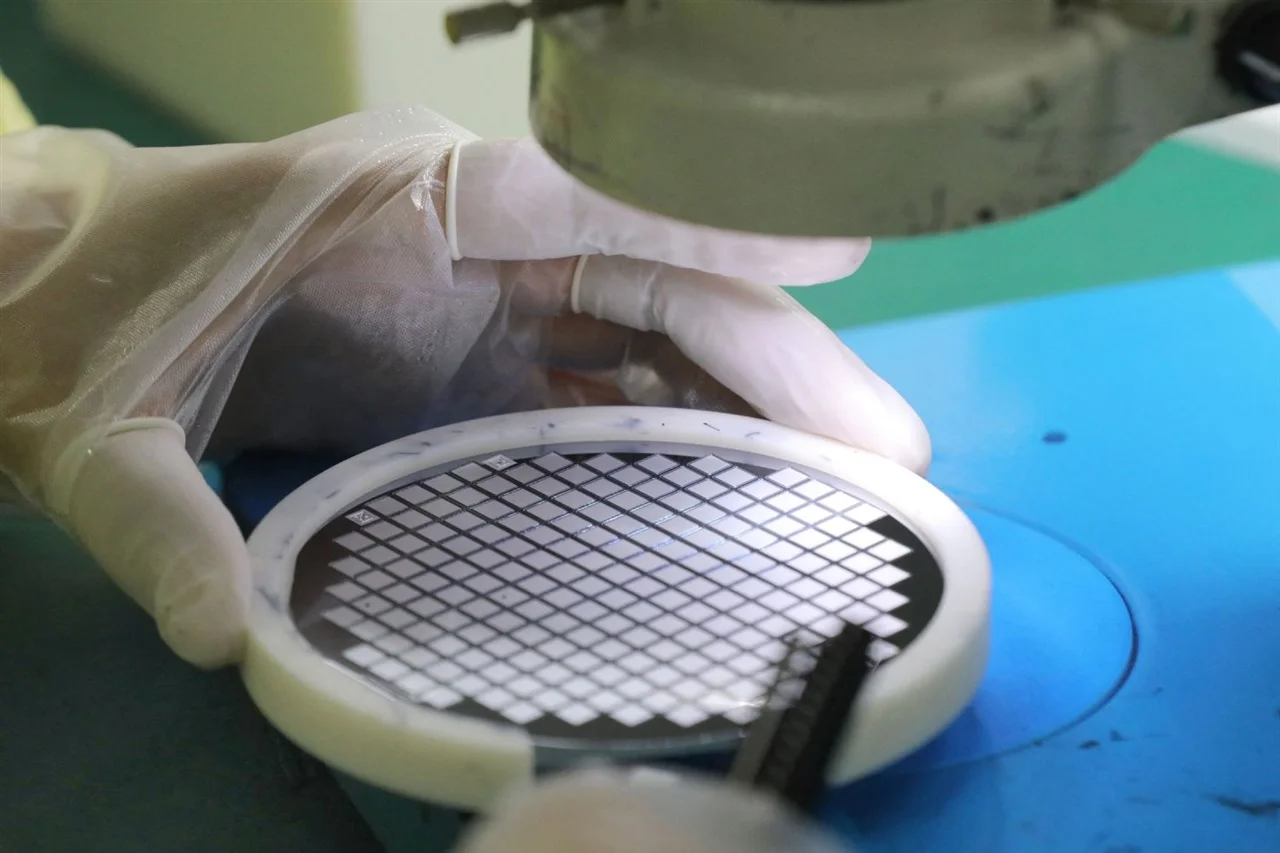
Alibaba’s dedicated semiconductor division, the T-Head chip unit, has achieved a critical milestone in the global race for artificial intelligence sovereignty with the official unveiling and mass production of the Zhenwu M890. This high-performance GPU-class AI chip is strategically positioned as a robust domestic alternative to NVIDIA’s high-end accelerators, which have faced increasingly stringent trade barriers. The announcement marks a definitive shift in the landscape of the Chinese domestic accelerator market, proving that local entities are no longer just theorizing about hardware independence but are actively deploying silicon at scale.
According to the data provided, the Zhenwu M890 has already moved beyond the prototype phase into scaled mass production, signifying that the technical hurdles of manufacturing such complex architecture have been successfully navigated.
The development of the Zhenwu M890 is a masterclass in strategic engineering under geopolitical pressure. Alibaba has meticulously designed the chip to align with current US export controls, ensuring its production and deployment remain uninterrupted by international sanctions while still delivering the high-level computational power required for modern AI workloads. This careful balancing act is particularly significant given the broader context of the reported Trump-Xi summit on AI chips, where the future of global technology trade and cooperation hangs in the balance.
By securing a reliable domestic supply chain, Alibaba is insulating itself and its partners from the volatility of international relations, effectively creating a ‘Great Silicon Wall’ that fosters a self-sufficient AI ecosystem within China.
Beyond its immediate technical specifications, the Zhenwu M890 represents the practical execution of ‘Sovereign AI.’ As organizations worldwide seek to reduce reliance on a handful of dominant Western vendors, Alibaba’s T-Head unit is offering a viable path for large-scale enterprise AI deployment. The chip is engineered to handle the massive processing demands of large language models and generative AI, which are the primary drivers of today’s tech economy. For the Chinese market, this means a significant reduction in the total cost of ownership for AI infrastructure and an acceleration in the adoption of AI across various industrial sectors.
The success of the Zhenwu M890 sends a clear message to the global market: the era of uncontested hardware dominance is ending, replaced by a bifurcated supply chain where regional champions compete on both performance and strategic resilience.
From a market intelligence perspective, the impact of this launch will be felt across the entire semiconductor value chain. It challenges the existing pricing models of global GPU vendors and forces a re-evaluation of long-term investment strategies in the AI space. As Alibaba continues to refine its chip architecture, we can expect subsequent iterations to push the boundaries of what is possible within regulatory constraints.
This evolution will likely drive further innovation in multi-chip modules and advanced packaging techniques as domestic firms strive to close the performance gap. Ultimately, the Zhenwu M890 stands as a testament to the maturing capabilities of China’s internal semiconductor industry and a harbinger of a more fragmented yet highly competitive global technology landscape.