🔍 Executive Summary
- Mercedes-AMG is pivoting its performance legacy toward electrification with the new GT 4-Door EV, emphasizing 'continuous performance' through the AMG.EA platform to outshine the Tesla Model S Plaid in sustained high-speed scenarios.
Strategic Deep-Dive
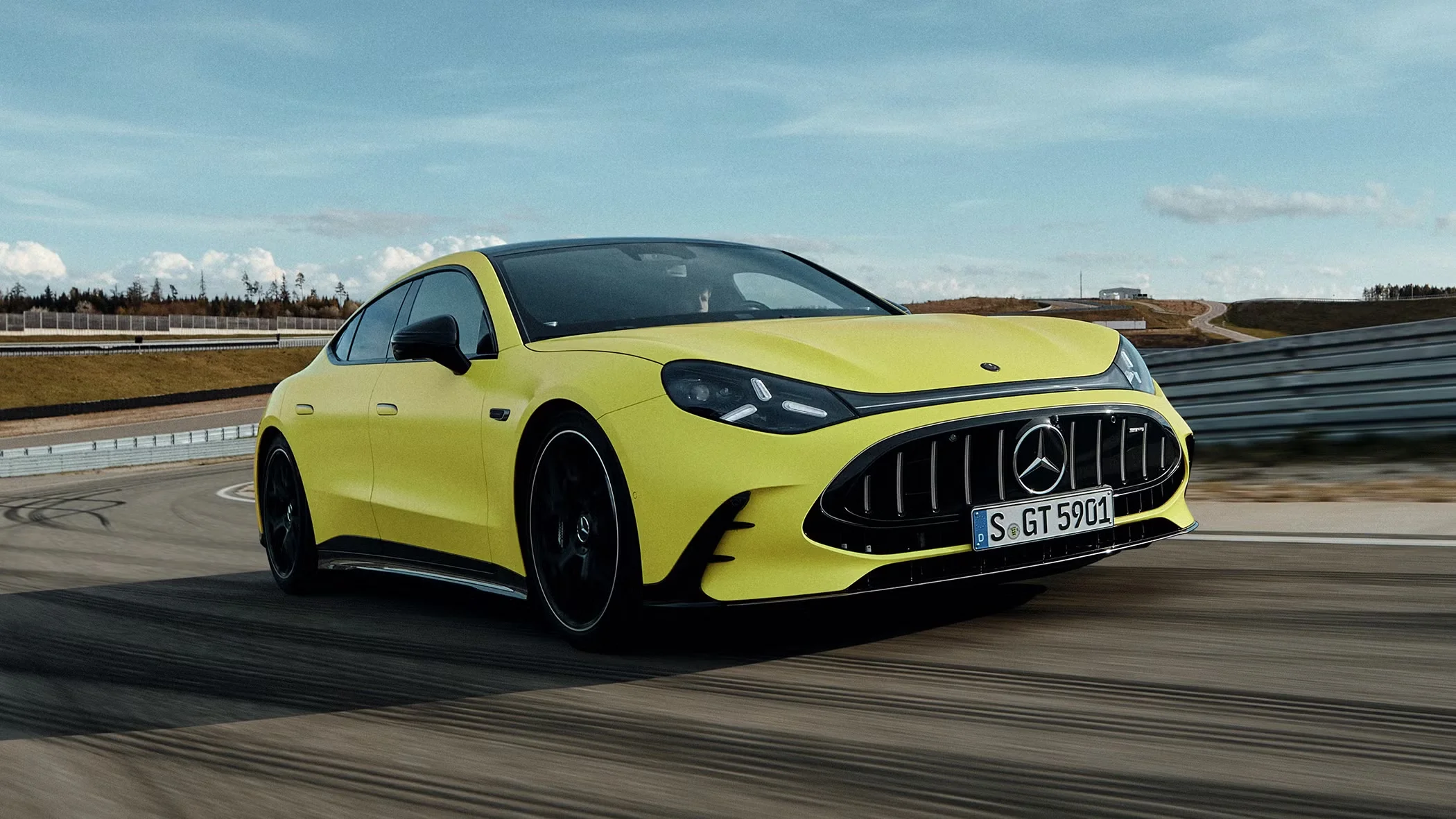
The unveiling of the Mercedes-AMG GT 4-Door EV marks a tectonic shift in the high-performance automotive landscape. For decades, the badge from Affalterbach has been synonymous with the thunderous roar of V8 engines and uncompromising mechanical brutality. As the industry pivots to electric power, the challenge for AMG was not just to create a fast car, but to ensure that the essence of a ‘driving machine’ was preserved in a silent, battery-electric format.
The result is a vehicle built on the proprietary AMG.EA (AMG Electric Architecture), a platform designed specifically to handle the extreme lateral and longitudinal forces unique to high-performance EVs.
One of the most significant technical differentiators in this new model is the integration of axial-flux motor technology, sourced from YASA, a specialist company acquired by Mercedes. Unlike the radial-flux motors found in the Tesla Model S Plaid and most other mass-market EVs, axial-flux motors are significantly lighter and thinner while providing vastly superior power density. This allows for a more compact powertrain layout, lowering the center of gravity and improving handling agility.
However, the real ‘Tesla-killer’ feature is AMG’s commitment to ‘continuous performance.’ While the Model S Plaid is famous for its incredible 0-60 mph sprints, it often suffers from thermal throttling during repeated high-speed runs or intensive track sessions. Mercedes-AMG has addressed this through a sophisticated 800-volt thermal management system that utilizes active liquid cooling for both the battery cells and the motors. This ensures that the driver can extract maximum power lap after lap at the Nürburgring without a drop in output.
Furthermore, the AMG GT 4-Door EV introduces a new level of chassis dynamics with active rear-wheel steering and a specialized air suspension system that adapts in milliseconds to road conditions. The aerodynamics are equally advanced, featuring an active rear spoiler and underbody flaps that adjust to minimize drag or maximize downforce depending on the drive mode. Inside, the cabin is a blend of digital luxury and racing ergonomics, featuring a performance-oriented version of the MBUX Hyperscreen that displays real-time telemetry and G-force data.
By focusing on the ‘sustainability’ of performance—meaning the ability to maintain peak operation under duress—Mercedes-AMG is carving out a niche that separates it from tech-focused competitors. The AMG GT 4-Door EV is a testament to the fact that while the source of energy has changed, the engineering rigor required to master that energy has only increased. It is a bold statement that in the electric era, the legacy of German engineering will continue to lead from the front, offering a level of tactile engagement and mechanical reliability that Silicon Valley has yet to replicate.