🔍 Executive Summary
- Samsung Electronics secures a high-stakes labor ceasefire with its 48,000-worker union, averting billions in potential manufacturing losses and protecting its critical HBM3e/HBM4 roadmap.
Strategic Deep-Dive
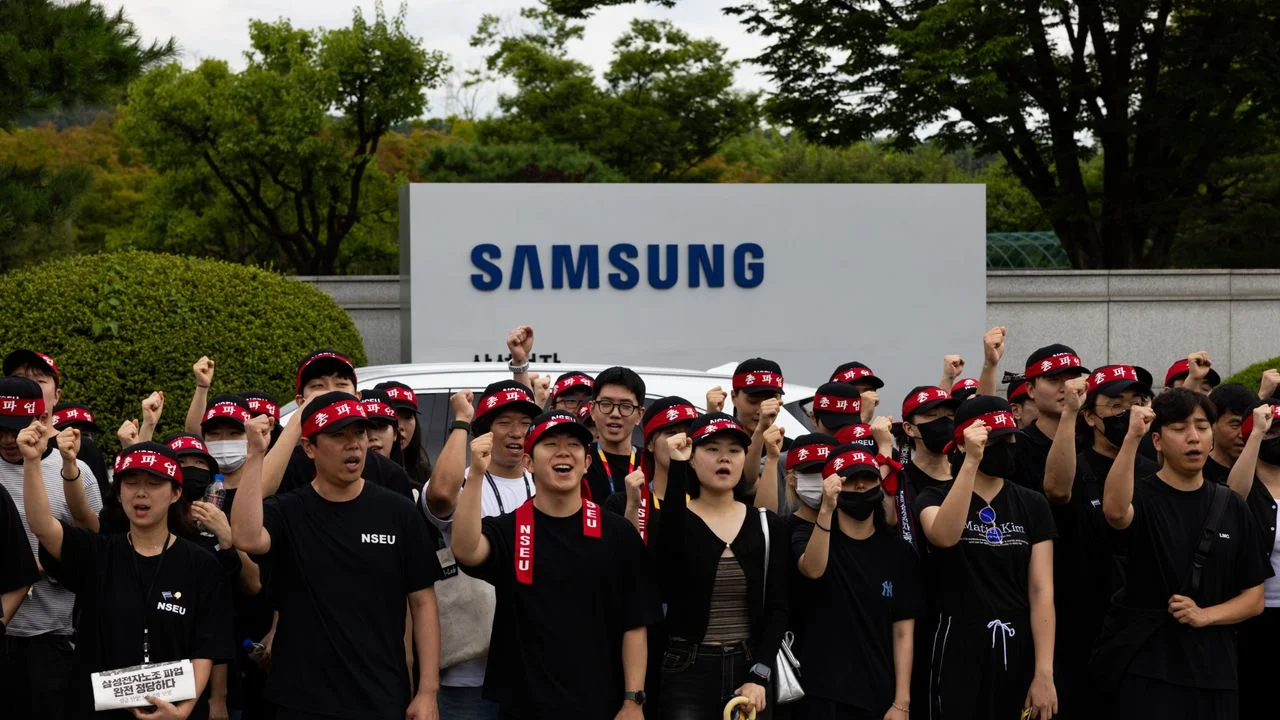
Samsung Electronics has navigated a treacherous 18-day period of labor instability, reaching a tentative wage agreement with its 48,000-member National Samsung Electronics Union (NSEU) just moments before a full-scale operational paralysis. As a Senior Technical Intelligence Architect, it is critical to understand the logistical gravity of this resolution: in the hyper-sensitive environment of a 3nm or 4nm logic fab, ’labor continuity’ is as vital as the purity of the neon gas used in lithography. The 18-day strike threat represented a ‘point of no return’ for the firm’s supply chain integrity.
A semiconductor cleanroom is not a facility that can simply be toggled off and on; the delicate balance of High-Efficiency Particulate Air (HEPA) filtration, chemical vapor deposition (CVD) timing, and extreme ultraviolet (EUV) light source stabilization requires a constant, highly trained human presence. Had the 48,000 workers walked out, the resulting ‘Work in Progress’ (WIP) losses—referring to the thousands of silicon wafers currently moving through the hundreds of steps in the manufacturing pipeline—would have translated into billions of dollars in sunk costs and months of recovery time. Furthermore, the timing was strategically perilous.
Samsung is currently locked in a high-stakes ‘yield war’ for High Bandwidth Memory (HBM3e and HBM4) against SK Hynix. Any disruption in production would have fundamentally compromised Samsung’s ability to secure long-term purchase agreements with key AI hyperscalers like NVIDIA and Microsoft. The tentative deal, while still subject to a final membership vote, provides a necessary reprieve for management to stabilize their high-yield manufacturing roadmaps.
Technical analysts highlight that the agreement’s focus on wage increases and improved welfare is a small price to pay compared to the catastrophic loss of ‘Time-to-Market’ (TTM) advantages. For global stakeholders, the suspension of strike activities mitigates the risk of a systemic failure in the storage and logic markets, where Samsung remains a dominant pillar. However, the architecture of Samsung’s labor relations remains fragile; should the union membership reject the deal, the threat of a renewed walkout could force global OEMs to prematurely pivot toward TSMC or Intel Foundry services.
This labor crisis underscores a growing trend where human capital risk is becoming as volatile as geopolitical risk in the global semiconductor stack. Samsung must now leverage this temporary peace to implement more robust automation in its logistical layers, ensuring that the next generation of HBM and logic production is less susceptible to human-driven bottlenecks while simultaneously rebuilding the internal engineering culture that defined its early dominance in the silicon era.