🔍 Executive Summary
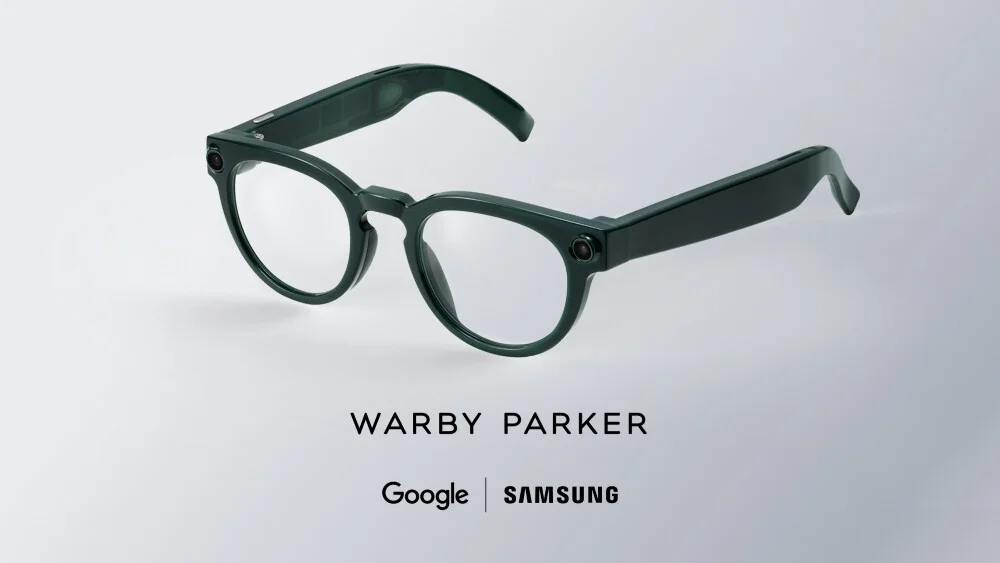
- At Google I/O 2026, Samsung and Google introduced new intelligent eyewear developed with Gentle Monster and Warby Parker, prioritizing fashion and voice-driven AI interaction over traditional display-heavy AR hardware.
Strategic Deep-Dive
The landscape of wearable technology underwent a fundamental shift at Google I/O 2026 as Samsung Electronics and Google officially unveiled their collaborative project: Intelligent Eyewear. This launch marks a strategic pivot away from the display-heavy, bulky augmented reality (AR) goggles of the past toward a more socially acceptable, fashion-forward form factor. By partnering with industry leaders Gentle Monster and Warby Parker, Samsung and Google have prioritized design aesthetics, ensuring that the technology is seamlessly integrated into a frame that looks and feels like premium everyday eyewear.
The two styles introduced reflect a mature understanding that for wearables to achieve mass adoption, they must first succeed as apparel before they can succeed as computers.
Technically, the Intelligent Eyewear is positioned as a sophisticated companion device to the user’s mobile smartphone. Rather than attempting to replace the phone, the glasses act as an ambient interface, extending the reach of AI services directly to the user’s ears and eyes. At the heart of the user experience is Google’s Gemini AI, which facilitates complex voice interactions.
Through integrated high-fidelity directional speakers and advanced noise-canceling microphones, users can ask for real-time translations, receive contextual notifications, or control smart home devices without ever looking at a screen. The UX/UI is entirely predicated on a ‘hands-free’ philosophy, where the interaction is invisible and intuitive. This approach addresses the ‘screen fatigue’ prevalent in current mobile culture, offering a more natural way to stay connected while remaining present in the physical world.
When compared to the Meta Ray-Ban glasses, the Samsung-Google offering appears to lean more heavily into ecosystem integration. While Meta focuses on social sharing and content capture, the Samsung-Google eyewear is a tool for productivity and ambient assistance, leveraging the deep integration of Google Assistant and the Galaxy mobile suite. The internal hardware includes miniaturized sensors that detect the user’s environment to provide proactive help—such as identifying a landmark or reading a menu in a foreign language—delivered via audio.
The omission of a primary visual display is a calculated risk; it drastically reduces battery consumption and weight, making the glasses comfortable for all-day wear, a feat that AR competitors have yet to achieve.
For Google, the I/O 2026 debut is a redemption story after the public failure of Google Glass a decade ago. For Samsung, it is an expansion of its hardware dominance into a new category that bridges the gap between the smartphone and the body. As the industry moves toward display-less AI interfaces, this product represents a bold bet that the future of hardware lies in silence and subtlety.
The strategic alignment with fashion brands like Warby Parker ensures a distribution network beyond traditional tech retailers, signaling a push to capture a demographic that values style as much as silicon. The long-term success of this intelligent eyewear will depend on whether its AI-driven utility can prove indispensable enough to justify its place on the user’s face, potentially leading to a future where the smartphone remains in the pocket permanently.