🔍 Executive Summary
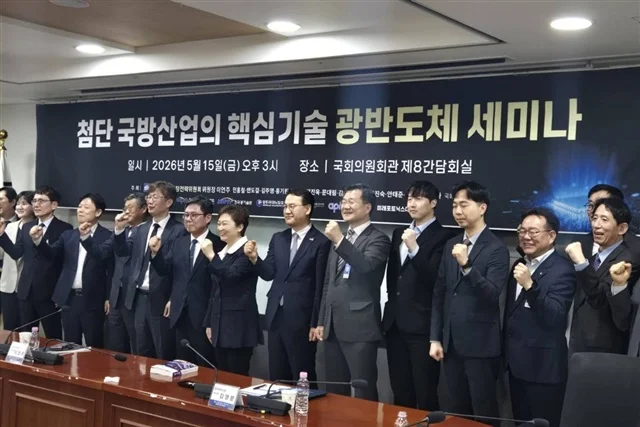
- South Korea's defense sector faces a critical strategic vulnerability as it remains 99% dependent on foreign suppliers for photonic semiconductors, essential components for next-generation electronic warfare and high-speed signal processing.
Strategic Deep-Dive
Photonic semiconductors have emerged as the definitive frontier in modern defense technology, fundamentally altering the parameters of electronic warfare and strategic intelligence. Unlike traditional silicon-based electronics that rely on electron flow—limited by resistance and thermal dissipation—photonic integrated circuits (PICs) utilize photons to transmit data at the speed of light. This transition enables ultra-high-bandwidth signal processing with significantly reduced latency and power consumption.
For military applications, the implications are transformative: photonic chips are the backbone of advanced LIDAR sensors, high-frequency radar arrays, and resilient satellite communication links. Moreover, a critical technical advantage of photonic hardware is its inherent immunity to electromagnetic interference (EMI) and electromagnetic pulse (EMP) attacks, which would neutralize conventional electronic systems in a high-intensity conflict scenario.
Despite the global acclaim for South Korea’s defense exports, a recent intelligence report from DigiTimes exposes a precarious structural flaw: a staggering 99% of the photonic semiconductors used in Korean defense systems are imported. This overwhelming dependency creates a strategic bottleneck that threatens national sovereignty. In an era where technology is increasingly weaponized through export controls and sanctions, South Korea’s reliance on foreign photonic foundries means its defense readiness is subject to the geopolitical whims of external suppliers.
If a supply chain disruption occurs—whether due to a regional conflict in the Taiwan Strait or shifting trade policies in the West—the production of South Korea’s premier tanks, missiles, and fighter jets could grind to a halt. This is no longer just an industrial concern; it is a matter of national survival.
The alarm sounded by industry leaders highlights the urgent need for a ’localization of the value chain.’ The current crisis is a symptom of a broader manufacturing hollow-out where domestic investment has focused on high-volume memory chips at the expense of specialized, high-reliability defense components. To mitigate this risk, South Korea must leverage its existing semiconductor expertise to establish dedicated domestic fabrication facilities for photonic-grade hardware. This requires a shift from horizontal integration toward state-led vertical integration, ensuring that critical intellectual property (IP) for photonic designs remains within national borders.
Furthermore, the integration of photonics into the broader semiconductor ecosystem will require a multi-decade roadmap, focusing on hybrid integration techniques where light-based processing and electronic control coexist on a single substrate. Without a decisive move toward technological self-reliance, the ‘K-Defense’ brand remains a fragile giant, dependent on a global supply chain that is increasingly fragmented and unpredictable. The transition to domestic photonic production is not merely an economic opportunity but a mandatory requirement for maintaining a credible deterrent in the 21st century.