🔍 Executive Summary
- Technical analysis reveals that the popular Reddit advice of frequently spinning down NAS hard drives to save power actually leads to premature mechanical failure due to excessive load/unload cycles.
Strategic Deep-Dive
In the niche circles of home-server enthusiasts and data hoarders, the subreddit for Network Attached Storage (NAS) is often seen as a fountain of wisdom. However, one of its most frequently touted tips—setting aggressive ‘spin-down’ timers for hard drives—is increasingly being identified by data center engineers as a major contributor to premature hardware death. The conflict lies between the desire for energy efficiency and the unforgiving laws of mechanical physics that govern hard disk drive (HDD) longevity.
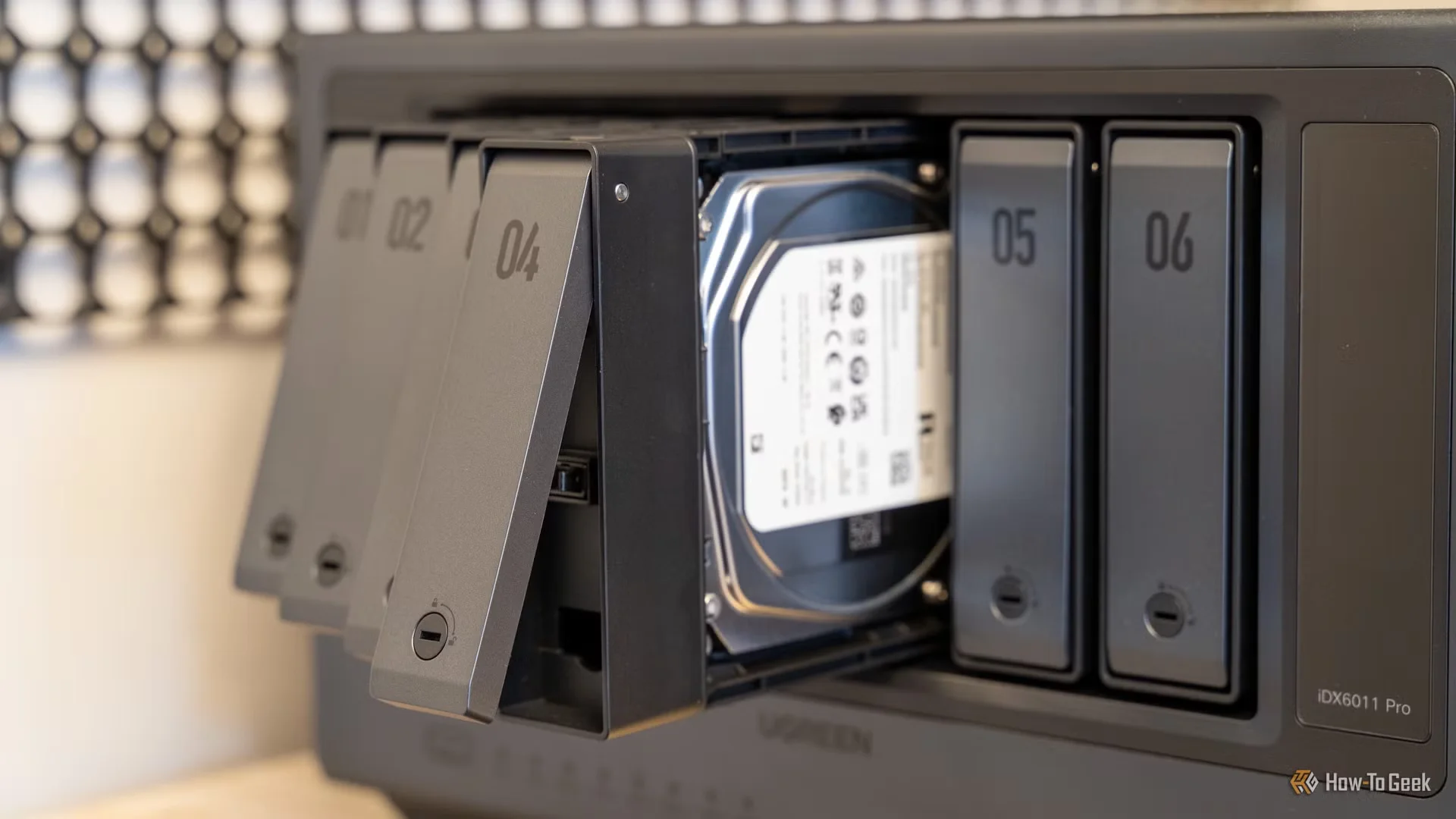
To understand why frequent spin-downs are detrimental, one must look at the mechanical components of a drive: the spindle motor, the fluid dynamic bearings, and the actuator arm. NAS-grade drives, such as the Western Digital Red or Seagate IronWolf series, are specifically engineered for near-constant thermal equilibrium. When a drive is spinning, it maintains a stable temperature and the lubricant in the bearings flows consistently.
The act of ‘spinning up’ requires a massive surge of current to overcome inertia and accelerate the platters to 7,200 RPM. This process generates localized heat spikes and subjects the motor to its maximum mechanical stress. Furthermore, each time a drive spins down, the read/write heads must be ‘parked’ on a ramp.
These are known as Load/Unload cycles, and every drive has a rated limit—often around 600,000 cycles. While that sounds high, a drive that spins down every 10 minutes of inactivity can reach that limit in just a few years, far shorter than its intended service life.
Moreover, the thermal expansion and contraction caused by the drive cooling down during a spin-down and heating up during a spin-up can lead to microscopic ‘creep’ in the mechanical alignments. Over thousands of cycles, this leads to head misalignment or total spindle seizure. From a financial perspective, the argument for spinning down is even weaker.
An idling 12TB NAS drive typically consumes between 3 to 5 watts of power. In most regions, leaving a drive spinning 24/7 costs less than $10 per year in electricity. Comparing this to the $300 cost of a high-capacity drive and the priceless nature of the data stored within, the ‘savings’ achieved by spinning down represent a classic case of being penny-wise and pound-foolish.
For those serious about data integrity, the recommendation is clear: let the drives spin. Keeping the platters in constant motion minimizes mechanical fatigue and maintains a stable operating environment. If power consumption is a critical concern, a better strategy is to invest in SSD-based storage for frequent small-file access while keeping the bulk HDDs for sequential storage that stays powered on.
Ultimately, the durability of a NAS is built on consistency, not on the constant cycling of mechanical parts. It is time for the community to prioritize engineering reality over the ‘green’ myths of spin-down optimization.