🔍 Executive Summary
- Faced with acute labor shortages, the manufacturing sector is pivoting toward integrated CNC turnkey solutions. By unifying robotics, part orientation, and advanced waste management, these systems eliminate the 8-12 minute manual intervention window per part, enabling a transition to autonomous, high-yield production cycles.
Strategic Deep-Dive
The Technical Transition: Engineering the ‘Lights-Out’ Future of CNC Operations
In the contemporary industrial landscape, the transition to CNC turnkey automation has moved from an elective luxury to a reactive necessity. Data from Hardware Times indicates that shop owners rarely prioritize turnkey integration until the external pressures of labor scarcity and wage inflation make manual operations economically non-viable. This shift represents a fundamental pivot in manufacturing philosophy: moving away from labor-intensive setups toward high-integrity, automated ecosystems that decouple production capacity from human headcount.
The Anatomy of a High-Efficiency Turnkey Cell
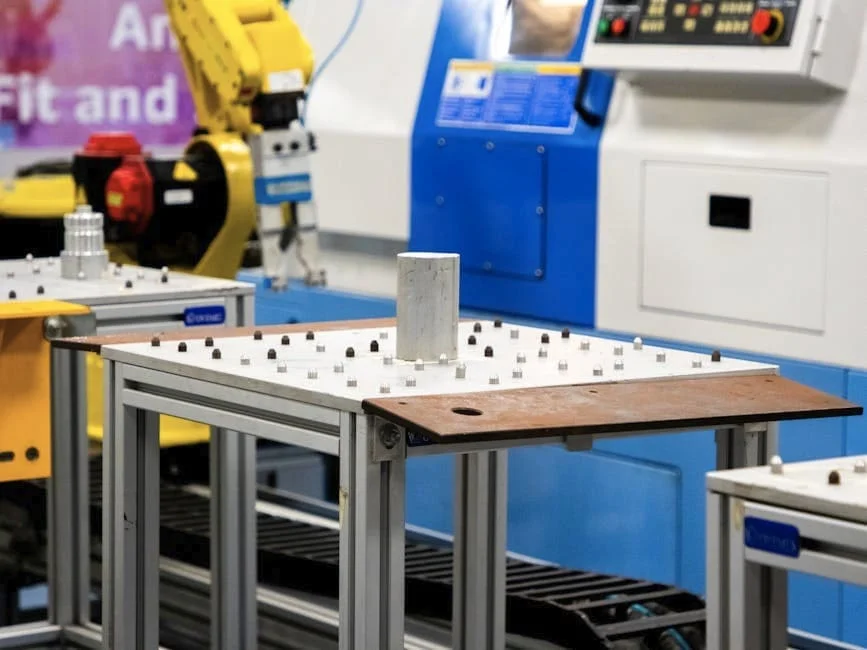
A true CNC turnkey solution is defined by its operational cohesion. Unlike modular add-ons, a turnkey cell functions as a singular, pre-engineered unit. The hardware stack is centered on three critical subsystems: the robot loader, the part presenter, and the chip-management system.
- Precision Robot Loaders: Modern 6-axis or collaborative robots are the workhorses of the cell. They handle material transfer with a level of repeatability and speed that far exceeds human capabilities, especially in high-volume, low-mix environments.
- Part Presenters: These systems—ranging from vibration bowls to palletized trays—ensure that raw stock is oriented perfectly for the robot. This eliminates the ‘seek time’ associated with human operators manually finding and aligning parts.
- Advanced Chip Management: Often the most undervalued component, an integrated chip-management system is the ‘unsung hero’ of autonomous manufacturing. By utilizing screw-type conveyors and high-pressure flushing, the system prevents the buildup of metallic debris that would otherwise trigger emergency stops or damage sensitive tool spindles. Without robust chip management, a robot loader would merely be loading parts into a machine destined for mechanical failure.
Quantitative Analysis: Decoupling Labor from Output
The most compelling argument for turnkey adoption is the reduction in human intervention time. In a standard manual environment, a machinist must spend between 8 to 12 minutes per part on tasks such as loading, deburring, debris clearing, and quality checks. This ’touch time’ creates a hard ceiling on productivity.
By implementing a fully integrated cell, this 8-12 minute window is compressed into seconds of supervisory oversight. When translated across a three-shift production schedule, the savings are astronomical. For instance, removing 10 minutes of manual labor from a 100-part-per-day run saves over 16 hours of labor daily.
This allow facilities to achieve ‘Lights-out’ manufacturing—running machines for 168 hours a week rather than the standard 40-hour workweek.
Economic Strategy and Long-term ROI
The economic impact of this transition is multifaceted. First, the ‘cost-per-part’ drops significantly as fixed equipment costs are amortized over a much larger volume of units produced in a shorter timeframe. Second, it serves as a strategic hedge against the declining availability of skilled machinists.
For the modern machine shop, investing in a turnkey system is not just about buying a machine; it is about securing a predictable, high-speed output that remains immune to the volatility of the labor market. As global manufacturing continues to face demographic challenges, the turnkey cell is evolving into the standard baseline for operational competitiveness and survival.