🔍 Executive Summary
- In a strategic pivot to secure its dominance in the electric vehicle sector, Japan's NTN is launching mass production of specialized EV bearings in China, focusing on localized efficiency to mitigate geopolitical risks and meet surging demand from local automakers.
Strategic Deep-Dive
NTN’s 2026 Pivot: Dominating the Chinese EV Supply Chain
By May 2026, the global automotive industry has reached a point of no return in its transition to electrification, with China maintaining its position as the world’s largest and most competitive EV market. In this high-stakes environment, Japanese precision engineering firm NTN has made a decisive move: the launch of full-scale mass production for EV-specific bearings within Chinese borders. This is not merely an expansion of a factory floor; it is a calculated ‘Data Architect’ approach to supply chain resiliency, optimizing the proximity between high-precision manufacturing and high-volume consumption.
The Science of Motion: Tribology in the EV Era
The technical requirements for EV bearings are significantly more stringent than those for internal combustion engines. With electric motors operating at exceptionally high RPMs (Rotations Per Minute), the bearings must exhibit minimal friction and superior heat dissipation to prevent thermal runaway and maximize vehicle range. NTN’s competitive edge lies in its mastery of ‘Tribology’—the science of interacting surfaces in relative motion.
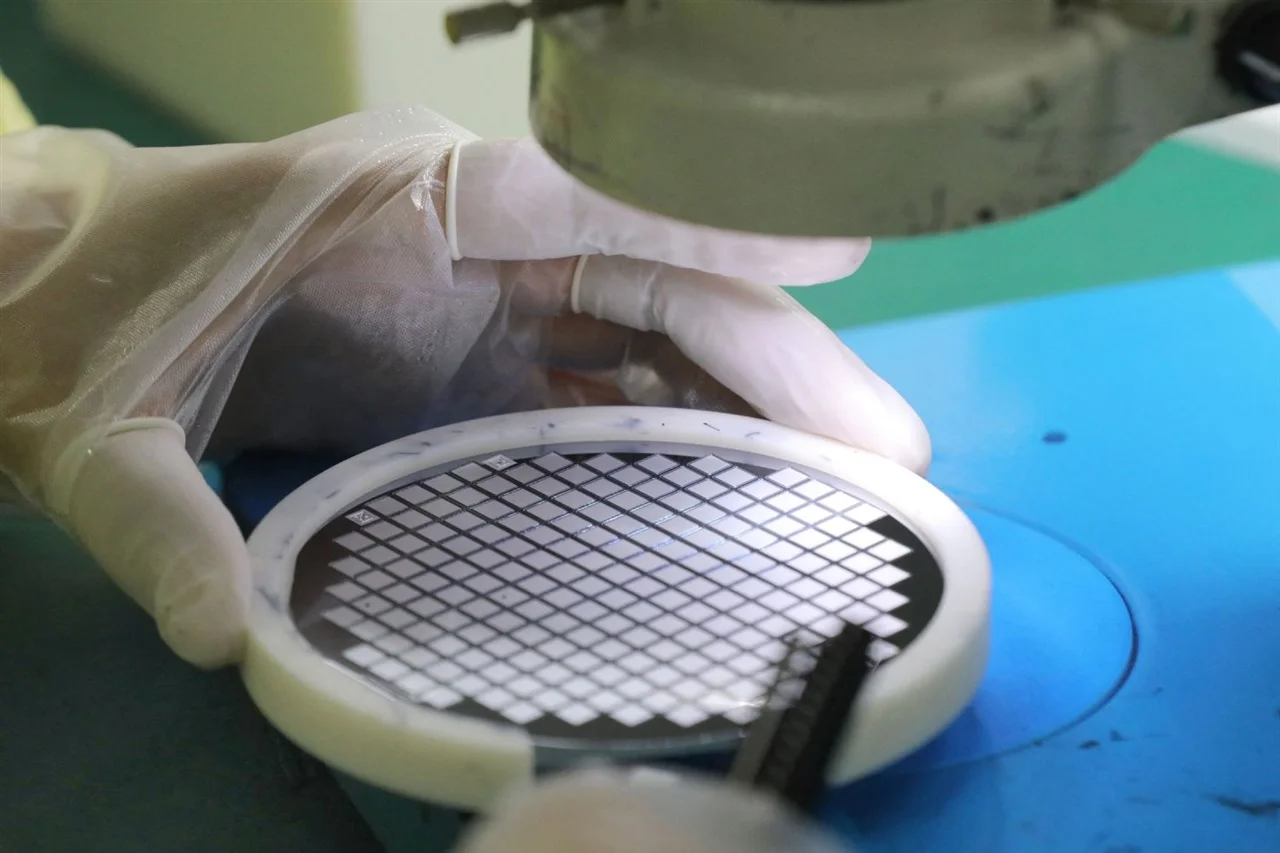
By localizing the production of these high-spec components in China, NTN is providing local giants like BYD and NIO with immediate access to tier-one Japanese engineering. The 2026 production line utilizes advanced automated optical inspection (AOI) and IoT-enabled quality control, ensuring that every bearing meets the same zero-defect standards as those produced in Shizuoka, Japan. This allows NTN to offer a ’local price’ with ‘global quality,’ effectively squeezing out lower-tier domestic competitors who cannot match NTN’s durability and noise-reduction metrics.
Navigating Geopolitics: The China-for-China Strategy
The broader strategic context of NTN’s move is the ongoing fragmentation of the global supply chain. While the ‘China Plus One’ strategy—diversifying production to countries like Vietnam or India—is popular in the West, NTN has recognized that the Chinese EV ecosystem is too integrated to serve from the outside. Their ‘China-for-China’ strategy is designed to insulate the company from fluctuations in Sino-Japanese trade relations and potential tariff hikes.
However, NTN maintains a strict firewall between its local production and its core intellectual property. The specialized lubricants and proprietary steel treatment processes remain closely guarded secrets handled by Japanese expats and secure data links. This hybrid approach—localizing the muscle (production) while centralizing the brain (R&D)—represents a sophisticated response to the geopolitical realities of 2026.
For NTN, the path to global leadership runs directly through the heart of the Chinese industrial machine, proving that in the world of high-tech manufacturing, economic pragmatism often outweighs political decoupling.