🔍 Executive Summary
- Modern 3D printing, especially with multi-material systems, generates significant waste in the form of support structures and purge material. By understanding the thermal properties of polymers, users can reintegrate this 'waste' into their manufacturing process, reducing environmental impact and material costs.
Strategic Deep-Dive
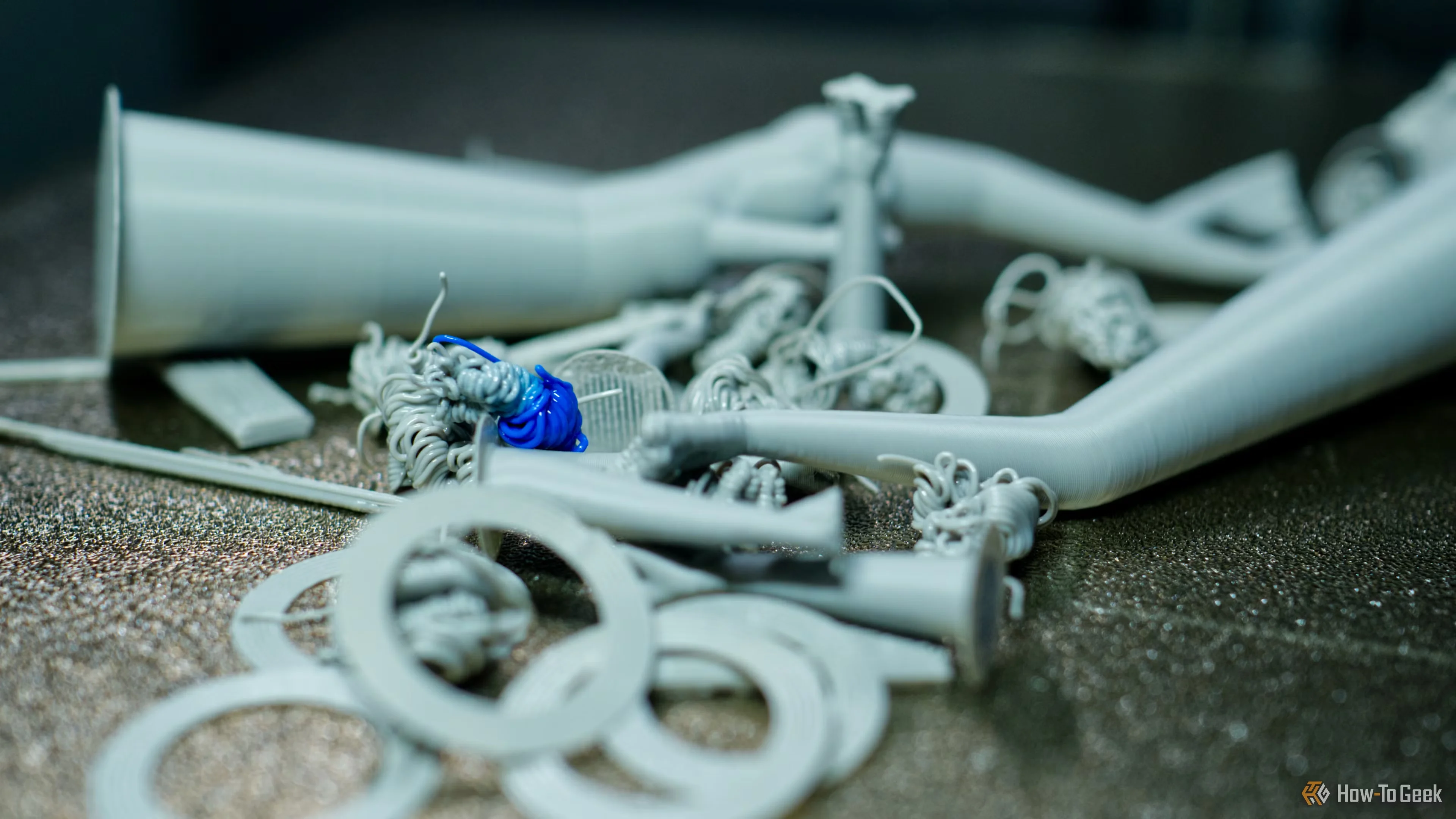
The transformation of 3D printing waste into viable feedstock is a critical frontier in sustainable desktop manufacturing. For years, hobbyists have ignored the mounting piles of failed prints, raft layers, and the purge waste generated by multi-material units (MMUs). However, as systems like Bambu Lab’s P2S become mainstream, the sheer volume of ‘filament poop’ has reached a tipping point, necessitating a structured approach to material recovery.
From a materials science perspective, common 3D printing filaments like Polylactic Acid (PLA) and Polyethylene Terephthalate Glycol (PETG) are ideal candidates for circular recycling due to their thermoplastic nature. The process involves mechanical granulating—breaking down waste into small, uniform pellets—followed by re-extrusion. Technical feasibility hinges on maintaining the polymer’s integrity; repeated thermal cycling can lead to chain scission, which reduces the molecular weight and, consequently, the mechanical strength of the final part.
To mitigate this, senior makers often use a ‘blend ratio,’ mixing virgin resin with recycled granules to ensure consistent diameter and flow rates. Even without expensive extrusion hardware, waste can be repurposed as internal ballasting or as ‘infill’ for large-scale artistic models where aesthetic surface quality is the only requirement for the outer shell. This methodology not only offsets the rising cost of premium filaments but also addresses the burgeoning environmental footprint of the additive manufacturing sector.
By adopting a data-driven approach to material sorting—segregating by polymer type and brand to ensure chemical compatibility—the 3D printing community can evolve from a linear ‘print-and-discard’ model to a sophisticated circular ecosystem.