🔍 Executive Summary
- Nvidia has fundamentally disrupted the semiconductor development cycle by institutionalizing an annual 'silicon cadence' that targets absolute dominance in the AI infrastructure market. During its latest earnings call, the company confirmed that the Blackwell architecture is undergoing the fastest production ramp-up in its corporate history, meeting the insatiable demand of hyperscale clients. However, the real strategic pivot lies in the future: the transition to the 'Vera Rubin' architecture, scheduled for production in the second half of 2026. This relentless iteration cycle is designed to ...
Strategic Deep-Dive
Nvidia has fundamentally disrupted the semiconductor development cycle by institutionalizing an annual ‘silicon cadence’ that targets absolute dominance in the AI infrastructure market. During its latest earnings call, the company confirmed that the Blackwell architecture is undergoing the fastest production ramp-up in its corporate history, meeting the insatiable demand of hyperscale clients. However, the real strategic pivot lies in the future: the transition to the ‘Vera Rubin’ architecture, scheduled for production in the second half of 2026.
This relentless iteration cycle is designed to maintain a perpetual performance gap between Nvidia and its rivals, forcing competitors to constantly chase a moving target while Nvidia locks in the premium tier of the market.
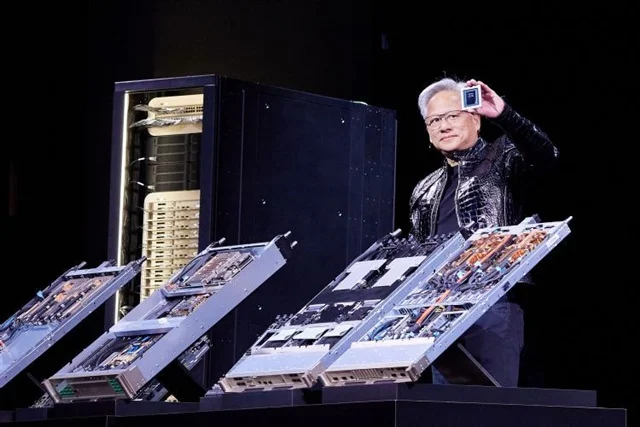
The most technically significant revelation is the ‘Vera’ CPU. Based on the Arm architecture, the Vera CPU is a direct offensive against the x86 hegemony held by Intel and AMD for decades. By entering the US$200 billion CPU Total Addressable Market (TAM), Nvidia is no longer content with being a co-processor provider; it aims to become the primary architect of the data center.
The Vera CPU is engineered to utilize the ‘NVLink-C2C’ (Chip-to-Chip) interconnect, which provides massive bandwidth between the CPU and GPU. Unlike traditional x86-to-GPU connections that suffer from PCIe bottlenecks, the Vera-Rubin combination allows for full cache coherency and a unified memory address space. This means large language models can reside across both chips with minimal latency, drastically increasing the efficiency of trillion-parameter model training.
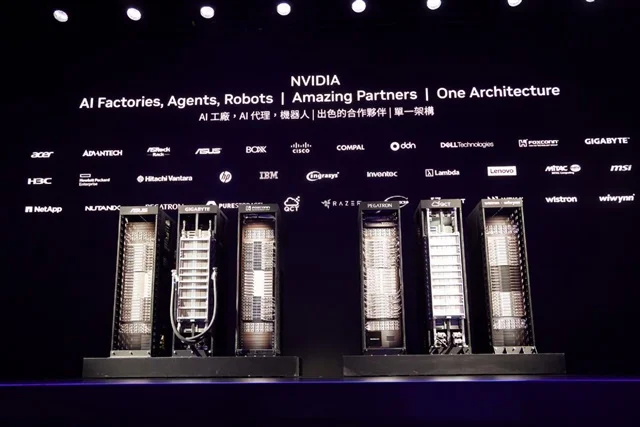
This architectural integration is the cornerstone of Nvidia’s ‘AI Factory’ vision—a holistic system where every component is optimized for data throughput and power efficiency.
From a competitive analysis standpoint, Nvidia’s annual refresh cycle represents a form of economic warfare. By releasing a new silicon generation every 12 months, Nvidia is compressing the return on investment (ROI) window for its rivals. To match this pace, AMD and Intel would need to double their R&D velocity and secure immense foundry capacity from TSMC at premium prices.
Nvidia’s ability to execute this roadmap stems from its software dominance; since the CUDA ecosystem is already optimized for this hardware, each new silicon release is immediately usable by the world’s leading AI developers. For enterprise customers, this creates a compelling argument for vertical integration. Why mix-and-match components from multiple vendors when Nvidia provides a pre-optimized, integrated CPU-GPU platform that outperforms any x86-based alternative?
As the Vera CPU matures, we are likely to see a rapid migration of high-performance computing (HPC) workloads toward Arm-based architectures, further solidifying Nvidia’s role as the central nervous system of the global AI economy. This is not just a hardware race; it is a battle for the very architecture of future computing, and Nvidia is currently setting all the rules.