🔍 Executive Summary
- The massive power requirements of AI servers are forcing a redesign of data center power architectures, driving the adoption of Wide-Bandgap (WBG) materials like SiC and GaN to optimize thermal management and power density.
Strategic Deep-Dive
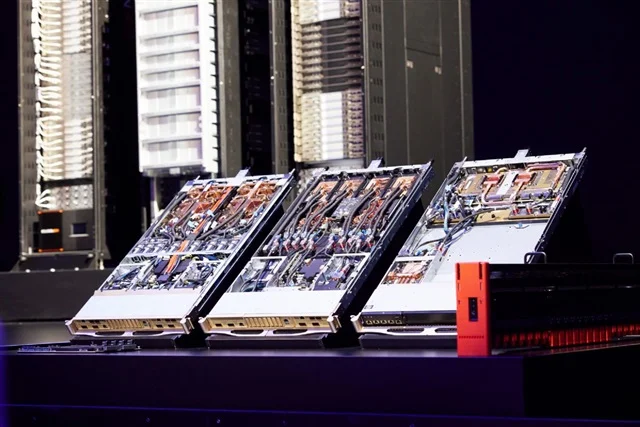
The relentless scale of AI training clusters is pushing data center power demands to unprecedented levels, often exceeding 100kW per rack. This trajectory has made the efficiency of the power delivery path a critical design constraint for data systems architects. The industry is currently undergoing a structural pivot, moving toward high-voltage direct current (DC) power architectures at the rack level to eliminate the conversion losses inherent in traditional AC-to-DC distribution.
This shift is catalyzing a massive surge in demand for power semiconductors that can handle higher voltages and temperatures with minimal thermal dissipation.
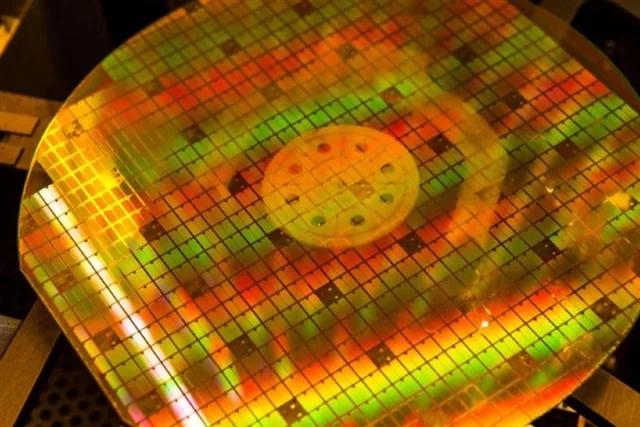
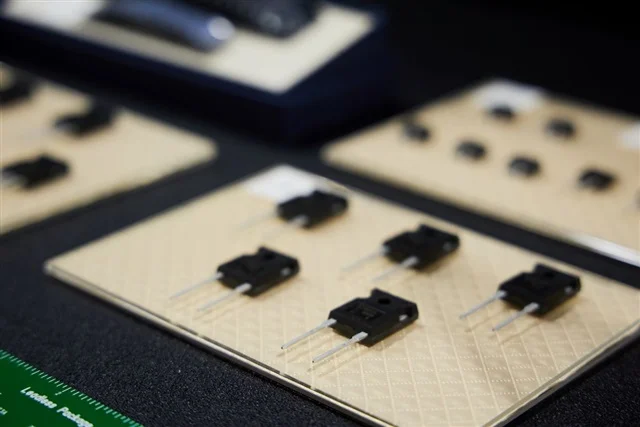
At the center of this transformation is the rapid adoption of Wide-Bandgap (WBG) semiconductors, namely Silicon Carbide (SiC) and Gallium Nitride (GaN). From an architectural perspective, WBG materials offer superior physics compared to legacy silicon. SiC is prized for its high thermal conductivity and ability to operate in extreme heat, which is essential for components positioned near high-performance GPUs that generate immense waste heat.
GaN, with its exceptional electron mobility, allows for much higher switching frequencies, enabling the design of significantly smaller and lighter power supply units (PSUs). By integrating SiC and GaN, data center operators can achieve higher power density, allowing more compute resources to be packed into the same physical footprint while simultaneously lowering the cooling requirements.
This evolution is also reshaping the supplier landscape. Taiwanese power semiconductor firms, traditionally focused on commodity components, are aggressively pivoting toward higher-specification ‘Power Management MOS’ and integrated cooling technologies. These companies are no longer just component vendors; they are becoming strategic partners that provide holistic thermal management and power conversion solutions.
As AI servers transition toward liquid cooling and phase-change systems, the power semiconductors must be co-engineered with these cooling infrastructures to ensure reliability and peak efficiency. The integration of power and cooling into a single optimization roadmap is the new standard for modern server design.
Ultimately, the goal of adopting SiC and GaN in the data center is to optimize the Total Cost of Ownership (TCO). While the initial bill of materials (BOM) cost for WBG components is higher than for silicon, the long-term savings from reduced electricity consumption and lower cooling expenses far outweigh the upfront investment. As global energy regulations tighten and the cost of carbon footprints rises, the role of these advanced power semiconductors in enabling ‘green’ AI infrastructure becomes indisputable.
They are the enabling technology that allows the AI revolution to scale without overwhelming the world’s electrical grids.