🔍 Executive Summary
- NVIDIA's roadmap indicates a doubling of thermal management requirements within a single year.
- Vera Rubin Ultra's 300kW per rack requirement makes liquid cooling a mandatory infrastructure standard by 2027.
Strategic Deep-Dive
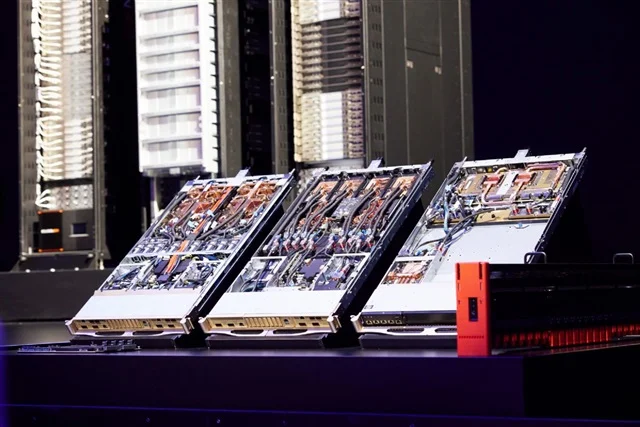
The thermal management roadmap for AI infrastructure is reaching a critical inflection point with the introduction of the Vera Rubin architecture. As NVIDIA pushes the boundaries of compute density, the mechanical and electrical constraints of the data center are being tested like never before. The NVL72 platform, scheduled for the second half of 2026, represents a significant jump in thermal design power (TDP), requiring up to 140kW of cooling capacity per rack.
However, the real challenge lies in the 2027 horizon with the Vera Rubin Ultra platform. Projections of 200kW to 300kW per rack suggest a world where air cooling is physically incapable of dissipating the heat generated by these high-performance clusters. This necessitates a rapid industry-wide shift toward advanced liquid cooling solutions, including direct-to-chip (DTC) and immersion cooling.
The doubling of cooling requirements in less than a year indicates that infrastructure providers must redesign power delivery and thermal rejection systems immediately. This is not merely a hardware upgrade but a fundamental redesign of the ‘AI Factory’ physical layer to accommodate unprecedented power densities.