🔍 Executive Summary
- Tech Forum 2026 highlighted four seismic shifts: AI server evolution, Capex bubble risks, ASIC-driven architectures, and TSMC’s global footprint.
- Analysts projected a 'Post-AI' roadmap focusing on specialized inference silicon, Silicon Photonics, and CXL integration beyond raw compute.
- The discussion scrutinized whether Taiwan’s semiconductor reliance is a permanent advantage or an economic 'Golden Handcuff' requiring urgent diversification.
Strategic Deep-Dive
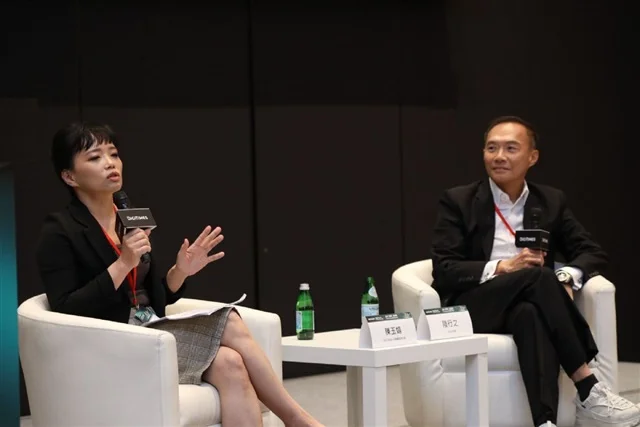
The discussions at Tech Forum 2026 provided a sophisticated look at the longevity of Taiwan’s status as the epicenter of global semiconductor manufacturing. The dialogue between Monica Chen and Andrew Lu synthesized the current industry state into a ‘Post-AI’ roadmap. As the initial GPU-driven build-out matures, the industry is pivoting toward a more specialized and efficient architecture.
The ‘Silicon Shield’ is currently being tested by a transition from general-purpose AI compute (GPUs) to Application-Specific Integrated Circuits (ASICs) designed for specialized inference tasks at the edge.
This roadmap highlights three critical technologies: Silicon Photonics, CXL (Compute Express Link) integration, and the decentralization of AI. Analysts noted that the massive capital expenditure (Capex) from cloud service providers (CSPs) is approaching a saturation point, raising concerns about an ROI-driven ‘AI Bubble.’ To mitigate this, the next phase of growth will likely shift from massive data center clusters to efficient, localized Edge-AI processing. Furthermore, TSMC’s expansion into Japan and Germany is viewed as a strategic necessity to maintain global influence, though it necessitates a careful balance to prevent the ‘hollowing out’ of domestic talent.
For Taiwan to maintain its competitive edge, the forum concluded it must move from being a volume-driven manufacturer to a strategic architect of the entire ecosystem, ensuring that its global footprint enhances, rather than dilutes, its core geopolitical value.