🔍 Executive Summary
- A deep-dive technical analysis of SPEC CPU2026, examining its methodology as the definitive industry standard for CPU benchmarking. This report explores why SPEC is indispensable for evaluating modern processor architectures through its rigorous integer and floating-point suites.
Strategic Deep-Dive
The Architectural Significance of SPEC CPU2026 in the Global Hardware Ecosystem
In the competitive landscape of semiconductor engineering, providing a level playing field for diverse processor architectures—from x86 to ARM—requires a benchmarking suite that is both rigorous and transparent. SPEC CPU2026 stands as the long-established industry standard that achieves this goal. As noted by technical authorities like Chips and Cheese, this benchmark is so ubiquitous that it is ‘almost impossible to miss’ in any serious hardware publication.
This analysis explores the technical depths that cement SPEC’s position at the top of the performance evaluation hierarchy.
Methodology: Integer vs. Floating Point Suites
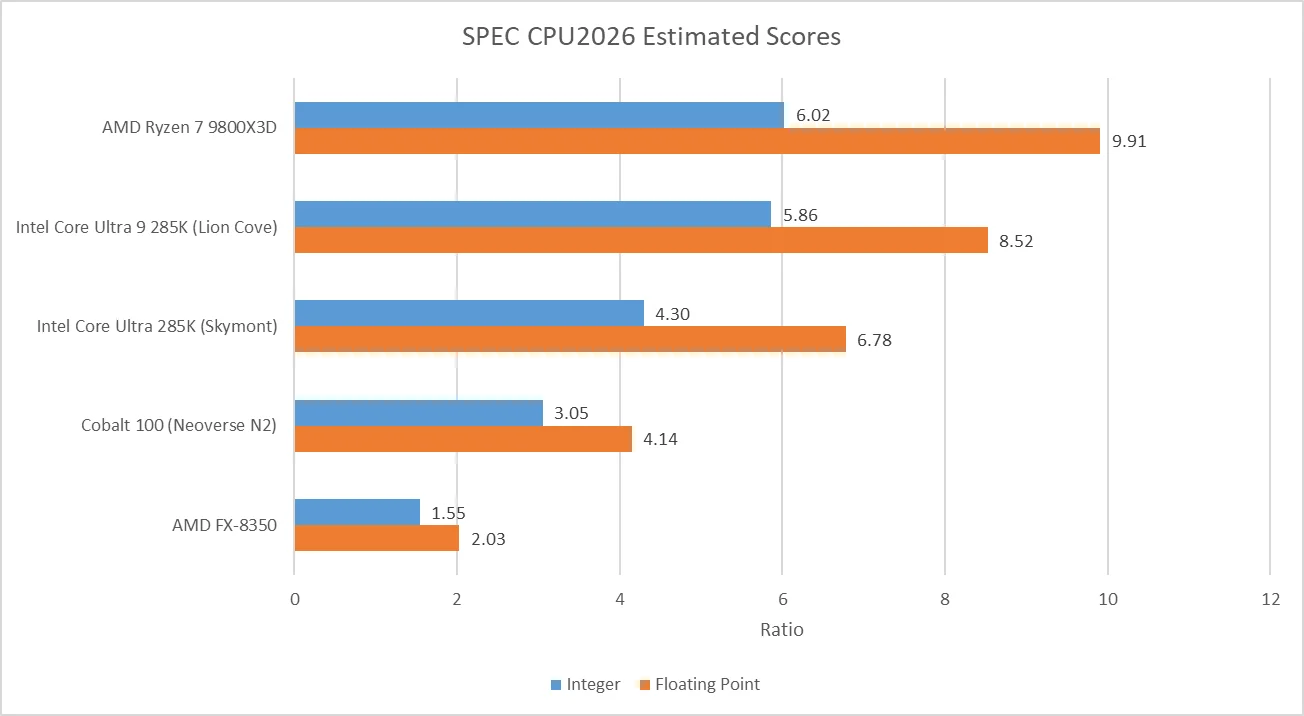
SPEC CPU2026 is divided into two primary component suites: CINT (Integer) and CFP (Floating Point). The integer suite utilizes real-world application code for tasks such as C++ compilation, XML parsing, and discrete event simulation. These tests are critical because they represent the general-purpose workloads found in both consumer and enterprise environments.
On the other hand, the floating-point suite focuses on high-precision scientific calculations, including weather modeling and molecular dynamics, which are essential for evaluating servers and workstations dedicated to high-performance computing (HPC). By testing both, SPEC provides a holistic view of a CPU’s microarchitectural efficiency.
The Metrics of Performance: Rate vs. Speed
A key technical distinction in SPEC CPU2026 is its reporting methodology, which separates SPECspeed and SPECrate. SPECspeed measures the time taken to complete a single task, making it the primary metric for evaluating individual core performance and IPC (Instructions Per Cycle) improvements. In contrast, SPECrate measures the number of tasks completed in a given time, providing a clear picture of multi-threaded throughput and the scalability of multi-core processors.
This dual-metric approach allows system architects to understand whether a new processor generation is achieving its gains through raw frequency increases or through better parallelization strategies.
Deterministic Workloads and Industry Consensus
What sets SPEC apart from synthetic benchmarks is its reliance on deterministic, peer-reviewed workloads. Because SPEC is a non-profit consortium composed of industry giants like Intel, AMD, NVIDIA, and ARM, the workloads are designed through consensus to prevent any single vendor from having an unfair advantage. This consensus-driven approach is why SPEC data is the gold standard for procurement departments in data centers and research labs.
When a technology publication cites SPEC CPU2026, it is providing a data point that has been validated against a massive historical database, allowing for cross-generational comparisons that proprietary benchmarks cannot offer. As we move into 2026, the reliance on SPEC only deepens as architectures become more specialized, necessitating a stable baseline for comparison.